



Filter
-
(133)
-
(733)
-
(4)
-
(1)
-
(47833)
-
(91)
-
(25)
-
(14)
-
(433)
-
(7)
-
(182)
-
(8)
-
(33)
-
(17)
-
(7)
-
(9)
-
(9)
-
(5)
-
(21)
-
(8)
-
(12)
-
(9)
-
(3)
-
(10)
-
(10)
-
(56)
-
(45)
-
(12)
-
(3)
-
(7)
-
(6)
-
(5)
-
(8)
-
(7)
-
(11)
-
(58)
-
(13)
-
(30)
-
(8)
-
(5)
-
(10)
-
(5)
-
(15)
-
(4)
2141 - 2150
of 52756 results
-
 Journal ArticleContrast sensitivity, which constrains human vision, decreases from fovea to periphery, from the horizontal to the vertical meridian, and from the lower vertical to the upper vertical meridian. The Contrast Sensitivity Function (CSF) depicts how contrast sensitivity depends on spatial frequency (SF). To compensate for these visual constraints, we constantly make saccadic eye movements to foveate on relevant objects in the scene. Already before saccade onset, presaccadic attention shifts to the saccade target and enhances perception. However, it is unknown whether and how it modulates the interplay between contrast sensitivity and SF, and if this effect varies around polar angle locations. Contrast sensitivity enhancement may result from a horizontal or vertical shift of the CSF, increase in bandwidth, or any combination. In addition, presaccadic attention could enhance contrast sensitivity similarly around the visual field, or it could benefit perception more at locations with poorer performance (i.e., ver...Aug 28, 2024
 -
Journal ArticleMuch of what has been discovered concerning neurophysiological mechanisms can be credited to ex vivo biomedical experiments. Beyond these discoveries, ex vivo research techniques have enhanced the global understanding of human physiology and pathology in almost every biomedical specialty. Naturally, ex vivo experiments are among the most desired methods of research, particularly in the field of neuroscience. Ex vivo experiment platforms may be purchased commercially. However, their substantial cost and sometimes limited availability can render them inaccessible to many research labs. Moreover, these manufactured systems are often rigid in function with no possibility of customization, severely narrowing their capabilities. However, developing essential components for ex vivo laboratory systems with a fused deposition modeling (FDM) printer provides a practical solution to each of these obstacles. Here, we provide the designs and construction process for an easily accessible, highly adaptable recording stag...Aug 28, 2024
-
 Webinar AdvocacyAre you interested in advocacy but not sure where to start? Get inspired by this webinar. SfN's Early Career Policy Fellows (ECPF) will tell you about opportunities they’ve pursued through SfN’s ECPF program, and how you, too, can explore similar advocacy activities at your institution or SfN chapter.Jan 9, 2015
 -
Journal ArticleSensory processing disruptions are a core symptom of autism spectrum disorder (ASD) and other neurological disorders. The acoustic startle response and prepulse inhibition (PPI) are common metrics used to assess disruptions in sensory processing and sensorimotor gating in clinical studies and animal models. However, often there are inconsistent findings on ASD-related PPI deficits across different studies. Here, we used a novel method for assessing changes in startle and PPI in rodents, using the Cntnap2 knockout (KO) rat model for neurodevelopmental disorder/ASD that has consistently shown PPI disruptions in past studies. We discovered that not only sex and prepulse intensity but also the intensity of the startle stimulus, profoundly impacts whether PPI deficits are evident in the Cntnap2 KO rat or not. We show that rats do not universally exhibit a PPI deficit, instead impaired PPI is contingent on specific testing conditions. Notably, at lower startle stimulus intensities, Cntnap2 KO rats not only demon...Aug 19, 2024
-
Journal ArticleMusicians can have better abilities to understand speech in adverse conditions such as background noise than non-musicians. However, the neural mechanisms behind such enhanced behavioral performances remain largely unclear. Studies have found that the subcortical frequency-following response to the fundamental frequency of speech and its higher harmonics (speech-FFR) may be involved since it is larger in people with musical training than in those without. Recent research has shown that the speech-FFR consists of a cortical contribution in addition to the subcortical sources. Both the subcortical and the cortical contribution are modulated by selective attention to one of two competing speakers. However, it is unknown whether the strength of the cortical contribution to the speech-FFR, or its attention modulation, is influenced by musical training. Here we investigate these issues through magnetoencephalographic (MEG) recordings of 52 subjects (18 musicians, 25 non-musicians, and 9 neutral participants) lis...Aug 19, 2024
-
Journal ArticleRetinal ganglion cell (RGC) axons provide direct input into several nuclei, including the dorsal lateral geniculate nucleus (dLGN), which is important for classical image-forming vision, and the ventral lateral geniculate nucleus (vLGN), which is associated with non-image-forming vision. Through both activity- and morphogen-dependent mechanisms, retinal inputs play important roles in the development of dLGN, including the refinement of retinal projections, morphological development of thalamocortical relay cells (TRCs), the timing of corticogeniculate innervation, and the recruitment and distribution of inhibitory interneurons. In contrast, little is known about the role of retinal inputs in the development of vLGN. Grossly, vLGN is divided into two domains, the retinorecipient external vLGN (vLGNe) and the non-retinorecipient internal vLGN (vLGNi). Studies previously found that vLGNe consists of transcriptionally-distinct GABAergic subtypes distributed into at least four adjacent laminae. At present, it r...Aug 19, 2024
-
Journal ArticleHomeostatic plasticity represents a set of mechanisms thought to stabilize some function of neural activity. Here, we identified the specific features of cellular or network activity that were maintained after the perturbation of GABAergic blockade in two different systems: mouse cortical neuronal cultures where GABA is inhibitory and motoneurons in the isolated embryonic chick spinal cord where GABA is excitatory (males and females combined in both systems). We conducted a comprehensive analysis of various spiking activity characteristics following GABAergic blockade. We observed significant variability in many features after blocking GABAA receptors (e.g. burst frequency, burst duration, overall spike frequency in culture). These results are consistent with the idea that neuronal networks achieve activity goals using different strategies (degeneracy). On the other hand, some features were consistently altered after receptor blockade in the spinal cord preparation (e.g. overall spike frequency). Regardles...Aug 19, 2024
-
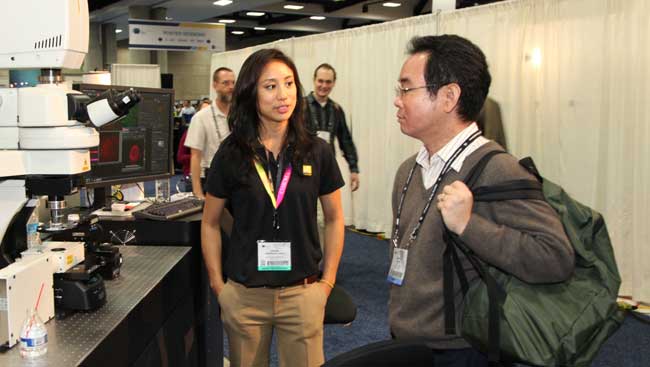 Webinar Professional DevelopmentThis resource was featured in the NeuroJobs Career Center. Visit today to search the world’s largest source of neuroscience opportunities. Networking is easier than you think with these practical tips from scientists successfully working outside of academia. Hear their personal stories, advice, and insider secrets about networking you can use to help advance your career.Oct 31, 2014
 -
Journal ArticleThe medial prefrontal cortex (mPFC) plays a pivotal role in regulating working memory, executive function, and self-regulatory behaviours. Dysfunction in mPFC circuits is a characteristic feature of several neuropsychiatric disorders including schizophrenia, depression, and post-traumatic stress disorder. Chronic stress (CS) is widely recognized as a major triggering factor for the onset of these disorders. Although evidence suggests synaptic dysfunction in mPFC circuits following CS exposure, it remains unclear how different neuronal populations in the infralimbic (IL) and prelimbic (PL) cortices are affected in terms of synaptic inhibition-excitation balance (I/E ratio). Here, using neuroproteomics analysis and whole-cell patch-clamp recordings in pyramidal neurons and parvalbumin interneurons (PV) within the PL and IL cortices, we examined the synaptic changes after 21 days of chronic unpredictable stress, in male mice. Our results reveal distinct impacts of CS on PL- and IL-pyramidal neurons, resulting...Aug 15, 2024
-
Journal ArticleVolatile anesthetics are currently believed to cause unconsciousness by acting on one or more molecular targets including neural ion channels, receptors, mitochondria, synaptic proteins, and cytoskeletal proteins. Anesthetic gases including isoflurane bind to cytoskeletal microtubules (MTs) and dampen their quantum optical effects, potentially contributing to causing unconsciousness. This possibility is supported by the finding that taxane chemotherapy consisting of microtubule-stabilizing drugs reduces the effectiveness of anesthesia during surgery in human cancer patients. In order to experimentally assess the contribution of MTs as functionally relevant targets of volatile anesthetics, we measured latencies to loss of righting reflex (LORR) under 4% isoflurane in male rats injected subcutaneously with vehicle or 0.75 mg/kg of the brain-penetrant microtubule-stabilizing drug epothilone B (epoB). EpoB-treated rats took an average of 69 seconds longer to become unconscious as measured by latency to LORR. T...Aug 15, 2024




