



Filter
-
(133)
-
(733)
-
(4)
-
(1)
-
(47833)
-
(91)
-
(25)
-
(14)
-
(433)
-
(7)
-
(182)
-
(8)
-
(33)
-
(17)
-
(7)
-
(9)
-
(9)
-
(5)
-
(21)
-
(8)
-
(12)
-
(9)
-
(3)
-
(10)
-
(10)
-
(56)
-
(45)
-
(12)
-
(3)
-
(7)
-
(6)
-
(5)
-
(8)
-
(7)
-
(11)
-
(58)
-
(13)
-
(30)
-
(8)
-
(5)
-
(10)
-
(5)
-
(15)
-
(4)
2001 - 2010
of 52756 results
-
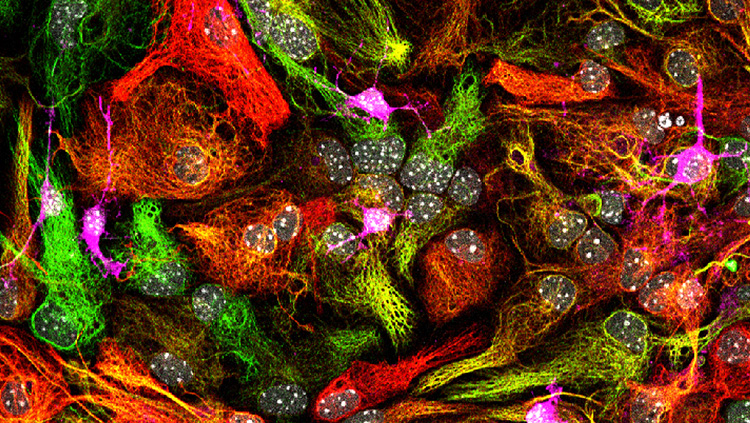 Article Professional DevelopmentThe Neuroscience Scholars Program is a two-year training program open to underrepresented graduate students and postdoctoral researchers. Building on 40 years of historic engagement, the program supports annual travel awards, mentoring, and the professional development of NSP Fellows and Associates. All materials available in this archive are provided open access to the field and are supported by the National Institute of Neurological Disorders and Stroke (NINDS). The contents of this series are solely the responsibility of the Society for Neuroscience and do not necessarily reflect the official views of NINDS. Learn more about the Neuroscience Scholars Program. Program Year 2021–2022Aug 3, 2015
 -
 Journal ArticleDecision bias influences estimates of the absolute visual threshold. However, most psychophysical estimates of the murine absolute visual threshold have not taken bias into account. Here we developed a one-alternative forced choice (1AFC) assay to assess decision bias of mice at the absolute visual threshold via the theory of signal detection, and compared our approach with the more conventional high-threshold theoretic approach. In the 1AFC assay, mice of both sexes were trained to signal whether they detected a flash stimulus. We directly measured both Hit and False Alarm rates, which were used to estimate d′ . Using the theory of signal detection we obtained absolute thresholds by interpolating the intensity where d′ = 1 from d′ psychometric functions. This gave bias-independent estimates of the absolute visual threshold which ranged over 6-fold, averaging ∼1R* in 1,000 rods (n = 7 mice). To obtain high-threshold theoretic estimates of absolute visual threshold from the same mice, we estimated threshold...Sep 24, 2024
 -
Journal ArticleAlcohol use disorder (AUD) is a significant global health issue. Despite historically higher rates among men, AUD prevalence and negative alcohol-related outcomes in women are rising. Loneliness in humans has been associated with increased alcohol use, and traditional rodent drinking models involve single housing, presenting challenges for studying social enrichment. We developed LIQ PARTI (Lick Instance Quantifier with Poly-Animal RFID Tracking Integration), an open-source tool to examine home cage continuous access two-bottle choice drinking behavior in a group-housed setting, investigating the influence of sex and social isolation on ethanol consumption and bout microstructure in C57Bl/6J mice. LIQ PARTI, based on our previously developed single-housed LIQ HD system, accurately tracks drinking behavior using capacitive-based sensors and RFID technology. Group-housed female mice exhibited higher ethanol preference than males, while males displayed a unique undulating pattern of ethanol preference linked ...Sep 24, 2024
-
Journal ArticleAutonoetic consciousness (ANC), the ability to re-experience personal past events links episodic memory and self-consciousness by bridging awareness of oneself in a past event (i.e. during its encoding) with awareness of oneself in the present (i.e. during the reliving of a past event). Recent neuroscience research revealed a bodily form of self-consciousness, including the sense of agency (SoA) and the sense of body ownership (SoO) that are based on the integration of multisensory bodily inputs and motor signals. However, the relation between SoA and/or SoO with ANC is not known. Here, we used immersive virtual reality technology and motion tracking and investigated the potential association of SoA/SoO with ANC. For this we exposed participants to different levels of visuo-motor and perspectival congruency, known to modulate SoA and SoO, during the encoding of virtual scenes and collected ANC ratings one week after the encoding session. In a total of 74 healthy participants, we successfully induced system...Sep 24, 2024
-
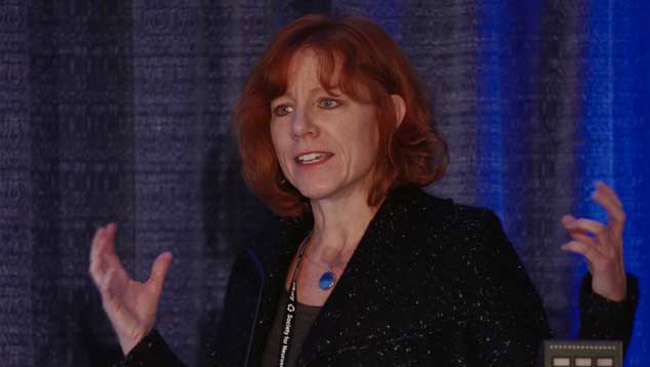 Video Career PathsYour to-do list in academia is long; you have to secure funding, publish, teach, manage your time, manage others, and somehow find time for a personal life. How do you prioritize these demands? How do you determine if you’re prioritizing successfully? Listen to neuroscience leaders talk about creative and effective ways they’ve defined and attained success in academic life.Jul 23, 2015
 -
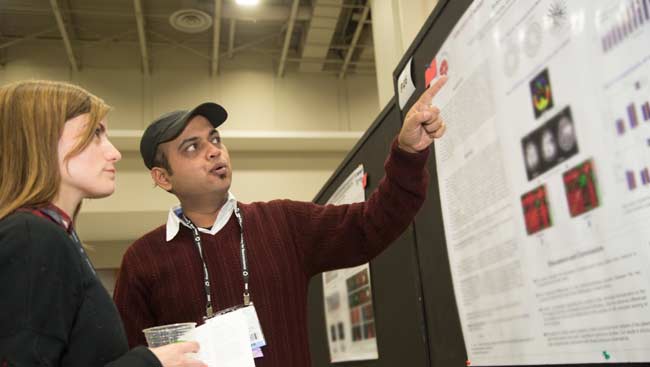 Article Professional DevelopmentCorrectly submitting your NIH grant application is just as important as writing it. Follow these practical steps to make sure your application successfully travels through the submission process.Jul 15, 2015
 -
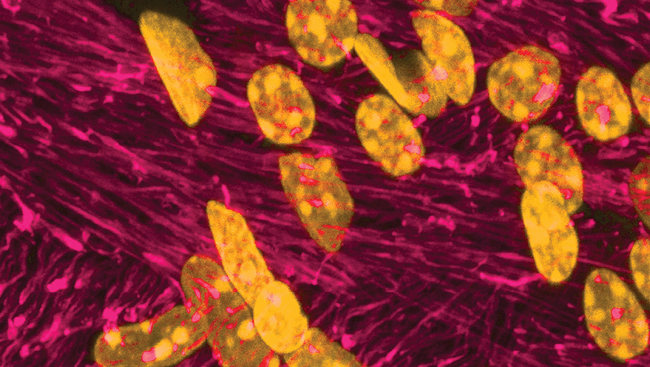 Article Scientific ResearchSharon L. Juliano, director of neuroscience and a professor at Uniformed Services University of the Health Sciences, discusses the importance of animals in research.Jul 15, 2015
 -
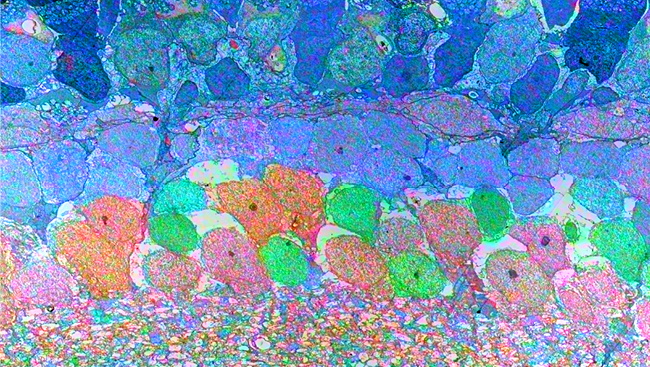 Article Scientific ResearchMapping activity in the brain requires both a wide lens — to see connections extending across brain regions — and a fine focus — to see the cells forming those connections. Two-photon microscopy coupled with calcium imaging meets the criteria for a fine focus; it can detect activity within individual neurons or within a local population of neurons.Jul 8, 2015
 -
 Article Professional DevelopmentBuilding an effective resume or CV is crucial in landing your ideal job. Knowing what to include and how to include it is the first step to a successful job hunt.Jul 8, 2015
 -
 Article AdvocacyAt the 21st Annual Coalition for National Science Funding (CNSF) Exhibition and Reception on Capitol Hill, SfN set up a booth where neuroscientists discussed their research with U.S. policymakers and staffers. Clara Scholl is one of the scientists who participated. Here, she shares her observations and takeaways about what advocacy is all about.Jul 8, 2015




