



Filter
-
(133)
-
(733)
-
(4)
-
(1)
-
(47833)
-
(91)
-
(25)
-
(14)
-
(433)
-
(7)
-
(181)
-
(8)
-
(33)
-
(17)
-
(7)
-
(9)
-
(9)
-
(5)
-
(21)
-
(8)
-
(12)
-
(9)
-
(3)
-
(10)
-
(10)
-
(56)
-
(45)
-
(12)
-
(3)
-
(7)
-
(6)
-
(5)
-
(8)
-
(7)
-
(11)
-
(58)
-
(13)
-
(30)
-
(8)
-
(5)
-
(10)
-
(5)
-
(14)
-
(4)
1531 - 1540
of 52754 results
-
 Journal ArticleFragile X autosomal homolog 1 (FXR1), a member of the fragile X messenger riboprotein 1 family, has been linked to psychiatric disorders including autism and schizophrenia. Parvalbumin (PV) interneurons play critical roles in cortical processing, and have been implicated in FXR1-linked mental illnesses. Targeted deletion of FXR1 from PV interneurons in mice has been shown to alter cortical excitability and elicit schizophrenia-like behavior. This indicates that FXR1 regulates behaviorally relevant electrophysiological functions in PV interneurons. We therefore expressed a genetically-encoded hybrid voltage sensor in PV interneurons, and used voltage imaging in slices of mouse somatosensory cortex to assess the impact of targeted FXR1 deletion. These experiments showed that PV interneurons lacking FXR1 had excitatory synaptic potentials with larger amplitudes and shorter latencies compared to wild type. Synaptic potential rise-times, decay-times, and half-widths were also impacted to degrees that varied bet...Jan 3, 2025
 -
Journal ArticleA comprehensive analysis of everyday sound perception can be achieved using Electroencephalography (EEG) with the concurrent acquisition of information about the environment. While extensive research has been dedicated to speech perception, the complexities of auditory perception within everyday environments, specifically the types of information and the key features to extract, remain less explored. Our study aims to systematically investigate the relevance of different feature categories: discrete sound-identity markers, general cognitive state information, and acoustic representations, including discrete sound onset, the envelope, and mel-spectrogram. Using continuous data analysis, we contrast different features in terms of their predictive power for unseen data and thus their distinct contributions to explaining neural data. For this, we analyse data from a complex audio-visual motor task using a naturalistic soundscape. The results demonstrated that the feature sets that explain the most neural varia...Jan 3, 2025
-
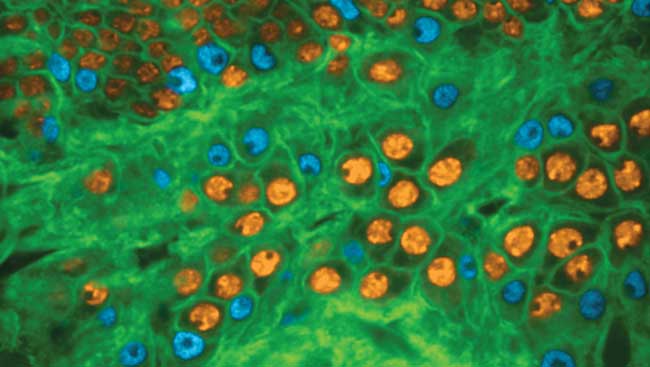 Article Scientific ResearchSonic Hedgehog (Shh) signaling contributes to the specification of midbrain dopamine neurons, which go on to form the ventral tegmental area (VTA) and substantia nigra pars compacta (SNc).Jun 1, 2017
 -
 Article Scientific ResearchScientific rigor broadly means good experimental practice. It means that other people can replicate your work and understand exactly what you did in the course of your experiments.Jun 1, 2017
 -
 Article AdvocacyWhen Michael Wells attended SfN's 2017 Hill Day to advocate for federal funding of biomedical research, his reach went far beyond the Capitol. In between meetings with lawmakers, he also facilitated an engaging, personal conversation on mental health through the band Passion Pit’s Twitter handle. Throughout the year, Wells also makes it a priority to communicate how advances in scientific research connect to the human experience. Here, he shares what he’s learned about the importance of audience-first communication online and in-person.May 30, 2017
 -
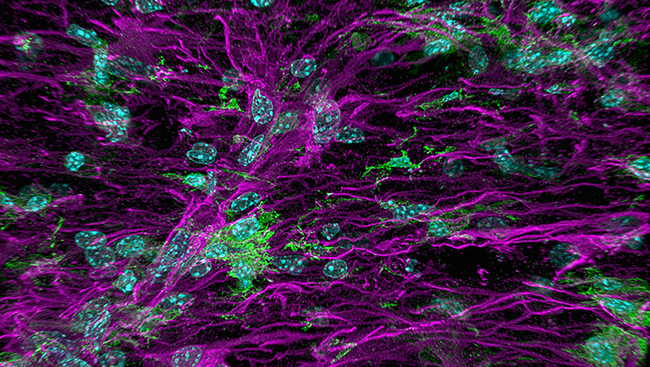 Article Annual Meeting Scientific ResearchPhysicians first noted severe mental illness ran in families nearly a century ago.May 30, 2017
 -
Journal ArticleThe subjective visual vertical (VV), the visually estimated direction of gravity, is essential for assessing vestibular function and visuospatial cognition. In this study, we aimed to investigate the mechanisms underlying altered VV perception in stroke participants with unilateral spatial neglect (USN), specifically by examining their eye movement patterns during VV judgment tasks. Participants with USN demonstrated limited eye movement scanning along a rotating bar, often fixating on prominent ends, such as the top or bottom. This suggests a reflexive response to visually salient areas, potentially interfering with accurate VV perception. In contrast, participants without USN showed broader scanning around the center of the bar. Notably, participants with USN without frontal lobe lesions occasionally exhibited extended scanning that included the bar’s center, which was associated with accurate VV judgments. These findings suggest that (1) a tendency to fixate on peripheral, prominent areas and (2) fronta...Jan 2, 2025
-
Journal ArticleCuprizone (CPZ) is a widely used toxin that induces demyelinating diseases in animal models, producing multiple sclerosis (MS)-like pathology in rodents. CPZ is one of the few toxins that triggers demyelination and subsequent remyelination following the cessation of its application. This study examines the functional consequences of CPZ-induced demyelination and the subsequent recovery of neural communication within the anterior cingulate cortex (ACC), with a particular focus on inter-hemispheric connectivity via the corpus callosum. By employing wide-field, high-speed, voltage-sensitive dye imaging, we were able to provide real-time mapping of neural activity in the ACC of CPZ-fed mice. Although we could not record physiological signals from the corpus callosum, the results demonstrated a notable impairment in inter-hemispheric connections within the ACC via the corpus callosum, with the most pronounced loss observed in a specific coronal slice among a series of slices examined. Notably, the latency of ne...Jan 2, 2025
-
Journal ArticleThe social environment has long been recognized to play an important role in substance use, which is often modeled in rodents using operant conditioning. However, most operant chambers only accommodate one rodent at a time. We present PeerPub - a unique social operant chamber. PeerPub employs touch sensors to track the licking behavior on drinking spouts. When the number of licks meets a set reinforcement schedule, it dispenses a drop of solution with a fixed volume as a reward at the tip of the spout. A radio-frequency identification (RFID) chip implanted on each rat's skull identifies it throughout the experiment. The system is managed by a Raspberry Pi computer. We evaluated PeerPub using Sprague Dawley rats in daily one-hour sessions, where supersac (a glucose and saccharin solution) was provided under a fixed ratio 5 schedule. We discovered that male rats consumed more supersac in dual rat conditions compared to single rat conditions. These findings illustrate PeerPub's effectiveness in modeling the i...Jan 2, 2025
-
Journal ArticleEpilepsy, a neurological disorder characterized by recurrent unprovoked seizures, significantly impacts patient quality of life. Current classification methods focus primarily on clinical observations and electroencephalography (EEG) analysis, often overlooking the underlying dynamics driving seizures. This study uses surface EEG data to identify seizure transitions using a dynamical systems–based framework—the taxonomy of seizure dynamotypes—previously examined only in invasive data. We applied principal component and independent component analysis to surface EEG recordings from 1,177 seizures in 158 patients with focal epilepsy, decomposing the signals into independent components (ICs). The ICs were visually labeled for clear seizure transitions and bifurcation morphologies, which were then examined using Bayesian multilevel modeling in the context of clinical factors. Our analysis reveals that certain onset bifurcations (SNIC and SupH) are more prevalent during wakefulness compared to their reduced rat...Jan 2, 2025




