



Filter
-
(133)
-
(733)
-
(4)
-
(1)
-
(47833)
-
(91)
-
(25)
-
(14)
-
(433)
-
(7)
-
(181)
-
(8)
-
(33)
-
(17)
-
(7)
-
(9)
-
(9)
-
(5)
-
(21)
-
(8)
-
(12)
-
(9)
-
(3)
-
(10)
-
(10)
-
(56)
-
(45)
-
(12)
-
(3)
-
(7)
-
(6)
-
(5)
-
(8)
-
(7)
-
(11)
-
(58)
-
(13)
-
(30)
-
(8)
-
(5)
-
(10)
-
(5)
-
(14)
-
(4)
1511 - 1520
of 52754 results
-
 Journal ArticleVisual information emerging from the extrafoveal locations is important for visual search, saccadic eye movement control, and spatial attention allocation. Our everyday sensory experience with visual object categories varies across different parts of the visual field which may result in location-contingent variations in visual object recognition. We used a body, animal body, and chair two-forced choice object category recognition task to investigate this possibility. Animal body and chair images with various levels of visual ambiguity were presented at the fovea and different extrafoveal locations across the vertical and horizontal meridians. We found heterogeneous body and chair category recognition across the visual field. Specifically, while the recognition performance of the body and chair presented at the fovea were similar, it varied across different extrafoveal locations. The largest difference was observed when the body and chair images were presented at the lower-left and upper-right visual fields...Jan 9, 2025
 -
 Article Professional DevelopmentBig data offer exciting opportunities to derive insights and make synergistic connections across many levels of inquiry.Jul 11, 2017
 -
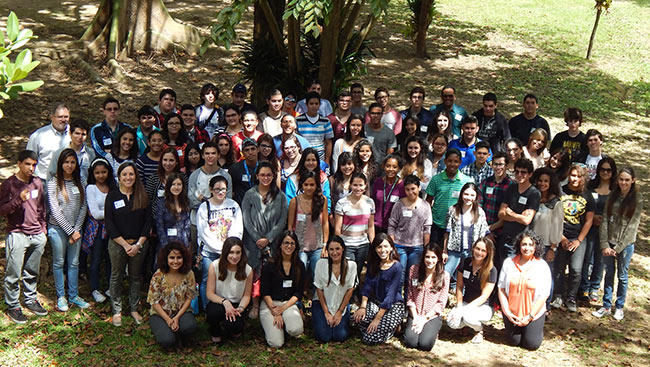 Article OutreachAlexandra Colón-Rodríguez, a postdoc at the University of California, Davis, became a neuroscientist after seeing family members suffer from Alzheimer’s and PTSD. She wanted to find out for herself and others why these diseases happen. Colón-Rodríguez is also passionate about outreach. She shares her own experience as a Puerto Rican woman advancing in the field to inspire others, especially females and underrepresented minorities, to become neuroscientists. Here’s her story.Jul 11, 2017
 -
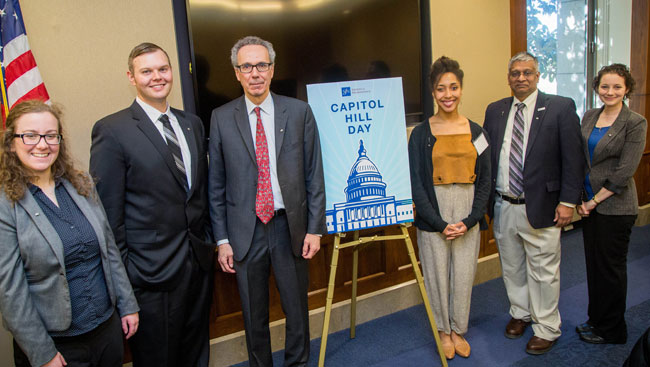 Webinar AdvocacyNeuroscientists at all career stages have meaningful perspectives to share with policymakers about why supporting the scientific enterprise is so important for the field and society. In this webcast, you will learn ways that you can persuasively advocate for science, and hear how recent Congressional actions may impact funding for biomedical research issues and your work.Jul 7, 2017
 -
Journal ArticleThe brain attends to environmental rhythms by aligning the phase of internal oscillations. However, the factors underlying fluctuations in the strength of this phase entrainment remain largely unknown. In the present study we examined whether the strength of low-frequency EEG phase entrainment to rhythmic stimulus sequences varied with pupil size and posterior alpha-band power, thought to reflect arousal level and excitability of posterior cortical brain areas, respectively. We recorded pupil size and scalp EEG while participants carried out an intermodal selective attention task, in which they were instructed to attend to a rhythmic sequence of visual or auditory stimuli and ignore the other perceptual modality. As expected, intertrial phase coherence (ITC), a measure of entrainment strength, was larger for the task-relevant than for the task-irrelevant modality. Across the experiment, pupil size and posterior alpha power were strongly linked with each other. Interestingly, ITC tracked both variables: lar...Jan 8, 2025
-
 Article Scientific ResearchPain is a conscious experience that encompasses sensory, emotional, and cognitive dimensions.Jul 6, 2017
 -
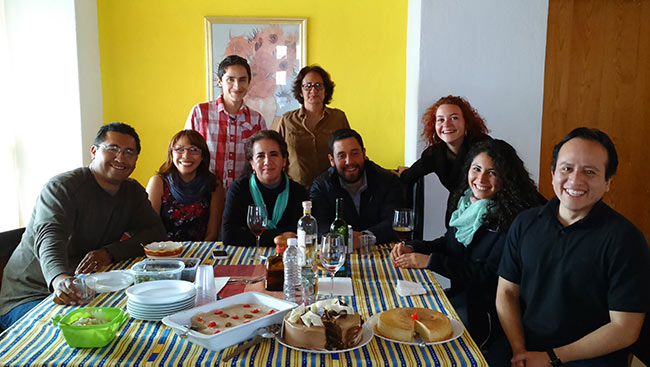 Article Professional DevelopmentTeresa Morales is an associate professor at the Institute for Neurobiology at the National Autonomous University of Mexico (UNAM).Jul 6, 2017
 -
 Article AdvocacyTell a good story. It’s a mantra we scientists live by. We all weave narratives into papers and talks, but the stories we tell stem from one common denominator: evidence.Jun 29, 2017
 -
 Article Scientific ResearchWorking memory is a central component of human goal-oriented behavior, reasoning, and decision-making.Jun 29, 2017
 -
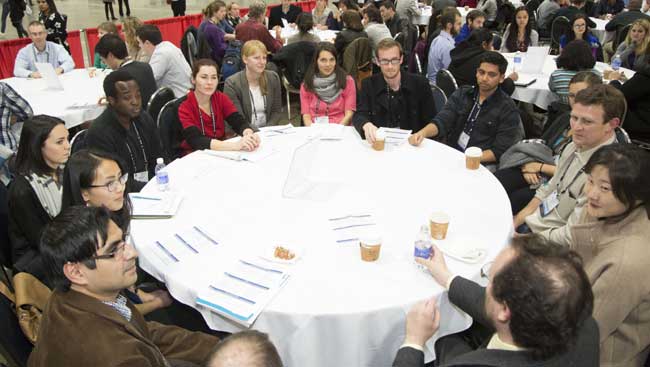 Video Annual Meeting Professional DevelopmentThere may be times when you have something to say but lack the confidence or skills to say what you think with clarity and grace. Sharing your opinions, raising an innovative or controversial idea, or challenging the status quo can take a lot of courage. Difficult discussions are par for the course in your career, but good communication and negotiation skills can help you think and speak with clarity and grace. This workshop will provide insight into best practices for interpreting a job offer, asking for what you want, and bringing colleagues around to your way of thinking. The fears that often prevent people, especially women, from speaking up will also be addressed.Jun 28, 2017




