



Filter
-
(133)
-
(733)
-
(4)
-
(1)
-
(47832)
-
(91)
-
(25)
-
(14)
-
(433)
-
(7)
-
(181)
-
(8)
-
(33)
-
(17)
-
(7)
-
(9)
-
(9)
-
(5)
-
(21)
-
(8)
-
(12)
-
(9)
-
(3)
-
(10)
-
(10)
-
(56)
-
(45)
-
(12)
-
(3)
-
(7)
-
(6)
-
(5)
-
(8)
-
(7)
-
(11)
-
(58)
-
(13)
-
(30)
-
(8)
-
(5)
-
(10)
-
(5)
-
(14)
-
(4)
1421 - 1430
of 52753 results
-
 Journal ArticleThe adrenal medulla is packed with chromaffin cells, modified postganglionic sympathetic neurons that secrete the catecholamines, epinephrine and norepinephrine, during the fight-or-flight response. Sometimes overlooked, is a population of immune cells that also resides within the gland but whose distribution and function is not clear. Here I examine the location of CD45+ hematopoietic cells in the mouse adrenal medulla and show the majority are F4/80+/Lyz2+ macrophages. These cells are present from early post-natal development and widely distributed. Anatomically they are associated with chromaffin cells, found aligned alongside synapsin-ir neuronal varicosities and juxtaposed to CD31-ir blood vessels. Using Lyz2cre-GCaMP6f mice to quantify calcium signaling in macrophages revealed these cells respond directly and indirectly to a wide variety of neuromodulators, including pre- and post-ganglionic transmitters and systemic hormones. Purinergic agonists, histamine, acetylcholine and bradykinin rapidly and r...Feb 3, 2025
 -
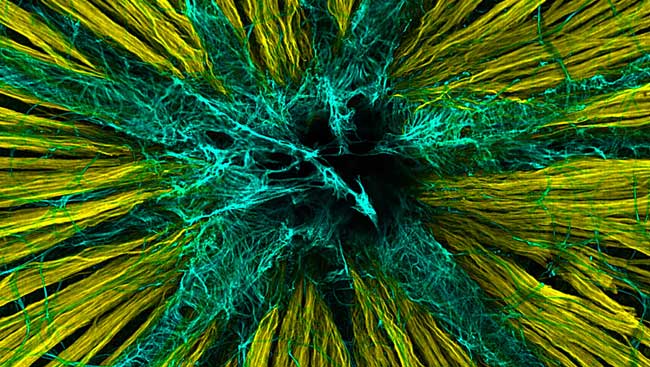 Article Professional Development“There are always new discoveries. It never ends,” says Angela Kim from Harvard Medical School on the most exciting aspect of studying neuroscience. As you prepare for another year of scientific discovery, professional development, and training, revisit Neuronline’s most popular resources from 2017. You’ll find fascinating scientific research, surprising facts about publishing a paper, a behind-the-scenes look at what goes into award-winning research, and more.Dec 12, 2017
 -
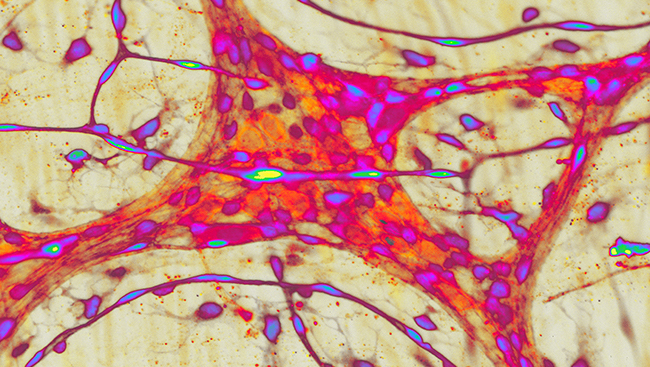 Article Annual Meeting Scientific ResearchMaterial below is adapted from the SfN Short Course, Adult Mouse Cortical Cell Taxonomy Revealed by Single-Cell Transcriptomics, by Bosiljka Tasic, PhD. Short Courses are day-long scientific trainings on emerging neuroscience topics and research techniques held just prior to SfN’s annual meeting. Single-cell RNA sequencing (RNA-seq) is a powerful tool that can help researchers look more deeply at individual cells, in order to better understand differences within tissues or groups of cells. One research team used RNA-seq to classify more than 1,600 cells from the cortex of adult male mice.Dec 12, 2017
 -
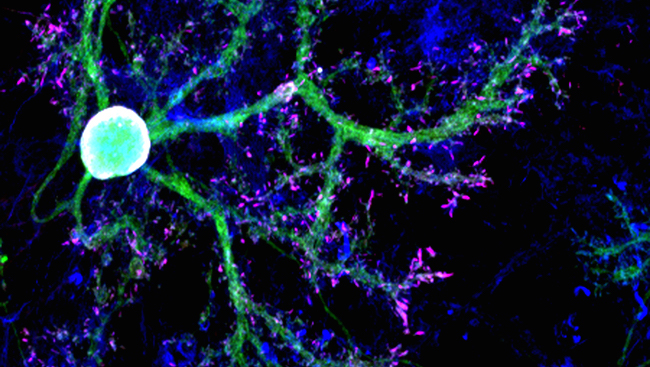 Article Career PathsPhillip West is an assistant professor of microbial pathogenesis and immunology at the Texas A&M University Health Science Center. He led a breakout group at the 2016 Neurobiology of Disease Workshop, From Pediatric Encephalopathy to Alzheimer's: Linking Mitochondria to Neurological Diseases, and presented in 2017 follow-up webinar, Linking Mitochondria to Neurological Disease. Here, he shares what led him to this research path and why it excites him. As told to, and edited by, SfN staff.Dec 6, 2017
 -
 Journal ArticleThe use of supervised machine learning to approximate poses in video recordings allows for rapid and efficient analysis of complex behavioral profiles. Currently, there are limited protocols for automated analysis of operant self-administration behavior. We provide a methodology to (1) obtain videos of training sessions via Raspberry Pi microcomputers or GoPro cameras, (2) obtain pose estimation data using the supervised machine learning software packages DeepLabCut (DLC) and Simple Behavioral Analysis (SimBA) with a local high-performance computer cluster, (3) compare standard Med-PC lever response versus quadrant time data generated from pose estimation regions of interest, and (4) generate predictive behavioral classifiers. Overall, we demonstrate proof of concept to use pose estimation outputs from DLC to both generate quadrant time results and obtain behavioral classifiers from SimBA during operant training phases.Feb 1, 2025
 -
 Journal ArticleBreathing is a complex neuromuscular process vital to sustain life. In preclinical animal models, the study of respiratory motor control is primarily accomplished through neurophysiologic recordings and functional measurements of respiratory output. Neurophysiologic recordings that target neural or muscular output via direct nerve recordings or respiratory muscle electromyography (EMG) are commonly collected during anesthetized conditions. While offering tight control of experimental preparations, the use of anesthesia results in respiratory depression, may impact cardiovascular control, eliminates the potential to record volitional nonventilatory behaviors, and can limit translation. Since the diaphragm is a unique muscle which is rhythmically active and difficult to access, placing diaphragm EMGs to collect chronic recordings in awake animals is technically challenging. Here, we describe methods for fabricating and implanting indwelling diaphragm EMG electrodes to enable recordings from awake rodents for...Feb 1, 2025
 -
Journal ArticleThe amygdala is believed to make invaluable contributions to visual emotion processing. Yet how this subcortical body contributes to emotion perception across time is contended. Here, we measured differences in the perceptual processing of emotional stimuli after unilateral temporal lobe and amygdala resection (TLR) in humans, using EEG. Through mass univariate analysis of brain activity, we compared responses to fearful and neutral faces (left TLR N = 8, right TLR N = 8, control N = 8), and fearful and neutral bodies (left TLR N = 9, right TLR N = 9, control N = 9). We found that TLR impaired the early-stage perceptual processing of emotional stimuli seen in the control group. Indeed, in controls a heightened responses to fearful faces was found in the 140–170 ms time window, over temporoparietal electrodes. This effect was also present in the left TLR group but disappeared in the right TLR group. For emotional bodies, brain activity was differentially sensitive to fearful stimuli at 90–120 ms in th...Feb 1, 2025
-
 Journal ArticleSpeech intelligibility declines with age and sensorineural hearing damage (SNHL). However, it remains unclear whether cochlear synaptopathy (CS), a recently discovered form of SNHL, significantly contributes to this issue. CS refers to damaged auditory-nerve synapses that innervate the inner hair cells and there is currently no go-to diagnostic test available. Furthermore, age-related hearing damage can comprise various aspects (e.g., hair cell damage, CS) that each can play a role in impaired sound perception. To explore the link between cochlear damage and speech intelligibility deficits, this study examines the role of CS for word recognition among older listeners. We first validated an envelope-following response (EFR) marker for CS using a Budgerigar model. We then applied this marker in human experiments, while restricting the speech material’s frequency content to ensure that both the EFR and the behavioral tasks engaged similar cochlear frequency regions. Following this approach, we identified the ...Feb 1, 2025
 -
 Journal ArticleThe behavioral interactions between adults and newborns are decisive for the fitness and the survival of offspring across the animal kingdom. In laboratory mice, while virgin females display caregiving behaviors, virgin males are rather neglectful or aggressive toward pups. Despite the importance of these behavioral variations, the underlying neural mechanisms remain poorly understood. Brain regions encoding these behaviors may exhibit sex-dependent functional differences at the baseline. Additionally, these structures might undergo sex-specific plasticity after adults interact with the offspring. Emerging evidence suggests sex-based differences in input connectivity, genetics, and receptor expression of the epithalamic lateral habenula (LHb). Moreover, LHb neuronal activity is instrumental for adult–newborn interactions. However, whether LHb neuronal function varies between sexes and/or undergoes adaptations following interactions with pups has not been fully investigated. In this study, we used in vivo a...Feb 1, 2025
 -
 Journal ArticleThe role of sleep in memory consolidation is a widely discussed but still debated area of research. In light of the fact that memory consolidation during sleep is an evolutionary adaptive function, investigating the same phenomenon in nonhuman model species is highly relevant for its understanding. One such species, which has acquired human-analog sociocognitive skills through convergent evolution, is the domestic dog. Family dogs have surfaced as an outstanding animal model in sleep research, and their learning skills (in a social context) are subject to sleep-dependent memory consolidation. These results, however, are correlational, and the next challenge is to establish causality. In the present study, we aimed to adapt a TMR (targeted memory reactivation) paradigm in dogs and investigate its effect on sleep parameters. Dogs ( N = 16) learned new commands associated with different locations and afterward took part in a sleep polysomnography recording when they were re-exposed to one of the previously l...Feb 1, 2025




