



Filter
-
(133)
-
(733)
-
(4)
-
(1)
-
(47830)
-
(91)
-
(25)
-
(14)
-
(433)
-
(7)
-
(181)
-
(8)
-
(33)
-
(17)
-
(7)
-
(9)
-
(9)
-
(5)
-
(21)
-
(8)
-
(12)
-
(9)
-
(3)
-
(10)
-
(10)
-
(56)
-
(45)
-
(12)
-
(3)
-
(7)
-
(6)
-
(5)
-
(8)
-
(7)
-
(11)
-
(58)
-
(13)
-
(30)
-
(8)
-
(5)
-
(10)
-
(5)
-
(14)
-
(4)
1261 - 1270
of 52751 results
-
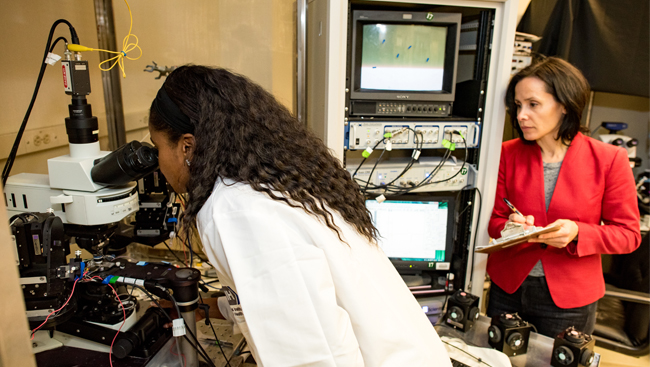 Poster Training Series TrainingLearn the fundamentals of ex vivo applications of optogenetic manipulations, including basic experimental design and required equipment. After reviewing the materials in Module 3, you should be able to: - Define the type of scientific questions that can be addressed using optogenetics in ex vivo preparations, and provide examples. - Understand proper experimental design of ex vivo optogenetic experiments. - Compare optogenetics to alternative ex vivo methodologies. - List key concepts in the design and interpretation of ex vivo optogenetic experiments. - Discuss the basic setup of ex vivo optogenetic experiments.Aug 1, 2018
 -
 Video Training Series TrainingThis presentation features the series co-organizers, Kamran Khodakhah, Alexandra Nelson, and Veronica Alvarez. Learn basic information about optogenetics and hear an overview of this training series, which provides foundational information to help neuroscientists better understand how to rigorously and effectively implement optogenetics methods in their research. After reviewing the video in Module 1, you should be able to: - Describe what optogenetics is and for what it was developed. - Understand the objectives of SfN’s optogenetics training series. - Understand the organization of the training series and how to engage with the resources.Aug 1, 2018
 -
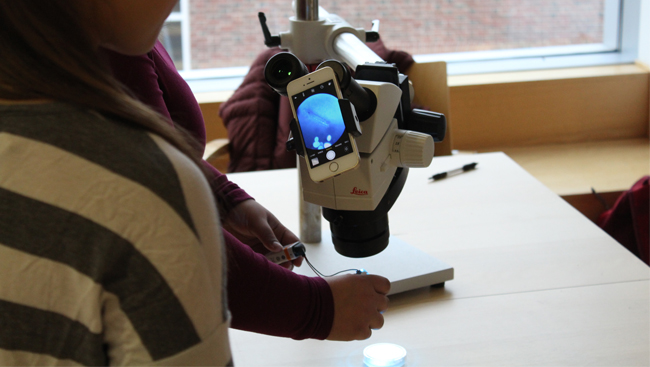 Poster Training Series TrainingLearn how to bring optogenetics into undergraduate teaching labs using Drosophila or C. elegens models. You will get ideas from the demonstration video, lists of resources, and first-hand case studies prepared by Heather Rhodes, who works at the undergraduate institution, Denison University. After reviewing the materials in Module 5, you should be able to: - Access readily available C. elegans or Drosophila lines to demonstrate optogenetics in the classroom. - Understand how to assemble simple, low-cost equipment to conduct these experiments. - Use provided resources to run hands-on, inquiry-based student experiments.Aug 1, 2018
 -
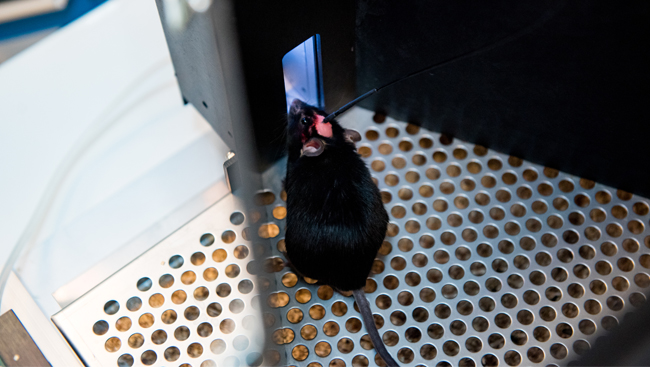 Training Series Poster TrainingLearn some of the common uses of optogenetics in an in vivo setting, as well as basic implementation strategies. After reviewing the materials in Module 4, you should be able to: - Describe several types of in vivo experiments in which optogenetics can be useful. - Describe basic experimental design used for in vivo optogenetic studies, including choice of optimal tools, stimulation parameters, and controls. - Identify some common potential confounds in optogenetic stimulation. - Describe key ways to validate optogenetic tools for in vivo experiments.Aug 1, 2018
 -
 Poster Training Series TrainingLearn the key technical issues that arise in the design and interpretation of optogenetics experiments. After reviewing the materials in Module 7, you should be able to: - Discuss how to select optimal tools and stimulation parameters for an optogenetics experiment. - Identify potential confounds related to stimulus parameters. - Describe key methods to validate optogenetic tools.Aug 1, 2018
 -
 Poster Training Series TrainingLearn about some major confounds, caveats, and limitations of optogenetics approaches. After reviewing the materials in Module 8, you should be able to: - Understand and control for potential confounds of in vivo optogenetic manipulations, including off-target expression of opsins, toxicity, and unintended effects of light delivery. - Describe the surprising and unintended effects of photostimulation on opsin-expressing neurons and downstream neural circuits, and how to use these effects to your advantage. - Understand and minimize potential confounds of synaptic plasticity and complex neurochemistry in the interpretation of in vivo optogenetic studies.Aug 1, 2018
 -
 Poster TrainingLearn basic approaches for implementing optogenetics methods to investigate brain function, including how to choose optogenetics versus other approaches, parameters for opsin selection, and pros and cons of different delivery methods. After reviewing the materials in Module 2, you should be able to: - Identify the advantages and disadvantages of optogenetic techniques compared to other techniques that explore the neural basis of behavior. - Understand the basic parameters of optogenetic tools. - Understand how to design appropriate light trains for optogenetic stimulation by taking account of the kinetics of optogenetic actuators. - Describe how to obtain and validate expression of optogenetic tools. - Identify factors important to consider when using optogenetic tools in combination with each other or other optical methods. - Describe pros and cons of different opsin delivery methods. - Comprehend the importance of adeno-associated virus (AAV) serotypes in regulating tropism, retrograde versus anterograde transport, and other factors.Aug 1, 2018
 -
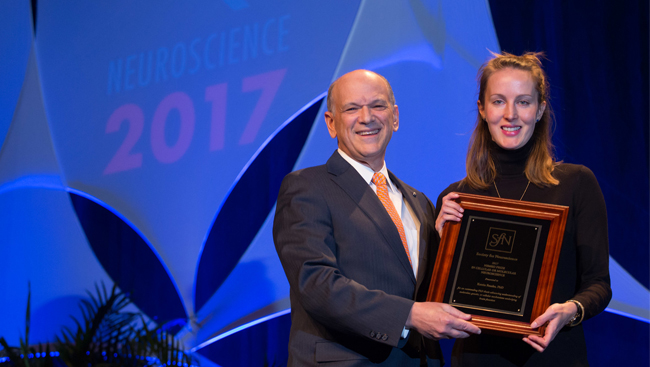 Article Annual Meeting Scientific ResearchKatrin Franke’s research seeks to understand how the retinal network disassembles complex visual input. Previous research on this topic conducted by the field often focused on individual types of retinal cells, but Franke sought to record complete populations of neurons to capture the full functional diversity of parallel retinal channels. Through her approach, her findings have increased the understanding of how the mammalian retina processes visual information. For her outstanding work, she was awarded the Nemko Prize in Cellular or Molecular Neuroscience in 2017. What led to your interest in visual processing? Information processing in the visual system first attracted my interest as a master’s student at Tübingen University in a lecture series about the retina as a model system in neuroscience. I found it extremely fascinating that retinal cells perform computations to “decide” what’s important enough to be sent to the brain, determining what we see. I decided to do a PhD in this field because I wanted to better understand how the retina decomposes the incoming visual stream into its relevant components that can then be interpreted by the brain. In the last few years, I developed a strong interest in visual ecology, which aims to understand how different animal species use their visual systems to meet their ecological needs. I think investigating visual processing and comparing findings from different species is exciting and essential to discover universal and general principles of vision.Jul 31, 2018
 -
 Journal ArticleBeta event-related spectral perturbation (ERSP), including bilateral movement-related beta desynchronization (MRBD) and post-movement beta synchronization (PMBS), can be evoked by unilateral speed movement. A potential correlation might exist between power (de)synchronization and interhemispheric coherence during movement execution. However, during the PMBS phase, the existence of interhemispheric coupling and the effect of speed on it are largely undiscovered. This study aimed to answer this question. In the present study, we investigated eight healthy, right-handed volunteers using a combination of electroencephalography (EEG), transcranial magnetic stimulation (TMS), and electromyography (EMG). We explored interhemispheric (directed) coherence during isotonic right index finger abduction movements at two speeds: ballistic and self-paced. We discovered that: (i) Compared to the MRBD period, interhemispheric coherence was greater during the PMBS period. Furthermore, ballistic movement induced a larger coh...Mar 11, 2025
 -
Journal ArticleAlpha (8-12 Hz) oscillations and default mode network (DMN) activity dominate the brain’s intrinsic activity in the temporal and spatial domains, respectively. They are thought to play crucial roles in the spatiotemporal organization of the complex brain system. Relatedly, both have been implicated, often concurrently, in diverse neuropsychiatric disorders, with accruing electroencephalogram/magnetoencephalogram (EEG/MEG) and functional magnetic resonance imaging (fMRI) data linking these two neural activities both at rest and during key cognitive operations. Prominent theories and extant findings thus converge to suggest a mechanistic relationship between alpha oscillations and the DMN. Here, we leveraged simultaneous EEG-fMRI data acquired before and after alpha-frequency transcranial alternating current stimulation ( α -tACS) and observed that α -tACS tightened the dynamic coupling between spontaneous fluctuations in alpha power and DMN connectivity (especially, in the posterior DMN, between the posteri...Mar 11, 2025




