



Filter
-
(133)
-
(733)
-
(4)
-
(1)
-
(47830)
-
(91)
-
(25)
-
(14)
-
(433)
-
(7)
-
(181)
-
(8)
-
(33)
-
(17)
-
(7)
-
(9)
-
(9)
-
(5)
-
(21)
-
(8)
-
(12)
-
(9)
-
(3)
-
(10)
-
(10)
-
(56)
-
(45)
-
(12)
-
(3)
-
(7)
-
(6)
-
(5)
-
(8)
-
(7)
-
(11)
-
(58)
-
(13)
-
(30)
-
(8)
-
(5)
-
(10)
-
(5)
-
(14)
-
(4)
1251 - 1260
of 52751 results
-
 Article Professional DevelopmentDeciding to apply to graduate school is a big decision. The admission timeline for most PhD programs in the United States begins one year before enrollment. Meaning, if you want to go straight to grad school from undergrad, you’ll have to apply during your senior year. While a seamless transition may be appealing, it’s important to consider the strength of your application with respect to your target programs and schools. In my experience, a gap year, an increasingly popular option for many prospective graduate students, offers a chance to gain the financial capital to apply, brush up on skills and experiences, reflect on what you want out of grad school, and further develop as an aspiring scientist.Aug 28, 2018
 -
.jpg) Article Professional DevelopmentAs you near the end of your undergraduate career, you may ask yourself, “What comes next?” Amy Jo Stavnezer, an undergraduate professor at the College of Wooster, suggests thinking about your end goals, including what you want to be doing in five or ten years and what paths can lead you there. If graduate school is part of your plan, deciding when to start and which program can be complicated. To help you navigate the process, Stavnezer answers commonly asked questions from undergraduate students.Aug 22, 2018
Article Professional DevelopmentAs you near the end of your undergraduate career, you may ask yourself, “What comes next?” Amy Jo Stavnezer, an undergraduate professor at the College of Wooster, suggests thinking about your end goals, including what you want to be doing in five or ten years and what paths can lead you there. If graduate school is part of your plan, deciding when to start and which program can be complicated. To help you navigate the process, Stavnezer answers commonly asked questions from undergraduate students.Aug 22, 2018 -
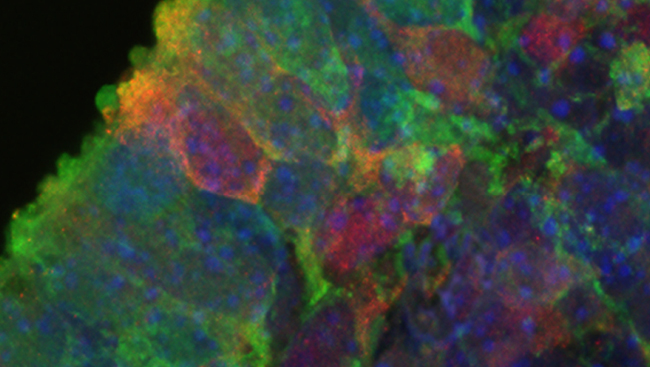 Article Annual Meeting Scientific ResearchMaterial below is adapted from the SfN Short Course, The Maternal Interleukin-17a Pathway in Mice Promotes Autism-Like Phenotypes in Offspring by Gloria B. Choi, PhD, Yeong S. Yim, PhD, Helen Wong, PhD, Sangdoo Kim, PhD, Hyun Ju Kim, PhD, Sangwon V. Kim, PhD, Charles A. Hoeffer, PhD, Jun R. Huh, PhD, and Dan R. Littman, MD, PhD. Short Courses are day-long scientific trainings on emerging neuroscience topics and research techniques held just prior to SfN’s annual meeting. Researchers have shown before that if a mother has a viral infection during pregnancy, her baby has a higher chance of having autism spectrum disorder (ASD). Studies have also shown that activating the maternal immune system in mice leads to ASD-like symptoms in the mouse pups. But it was not clear how the mother’s immune system interacted with the fetal brain. Now, scientists have found that the development of ASD in offspring after maternal immune system activation requires the presence of IL-17a, a substance secreted by a type of immune cell called a T helper 17 (Th17) cell. It is possible that targeting the Th17 cells to prevent them from secreting IL-17a could prevent the development of ASD-like symptoms in the children of mothers whose immune systems are activated during pregnancy.Aug 21, 2018
 -
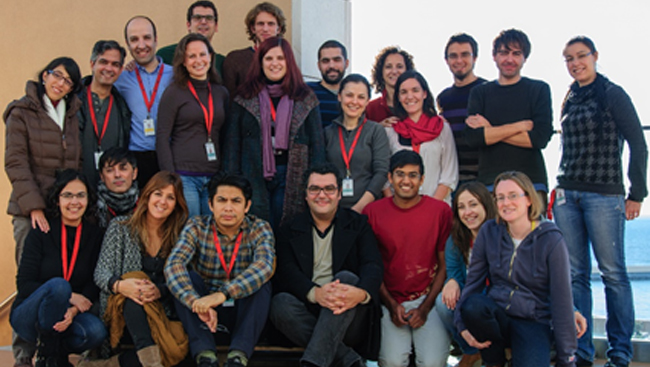 Article Professional DevelopmentWhat you learn during your postdoc could continue to shape your career even years later. Fatuel Tecuapetla, tenured researcher at the National Autonomous University of Mexico (UNAM), still incorporates valuable career and life lessons he discovered through his two postdocs abroad. Here, he reflects on how he made the decision to do a second postdoc, ways he grew as a scientist, and advice for young researchers. How did you approach your postdoctoral training? During my PhD at UNAM, I asked my advisers, "What do I need to do to have a position here one day?” To be competitive, they said I’d need good quality publications and the ability to bring something different to Mexico — a technique nobody else was doing, for example. I made a plan and focused on it. There were certain techniques I wanted to learn, so I tried to find labs that would help me. I then did two postdocs. One was at Rutgers University in Newark, New Jersey, and the other was at the Champalimaud Neuroscience Program in Lisbon, Portugal. The postdoc in Portugal had the biggest impact on my career. I ended up moving there for four years and learned techniques while collaborating with incredible people. By the time I was finishing my postdoc in Portugal, I was waiting for an open position at UNAM.Aug 16, 2018
 -
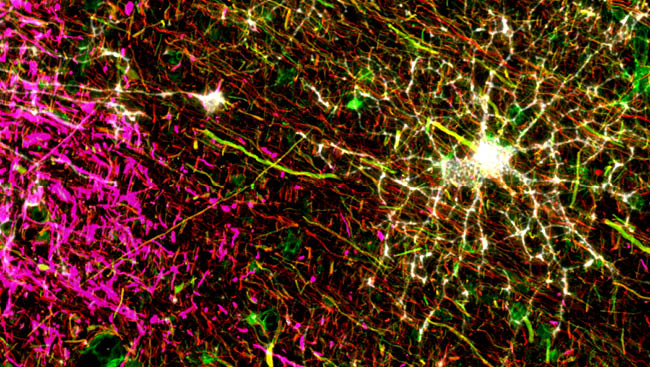 Article Scientific ResearchMaterial below summarizes the article, Bilingual Language Switching in the Lab vs. in the Wild: The Spatio-Temporal Dynamics of Adaptive Language Control, published on August 16, 2017, in JNeurosci and authored by Esti Blanco-Elorrieta and Liina Pylkkänen.Aug 15, 2018
 -
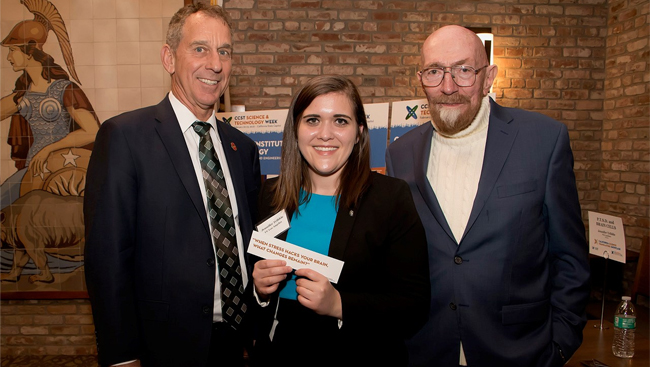 Article AdvocacyI believe science is a public good and provides a base of knowledge to improve lives. It’s why so much of science research is funded by taxpayers. Therefore, we scientists, have a responsibility to convince the public and policymakers about the merit of our research. We cannot afford to stay silent and must communicate about our work clearly and accurately. However, it can be easy to forget how unrelatable our work and lifestyle can be. The tools we use are unrecognizable, and we’re often kept up all night by our experiments (metaphorically and physically). We can lose sight of how critical it is to make our world as scientists more approachable to the public.Aug 14, 2018
 -
 Journal ArticleDelayed motor development is an early clinical sign of Fetal Alcohol Spectrum Disorders (FASD). However, changes at the neural circuit level that underlie early motor differences are underexplored. The striatum, the principal input nucleus of the basal ganglia, plays an important role in motor learning in adult animals, and the maturation of the striatal circuit has been associated with the development of early motor behaviors. Here, we briefly exposed pregnant C57BL/6 dams to ethanol (5% w/w) in a liquid diet on embryonic days (E)13.5-16.5, and assessed the mouse progeny using a series of 9 brief motor behavior tasks on postnatal days (P)2-14. Live brain slices were then obtained from behaviorally-tested mice for whole cell-voltage and current clamp electrophysiology to assess GABAergic/glutamatergic synaptic activity, and passive/active properties in two populations of striatal neurons: GABAergic interneurons and spiny striatal projection neurons. Electrophysiologically-recorded spiny striatal projection...Mar 14, 2025
 -
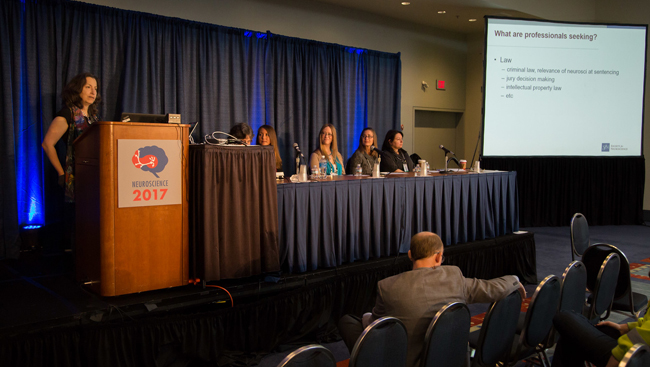 Video Annual Meeting OutreachEngagement is rewarding for individual neuroscientists and the field as a whole, but it can be challenging to effectively organize and perform. This Neuroscience 2017 workshop offers resources and hard-won perspectives on how to incorporate meaningful neuroscience public engagement into your professional portfolio without sacrificing other responsibilities.Aug 8, 2018
 -
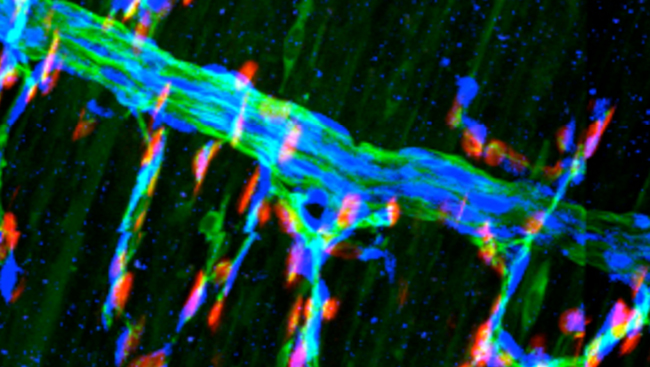 Article Scientific ResearchProtein synthesis, or mRNA translation, is a key step in the gene-expression pathway. Initiation of translation is the rate-limiting step in protein synthesis, where the majority of regulatory events occur. Eukaryotic initiation factor 4E (eIF4E) binds to the five-prime cap structure of mRNA and regulates translation initiation by forming a multiprotein complex called eIF4F. This multiprotein complex recruits the small ribosomal subunit to the five-prime cap of mRNA and has been extensively shown to regulate the translation of different subsets of mRNAs in different cell types without affecting global protein synthesis. This series of regulatory events are defined as translational control and have been shown to be important in cancer, the immune system, synaptic plasticity, learning and memory, and neurodevelopmental disorders.Aug 2, 2018
 -
 Video Training Series TrainingThis presentation features the series co-organizers, Kamran Khodakhah, Alexandra Nelson, and Veronica Alvarez. Learn basic information about optogenetics and hear an overview of this training series, which provides foundational information to help neuroscientists better understand how to rigorously and effectively implement optogenetics methods in their research. After reviewing the video in Module 1, you should be able to: - Describe what optogenetics is and for what it was developed. - Understand the objectives of SfN’s optogenetics training series. - Understand the organization of the training series and how to engage with the resources.Aug 1, 2018




