



Filter
-
(133)
-
(733)
-
(4)
-
(1)
-
(47830)
-
(91)
-
(25)
-
(14)
-
(433)
-
(7)
-
(181)
-
(8)
-
(33)
-
(17)
-
(7)
-
(9)
-
(9)
-
(5)
-
(21)
-
(8)
-
(12)
-
(9)
-
(3)
-
(10)
-
(10)
-
(56)
-
(45)
-
(12)
-
(3)
-
(7)
-
(6)
-
(5)
-
(8)
-
(7)
-
(11)
-
(58)
-
(13)
-
(30)
-
(8)
-
(5)
-
(10)
-
(5)
-
(14)
-
(4)
1001 - 1010
of 52751 results
-
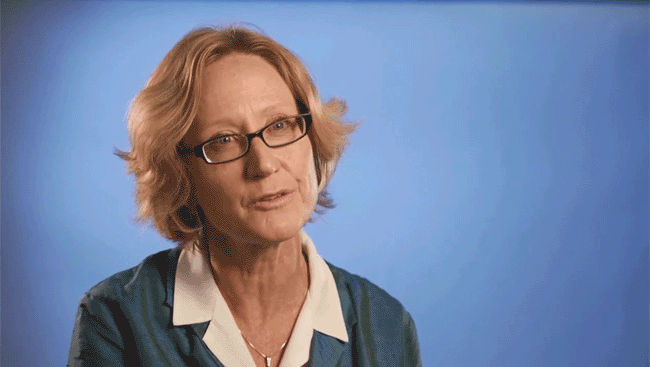 Video CommunityYou’ve heard of the elusive work/life balance — but is it really possible to find time for both a personal and professional life? Established scientists tell you the strategies they use to integrate home and work life.Nov 13, 2019
 -
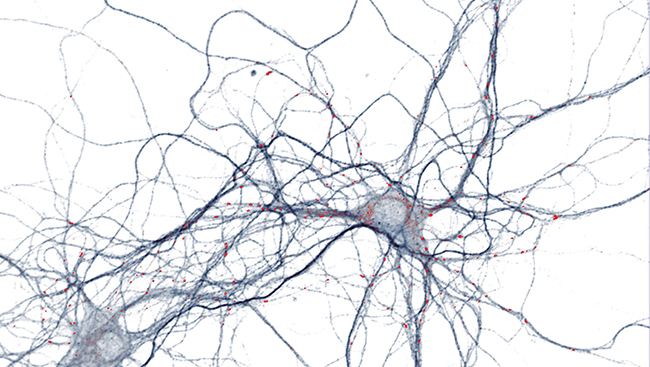 Article Scientific ResearchMaterial below is adapted from the SfN Short Course Sex Differences and the Role of Ovarian Hormones in Modulating the Behavioral Effects of Nicotine in Rodent Models,by Rodolfo J. Flores, Bryan Cruz, Kevin P. Uribe, Luis M. Carcoba, and Laura E. O'Dell. Short Courses are daylong scientific trainings on emerging neuroscience topics and research techniques held the day before SfN's annual meeting. Women are more likely than men to smoke and face negative health consequences from long-term tobacco use, and they are less likely to quit smoking. Researchers have begun to use to rodent models to better understand why these disparities exist.Nov 12, 2019
 -
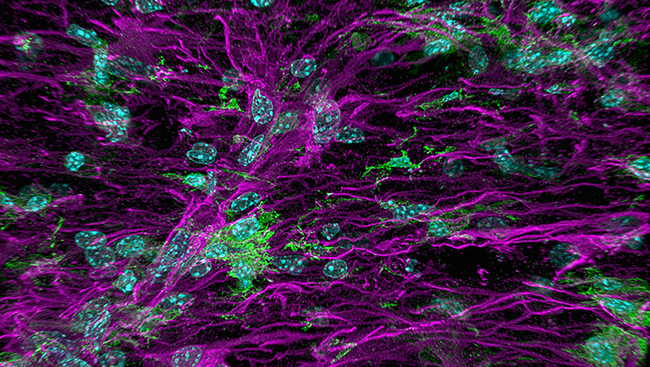 Article Professional DevelopmentImagine a future in which you could tell your spouse about your day by simply transferring the memory to them, or one in which you could pass your memories on even after your death. These scenarios may seem far ahead in the future, but steps are definitely being taken towards this development. To combat our natural memory inaccuracy and decline due to old age or Alzheimer’s disease, which has been found in 1 out of every 10 people over 65 years old, scientists are beginning to investigate the biology of memory and the ways in which the process of making memories can be improved. A recent and controversial article published by Science News reported that RNA may be used to transfer memories from one sea slug to another.Nov 6, 2019
 -
 Video Scientific ResearchTrainingSpace (TS) is an online hub that aims to make neuroscience educational materials more accessible to the global neuroscience community. As a hub, TS provides users with access to: Multimedia educational content from courses, conference lectures, and laboratory exercises from some of the world’s leading neuroscience institutes and societies. Study tracks to facilitate self-guided study. Tutorials on tools and open science resources for neuroscience research. A Q&A forum. A neuroscience encyclopedia that provides users with access to over 1,000,000 publicly available datasets as well as links to literature references and scientific abstracts. Topics currently included in TS include: general neuroscience, clinical neuroscience, computational neuroscience, neuroinformatics, computer science, data science, and open science. All courses and conference lectures in TS include a general description, topics covered, links to prerequisite courses if applicable, and links to software described in or required for the course, as well as links to the next lecture in the course or more advanced related courses. To learn more about TrainingSpace, visit: https://training.incf.org/Nov 5, 2019
 -
 Video Training“Thinking about the evidence behind how we teach and what we teach is important,” reflects Brian Couch, assistant professor at the University of Nebraska-Lincoln, whose research group seeks to understand the undergraduate science education system and identify methods to improve student learning. Undergraduate neuroscience is a broad field with diverse students. Identifying and using tested teaching practices with demonstrated efficacy in the classroom can help educators assess their students’ success and adequately prepare them for future careers. Watch this video to learn how to start small and incorporate specific evidence-based activities into your classroom to improve student learning.Oct 31, 2019
 -
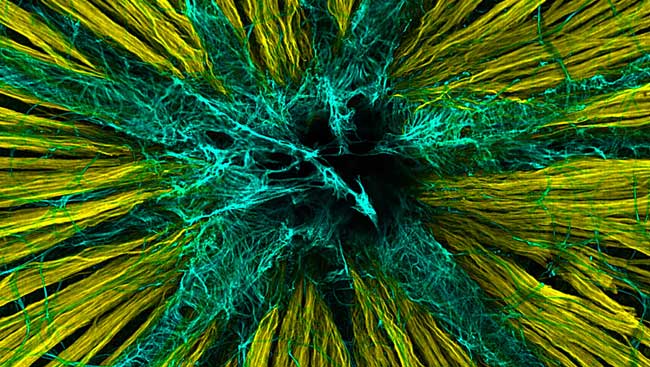 Article Scientific ResearchMaterial below is adapted from the SfN Short Course session Sex Differences in Behavioral Strategies: Avoiding Interpretational Pitfalls, by Rebecca M. Shansky. Short Courses are daylong scientific trainings on emerging neuroscience topics and research techniques held the day before the start of SfN’s annual meeting. Although scientists have studied animal behavior in the lab for years, most of those studies have been in male rodents. The NIH recently mandated that researchers must include both sexes in their experiments, meaning the ways scientists have done and interpreted studies for years are now getting another look. This shift to widely including both male and female animals in experimentation has already and will likely continue to provide insight into the relationship between brain structure and function, and should help to inform translational work.Oct 30, 2019
 -
 Journal ArticlePaying attention to a target talker in multi-talker scenarios is associated with its more accurate neural-tracking relative to competing non-target speech. This “neural-bias” to target speech has largely been demonstrated in experimental setups where target and non-target speech are acoustically controlled and interchangeable. However, in real-life situations this is rarely the case. For example, listeners often look at the talker they are paying attention to while non-target speech is heard (but not seen) from peripheral locations. To enhance the ecological-relevance of attention research, here we studied whether neural-bias towards target speech is observed in a spatially realistic audiovisual context, and how this is affected by switching the identity of the target talker. Group-level results show robust neural-bias towards target speech, an effect that persisted and generalized after switching the identity of the target talker. In line with previous studies, this supports the utility of the speech-trac...Jun 2, 2025
 -
Journal ArticleNeurons in the paraventricular nucleus of the thalamus (PVT) integrate visceral and limbic inputs and project to multiple brain regions to bias behavior towards aversive or defensive states. This study examines MOR signaling in anterior PVT neurons in brain slices from untreated and morphine treated animals. Imaging in a MOR-Cre reporter rat revealed extensive expression in in aPVT cells, and the application of [Met]5-enkephalin (ME) induced outward currents which were abolished by the MOR-selective antagonist CTAP. A saturating concentration of ME resulted in desensitization that was blocked by compound101, indicating a phosphorylation-dependent process. The opioid sensitivity of amygdala-, nucleus accumbens-, and prefrontal cortex-projecting neurons was then examined. Neurons that projected to the amygdala were more sensitive to ME than cortical- and accumbal-projecting cells. Following chronic treatment, tolerance to morphine was found in neurons projecting to the amygdala and nucleus accumbens with a t...Jun 2, 2025
-
Journal ArticleGlymphatic transport in rodents has primarily been studied using cisterna magna cannulation (CMC), a minimally invasive method for cerebrospinal fluid (CSF) tracers’ infusion. However, CMC is suboptimal due to the lack of bony structures to stabilize the cannula, leading to potential movement artifacts. Here, we present an alternative approach involving chronic cannulation of the lateral ventricles of mice for CSF tracer delivery. A direct comparison demonstrated that intraventricular cannulation (IVC) reproduces CMC results in vivo, including perivascular labeling of the middle cerebral artery, which was further confirmed by ex vivo analysis. IVC enables tracer infusion in awake mice, facilitating glymphatic transport studies in conjunction with behavioral assessments that were previously unattainable. Additionally, IVC supports repeated infusions in awake animals, offering the potential to reduce the number of experimental animals required. This study establishes IVC as a robust alternative for studying ...Jun 2, 2025
-
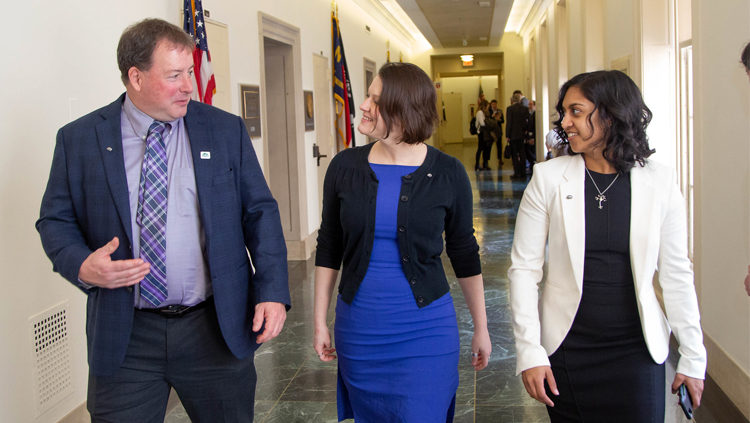 Article AdvocacyI worked on Capitol Hill for about eight years before moving out west, coming back, working at the Alliance for Aging Research, and finally joining the Coalition for Life Sciences. I've been with them for about 15 years now. We’re located in Washington, DC, and as advocates in that world, it’s our responsibility to make sure scientists feel comfortable coming and working with Members of Congress. We help them learn how to talk about their science in ways that are understandable regardless of the last time you took biology.Oct 29, 2019




