



Filter
-
(133)
-
(733)
-
(4)
-
(1)
-
(47830)
-
(91)
-
(25)
-
(14)
-
(433)
-
(7)
-
(181)
-
(8)
-
(33)
-
(17)
-
(7)
-
(9)
-
(9)
-
(5)
-
(21)
-
(8)
-
(12)
-
(9)
-
(3)
-
(10)
-
(10)
-
(56)
-
(45)
-
(12)
-
(3)
-
(7)
-
(6)
-
(5)
-
(8)
-
(7)
-
(11)
-
(58)
-
(13)
-
(30)
-
(8)
-
(5)
-
(10)
-
(5)
-
(14)
-
(4)
761 - 770
of 52751 results
-
 Journal ArticleChemotherapy can cause debilitating behavioral side effects (e.g., fatigue, depression, cognitive decline); however, having an intimate partner can buffer these effects. The California mouse ( Peromyscus californicus ) is a rare monogamous mouse species that offers a novel opportunity to model human intimate partnership to identify the neurobiological mechanisms by which mate bonding reduces chemotherapy-associated behavioral side effects. As a first step toward this goal, this pilot study aimed to develop the first chemotherapy model, to our knowledge, in adult male and female California mice. Following a repeated paclitaxel chemotherapy regimen, well characterized in laboratory mice ( Mus musculus ), gross sickness physiology was first assessed after various doses. The 20 mg/kg paclitaxel dose, injected six times every other day, was the highest tolerable, clinically relevant dose and was characterized by moderate body mass loss and increased spleen mass. Thus, further investigation of the effects of thi...Sep 1, 2025
 -
 Journal ArticleThe plasma membrane acts as a capacitor that plays a critical role in neuronal excitability and signal propagation. Neuronal capacitance is proportional to the area of the cell membrane; thus it is often used as a measure of the cell size that is assumed to be relatively stable. Recent work proposes that the capacitance of dentate granule cells (dGCs) and cortical pyramidal cells changes across the light/dark (LD) cycle in a manner that alters synaptic integration. We addressed this potential change in capacitance using a large dataset of dGC recordings from adult male and female mice across the light cycle. Our data show that daily changes in the membrane time constant result from fluctuation in membrane resistance rather than capacitance. We also confirm the ability to resolve changes in neuronal capacitance induced by altering dGC membrane area via acute axotomy or genetically induced overgrowth using either voltage-clamp or current-clamp approaches. Our results demonstrate that the capacitance of dGCs ...Sep 1, 2025
 -
 Journal ArticleThe environment experienced by children, such as exposure to chronic early life adversity (ELA), increases lifespan brain disorder risk. The mechanisms that link ELA exposure to functional brain disruptions are not well understood. A limited-bedding and nesting paradigm, in which ELA is induced in mouse pups over the first postnatal week through disruption of maternal care, is characterized by limited resources, environment unpredictability, and disruption of reward and cognitive behaviors. Studies using this model demonstrated sex-selective alterations in hippocampal mitochondrial-associated proteins in response to ELA compared with care as usual (CAU). Further, oxidative phosphorylation (OXPHOS) capacity and complex I activity are increased in ELA juveniles, yet decreased in adults, with the impact of ELA moderated by sex in adults. Given that altered mitochondrial function is a key mediator in metabolic adaptations, the goal of the present study was to evaluate the possibility of reversing mitochondrial...Sep 1, 2025
 -
 Article Scientific ResearchWhy we need neuro-psychiatric monitoring and registries during the Global Pandemic There is a growing awareness of COVID-19-associated CNS dysfunction likely caused by SARS-CoV-2 direct or indirect CNS invasion. This raises the possibility of a neuro-phenotype of COVID-19 with acute and delayed neuro-psychiatric effects. To this end, a few groups are advocating for prospective trials to monitor the evolution of neurologic symptoms associated with COVID-19 as well as the establishment of International COVID-19 Neurologic Registries. There are multiple potential benefits to neuro-psych registries and clinical trials.Feb 3, 2021
 -
 Article Professional DevelopmentFour years ago, in my second year of graduate school, I wrote about coping with failure as a graduate student. I was frustrated I couldn’t answer scientific questions because I was spending all of my time trying to get basic techniques to work. Since then, I continued to experience disappointment, both in and out of the lab. I’ve recently been reflecting on what I would now tell my younger self, and I’m sharing those thoughts in the hope that they might help someone else. Let yourself grieve. When we experience disappointment, there’s a sharp emotional response. That response has to pass before we can evaluate what happened and decide what to do next. The first few times we’re disappointed, it takes a long time to process and dispel our negative feelings. Eventually, we begin to heal from disappointment faster. We can’t force rational processes onto emotion – emotions happen in their own time, through a system older and deeper than our executive functioning. But we can understand how our own feelings work and create space for them to happen and to minimize the damage they inflict on our lives. That can mean taking an afternoon or day to sulk after a frustrating experiment or “not discussed” grant application. The pain will eventually subside, and then you can think. And each time, with each disappointment, the cycle will get shorter.Jan 28, 2021
 -
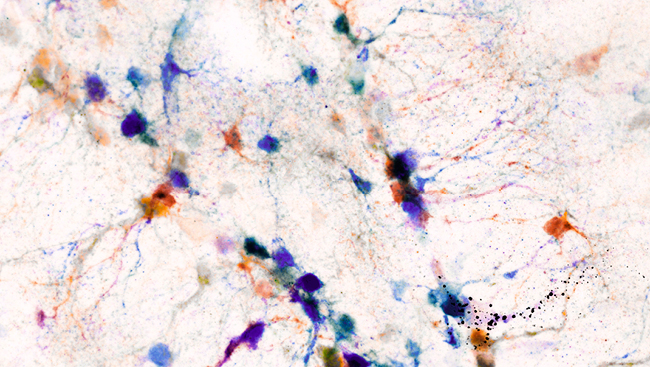 Video Annual Meeting OutreachRecent studies in the field of neuroscience illustrate the importance of creativity across our life spans. Using examples such as ballet lessons before kindergarten, band practice in college, and music therapy following a stroke, among others, this Public Advocacy Forum panel explore how and why the arts influence us so deeply and how we can use creativity to be healthier and more productive throughout our lives.Jan 27, 2021
 -
 Video Webinar AdvocacyAfter watching the video below, join us February 10th at 1:00pm for a live chat on the Neuronline Community and learn about the ways you can incorporate more sustainable practices in your work, and ask your questions on how to help move the field towards an environmentally friendly framework This special interest event from the FENS (Federation of European Neuroscience Societies) 2020 Virtual Forum offered an opportunity to discuss what scientists can do to adopt a more sustainable model for life sciences. The organizers presented the results of a small survey performed among neuroscientists and their research institutes to trigger discussion and start identifying solutions regarding the environmental footprint of the life science community. A panel of academics, activists, and life science industry representatives, among others, shared their viewpoints and experiences implementing concrete actions towards an environmentally friendly life science framework. Learn more and check out the conversations in the video (above or below). Organized by FENS-Kavli Network of Excellence (FKNE).Jan 27, 2021
 -
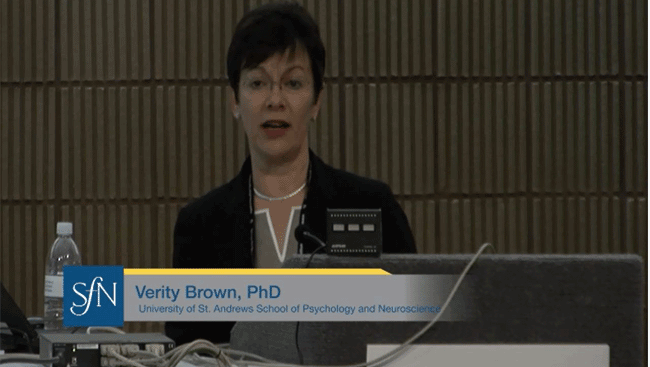 Video Annual Meeting Professional DevelopmentThis playlist walks through the entire process of deciding when to write, how to write, and where to publish your manuscript. Verity Brown, editor-in-chief of Neuroscience & Biobehavioral Reviews, discusses many helpful tips and tricks that these videos can help any neuroscientist learn new things about getting published.Jan 26, 2021
 -
 Article Scientific ResearchMaterial below summarizes the article, Vibrational Detection of Odorant Functional Groups by Drosophila Melanogaster, published on October 26, 2017, in eNeuro and authored by Klio Maniati, Katherine-Joanne Haralambous, Luca Turin, and Efthimios M.C. Skoulakis. We are interested in tests that could help decide between the vibrational theory of odor and the lock-and-key theory, a controversial question in the field of olfaction. Is odor character of a molecule determined by its shape or its vibrations? In a shape theory, the smell of an odorant is encoded in the shape of the odorant molecule, which in turn determines the receptors in which it fits. This is a lock-and-key theory: the shapes of both locks and keys matter to the pattern of receptor activation. Picture a thought experiment in which the shapes of the olfactory receptor binding sites are all altered, while leaving wiring identical to the brain. The receptor activation pattern will be different, and therefore odorants will be perceived to have a different smell or odor character.Jan 21, 2021
 -
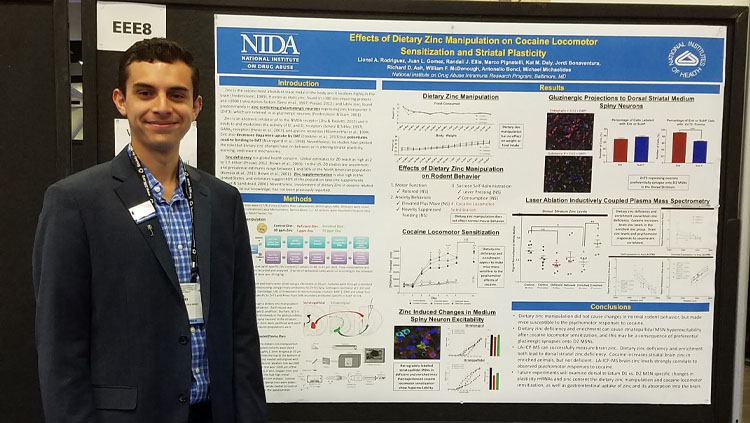 Article DiversityLionel Rodriguez is a neuroscience PhD candidate at Johns Hopkins. In this interview, Lionel discusses dealing with implicit bias and imposter syndrome. As a Gay, Latinx scientist, he also gives his hopes for the future of approaching discussions of equitable treatment and inclusion of historically marginalized communities in STEM.Jan 19, 2021




