



Filter
-
(133)
-
(733)
-
(4)
-
(1)
-
(47833)
-
(91)
-
(25)
-
(14)
-
(433)
-
(7)
-
(182)
-
(8)
-
(33)
-
(17)
-
(7)
-
(9)
-
(9)
-
(5)
-
(21)
-
(8)
-
(12)
-
(9)
-
(3)
-
(10)
-
(10)
-
(56)
-
(45)
-
(12)
-
(3)
-
(7)
-
(6)
-
(5)
-
(8)
-
(7)
-
(11)
-
(58)
-
(13)
-
(30)
-
(8)
-
(5)
-
(10)
-
(5)
-
(15)
-
(4)
1571 - 1580
of 52756 results
-
 Journal ArticleThe anterior hypothalamic area (AHA) is a key brain region for orchestrating defensive behaviors. Using in vivo calcium imaging in mice, we observed that AHA neuronal activity increases during footshock delivery and footshock-associated auditory cues. We found that following shock-induced increases in AHA activity, a decrease in activity coincides with the onset of grooming behavior. Next, we optogenetically activated the projections from the ventromedial hypothalamus (VMH) to the AHA and observed that photoactivation of the VMH→AHA pathway drives avoidance. Interestingly, repetitive grooming behavior occurs following cessation of stimulation. To identify changes in brain-wide activity patterns that occur due to optogenetic VMH→AHA stimulation, we combined optogenetic stimulation with positron emission tomography (PET)-based metabolic mapping. This approach revealed the amygdala as a downstream area activated by the stimulation of this pathway. Our findings show that the rise and fall of AHA neuronal activ...Jan 1, 2025
 -
 Journal ArticleVisual information emerging from the extrafoveal locations is important for visual search, saccadic eye movement control, and spatial attention allocation. Our everyday sensory experience with visual object categories varies across different parts of the visual field which may result in location-contingent variations in visual object recognition. We used a body, animal body, and chair two-forced choice object category recognition task to investigate this possibility. Animal body and chair images with various levels of visual ambiguity were presented at the fovea and different extrafoveal locations across the vertical and horizontal meridians. We found heterogeneous body and chair category recognition across the visual field. Specifically, while the recognition performance of the body and chair presented at the fovea were similar, it varied across different extrafoveal locations. The largest difference was observed when the body and chair images were presented at the lower-left and upper-right visual fields...Jan 1, 2025
 -
Journal ArticleIn the article “Short-Term Synaptic Plasticity Makes Neurons Sensitive to the Distribution of Presynaptic Population Firing Rates,” by Luiz Tauffer and Arvind Kumar, which was published online …Jan 1, 2025
-
 Journal ArticleCannabinoid receptor-1 (CB1R) signaling in the dorsal striatum regulates the shift from flexible to habitual behavior in instrumental outcome devaluation. Based on prior work establishing individual-, sex-, and experience-dependent differences in pavlovian behaviors, we predicted a role for dorsomedial striatum (DMS) CB1R signaling in driving rigid responding in pavlovian autoshaping and outcome devaluation. We trained male and female Long Evans rats in pavlovian lever autoshaping (PLA). We gave intra-DMS infusions of the CB1R inverse agonist, rimonabant, before satiety-induced outcome devaluation test sessions, where we sated rats on training pellets or home cage chow and tested them in brief nonreinforced PLA sessions. Overall, inhibition of DMS CB1R signaling prevented pavlovian outcome devaluation but did not affect behavior in reinforced PLA sessions. Males were sensitive to devaluation while females were not, and DMS CB1R blockade impaired devaluation sensitivity in males. Because these results sugge...Jan 1, 2025
 -
Journal ArticleMammalian parenting is an unusually demanding commitment. How has the reward system been co-opted to ensure parental care? Previous work has implicated the lateral habenula (LHb), an epithalamic nucleus, as a potential intersection of parenting behavior and reward. Here, we examine the role of the LHb in the maternal behavior of naturally parturient primiparous mouse dams. We show that kainic acid lesions of the LHb induced a severe maternal neglect phenotype in dams toward their biological pups. Next, we demonstrate that chronic chemogenetic inactivation of the LHb using inhibitory DREADDs impaired acquisition and performance of various maternal behaviors, such as pup retrieval and nesting. We present a random intercept model suggesting LHb inactivation prevents the acquisition of pup retrieval, a novel maternal behavior in primiparous mouse dams, and decreases nest building performance, an already-established behavior, in primiparous mouse dams. Lastly, we examine the spatial histology of kainic acid-tre...Jan 1, 2025
-
 Journal ArticleThe subjective visual vertical (VV), the visually estimated direction of gravity, is essential for assessing vestibular function and visuospatial cognition. In this study, we aimed to investigate the mechanisms underlying altered VV perception in stroke participants with unilateral spatial neglect (USN), specifically by examining their eye movement patterns during VV judgment tasks. Participants with USN demonstrated limited eye movement scanning along a rotating bar, often fixating on prominent ends, such as the top or bottom. This suggests a reflexive response to visually salient areas, potentially interfering with accurate VV perception. In contrast, participants without USN showed broader scanning around the center of the bar. Notably, participants with USN without frontal lobe lesions occasionally exhibited extended scanning that included the bar’s center, which was associated with accurate VV judgments. These findings suggest that (1) a tendency to fixate on peripheral, prominent areas and (2) fronta...Jan 1, 2025
 -
 Journal ArticleThe human medial parietal cortex (MPC) is recruited during multiple cognitive processes. Previously, we demonstrated regions specific to recall of people or places and proposed that the functional organization of MPC mirrors the category selectivity defining the medial–lateral axis of the ventral–temporal cortex (VTC). However, prior work considered recall of people and places only, and VTC also shows object selectivity sandwiched between face- and scene-selective regions. Here, we tested a strong prediction of our proposal: like VTC, MPC should show a region specifically recruited during object recall, and its relative cortical position should mirror the one of VTC. While responses during people and place recall showed a striking replication of prior findings, we did not observe any evidence for object-recall effects within MPC, which differentiates it from the spatial organization in VTC. Importantly, beyond MPC, robust recall effects were observed for people, places, and objects on the lateral surface o...Jan 1, 2025
 -
 Article Scientific ResearchThroughout the primate visual cortex, individual neurons and clusters of neurons respond quite strongly to specific features within a viewed image.May 19, 2017
 -
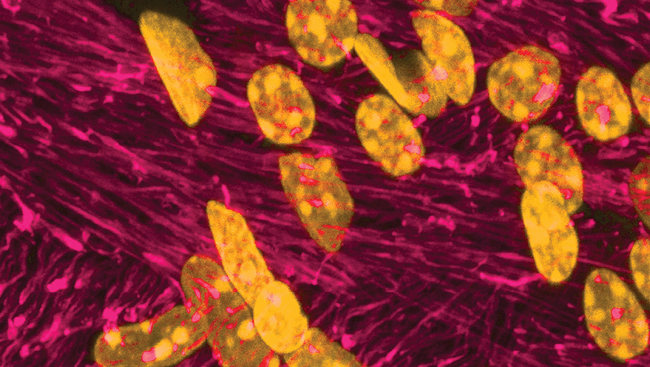 Article Scientific ResearchThe symptoms characterizing Alzheimer’s disease — memory loss and general cognitive decline — appear to derive from physical changes within the brain including amyloid plaque accumulation in the extracellular spaces, tangled fibrils of tau proteins within neural cells, and gross atrophy.May 18, 2017
 -
 Annual Meeting Video Professional DevelopmentYou may have heard terms such reproducibility, rigor, reliability, and robustness being increasingly used by SfN, the scientific community at large, journalists, and policymakers.May 17, 2017




