



Filter
-
(133)
-
(733)
-
(4)
-
(1)
-
(47833)
-
(91)
-
(25)
-
(14)
-
(433)
-
(7)
-
(181)
-
(8)
-
(33)
-
(17)
-
(7)
-
(9)
-
(9)
-
(5)
-
(21)
-
(8)
-
(12)
-
(9)
-
(3)
-
(10)
-
(10)
-
(56)
-
(45)
-
(12)
-
(3)
-
(7)
-
(6)
-
(5)
-
(8)
-
(7)
-
(11)
-
(58)
-
(13)
-
(30)
-
(8)
-
(5)
-
(10)
-
(5)
-
(14)
-
(4)
1441 - 1450
of 52754 results
-
 Journal ArticleThe amygdala is believed to make invaluable contributions to visual emotion processing. Yet how this subcortical body contributes to emotion perception across time is contended. Here, we measured differences in the perceptual processing of emotional stimuli after unilateral temporal lobe and amygdala resection (TLR) in humans, using EEG. Through mass univariate analysis of brain activity, we compared responses to fearful and neutral faces (left TLR N = 8, right TLR N = 8, control N = 8), and fearful and neutral bodies (left TLR N = 9, right TLR N = 9, control N = 9). We found that TLR impaired the early-stage perceptual processing of emotional stimuli seen in the control group. Indeed, in controls a heightened responses to fearful faces was found in the 140–170 ms time window, over temporoparietal electrodes. This effect was also present in the left TLR group but disappeared in the right TLR group. For emotional bodies, brain activity was differentially sensitive to fearful stimuli at 90–120 ms in th...Feb 1, 2025
 -
 Journal ArticleFor comprehensive anatomical analysis of a mouse brain, accurate and efficient registration of the experimental brain samples to a reference atlas is necessary. Here, we introduce Bell Jar, a semiautomated solution that can align and annotate tissue sections with anatomical structures from a reference atlas as well as detect fluorescent signals with cellular resolution (e.g., cell bodies or nuclei). Bell Jar utilizes Mattes mutual information-directed B-spline transformations to achieve precise alignments, even with damaged sample tissues. While user input remains a requirement for fine-tuning section matches, the platform streamlines the process, aiding rapid analyses in high-throughput neuroanatomy studies. As a standalone desktop application with a user-friendly interface, Bell Jar’s performance, which surpasses traditional manual and existing automated methods, can improve the reproducibility and throughput of histological analyses.Feb 1, 2025
 -
 Journal ArticleSpeech intelligibility declines with age and sensorineural hearing damage (SNHL). However, it remains unclear whether cochlear synaptopathy (CS), a recently discovered form of SNHL, significantly contributes to this issue. CS refers to damaged auditory-nerve synapses that innervate the inner hair cells and there is currently no go-to diagnostic test available. Furthermore, age-related hearing damage can comprise various aspects (e.g., hair cell damage, CS) that each can play a role in impaired sound perception. To explore the link between cochlear damage and speech intelligibility deficits, this study examines the role of CS for word recognition among older listeners. We first validated an envelope-following response (EFR) marker for CS using a Budgerigar model. We then applied this marker in human experiments, while restricting the speech material’s frequency content to ensure that both the EFR and the behavioral tasks engaged similar cochlear frequency regions. Following this approach, we identified the ...Feb 1, 2025
 -
 Journal ArticleObserving lip movements of a speaker facilitates speech understanding, especially in challenging listening situations. Converging evidence from neuroscientific studies shows stronger neural responses to audiovisual stimuli compared with audio-only stimuli. However, the interindividual variability of this contribution of lip movement information and its consequences on behavior are unknown. We analyzed source-localized magnetoencephalographic responses from 29 normal-hearing participants (12 females) listening to audiovisual speech, both with and without the speaker wearing a surgical face mask, and in the presence or absence of a distractor speaker. Using temporal response functions to quantify neural speech tracking, we show that neural responses to lip movements are, in general, enhanced when speech is challenging. After controlling for speech acoustics, we show that lip movements contribute to enhanced neural speech tracking, particularly when a distractor speaker is present. However, the extent of this...Feb 1, 2025
 -
 Journal ArticleThe use of supervised machine learning to approximate poses in video recordings allows for rapid and efficient analysis of complex behavioral profiles. Currently, there are limited protocols for automated analysis of operant self-administration behavior. We provide a methodology to (1) obtain videos of training sessions via Raspberry Pi microcomputers or GoPro cameras, (2) obtain pose estimation data using the supervised machine learning software packages DeepLabCut (DLC) and Simple Behavioral Analysis (SimBA) with a local high-performance computer cluster, (3) compare standard Med-PC lever response versus quadrant time data generated from pose estimation regions of interest, and (4) generate predictive behavioral classifiers. Overall, we demonstrate proof of concept to use pose estimation outputs from DLC to both generate quadrant time results and obtain behavioral classifiers from SimBA during operant training phases.Feb 1, 2025
 -
 Journal ArticleInner speech refers to the silent production of language in one’s mind. As a purely mental action without obvious physical manifestations, inner speech has been notoriously difficult to quantify. To address this issue, the present study repurposed the phenomenon of speaking-induced suppression, wherein overt speech has been consistently shown to elicit reduced auditory evoked potentials compared with externally generated speech, as well as changes in oscillatory activity in gamma and theta frequency bands. Given the functional similarities between inner and overt speech, we used an established experimental protocol to investigate whether similar metrics could be used to distinguish the content of inner speech. Healthy participants ( n = 129) produced an inner syllable at a precisely specified time. An audible syllable was concurrently presented which either matched or mismatched the content of the inner syllable. The results revealed that Match and Mismatch conditions could be differentiated on the basis o...Feb 1, 2025
 -
 Journal ArticleFood intake is controlled by multiple converging signals: hormonal signals that provide information about energy homeostasis and hedonic and motivational aspects of food and food cues that can drive nonhomeostatic or “hedonic” feeding. The ventral pallidum (VP) is a brain region implicated in the hedonic and motivational impact of food and food cues, as well as consumption of rewards. Disinhibition of VP neurons has been shown to generate intense hyperphagia, or overconsumption. While VP GABA neurons have been implicated in cue-elicited reward-seeking and motivation, the role of these neurons in the hyperphagia resulting from VP activation remains unclear. Here, we used designer receptors exclusively activated by designer drugs to activate VP GABA neurons in nonrestricted male and female rats during chow and sucrose consumption. We found that activation of VP GABA neurons increases consumption of chow and sucrose in male rats, but not female rats. Together, these findings suggest that activation of VP GABA...Feb 1, 2025
 -
Journal ArticleChronic pain is a debilitative disease affecting one in five adults globally and is a major risk factor for anxiety ( [Goldberg and McGee, 2011][1]; [Lurie, 2018][2]). Given the current dearth of available treatments for both individuals living with chronic pain and mental illnesses, there is a critical need for research into the molecular mechanisms involved in order to discover novel treatment targets. Cellular homeostasis is crucial for normal bodily functions, and investigations of this process may provide better understanding of the mechanisms driving the development of chronic pain. Using the spared nerve injury (SNI) model of neuropathic pain, we found contrasting roles for BECLIN-1 in the development of pain hypersensitivity and anxiety-like behaviors in a sex-dependent manner. Remarkably, we found that male SNI mice with impaired BECLIN-1 function demonstrated heightened mechanical and thermal hypersensitivity compared with male wild-type SNI mice, while female SNI mice with impaired BECLIN-1 func...Feb 1, 2025
-
 Journal ArticleThe role of sleep in memory consolidation is a widely discussed but still debated area of research. In light of the fact that memory consolidation during sleep is an evolutionary adaptive function, investigating the same phenomenon in nonhuman model species is highly relevant for its understanding. One such species, which has acquired human-analog sociocognitive skills through convergent evolution, is the domestic dog. Family dogs have surfaced as an outstanding animal model in sleep research, and their learning skills (in a social context) are subject to sleep-dependent memory consolidation. These results, however, are correlational, and the next challenge is to establish causality. In the present study, we aimed to adapt a TMR (targeted memory reactivation) paradigm in dogs and investigate its effect on sleep parameters. Dogs ( N = 16) learned new commands associated with different locations and afterward took part in a sleep polysomnography recording when they were re-exposed to one of the previously l...Feb 1, 2025
 -
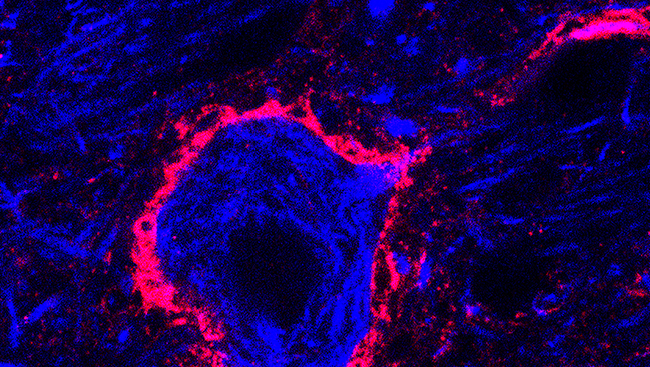 Article Annual Meeting Scientific ResearchMaterial below is adapted from the SfN Short Course, Transcription Dysregulation of the PGC-1α Pathway in Huntington’s Disease Pathogenesis: From Metabolic Derangement to Neurodegeneration, by Albert R. La Spada, MD, PhD.Nov 30, 2017




