



Filter
-
(133)
-
(733)
-
(4)
-
(1)
-
(47832)
-
(91)
-
(25)
-
(14)
-
(433)
-
(7)
-
(181)
-
(8)
-
(33)
-
(17)
-
(7)
-
(9)
-
(9)
-
(5)
-
(21)
-
(8)
-
(12)
-
(9)
-
(3)
-
(10)
-
(10)
-
(56)
-
(45)
-
(12)
-
(3)
-
(7)
-
(6)
-
(5)
-
(8)
-
(7)
-
(11)
-
(58)
-
(13)
-
(30)
-
(8)
-
(5)
-
(10)
-
(5)
-
(14)
-
(4)
1421 - 1430
of 52753 results
-
 Journal ArticleThe adrenal medulla is packed with chromaffin cells, modified postganglionic sympathetic neurons that secrete the catecholamines, epinephrine and norepinephrine, during the fight-or-flight response. Sometimes overlooked, is a population of immune cells that also resides within the gland but whose distribution and function is not clear. Here I examine the location of CD45+ hematopoietic cells in the mouse adrenal medulla and show the majority are F4/80+/Lyz2+ macrophages. These cells are present from early post-natal development and widely distributed. Anatomically they are associated with chromaffin cells, found aligned alongside synapsin-ir neuronal varicosities and juxtaposed to CD31-ir blood vessels. Using Lyz2cre-GCaMP6f mice to quantify calcium signaling in macrophages revealed these cells respond directly and indirectly to a wide variety of neuromodulators, including pre- and post-ganglionic transmitters and systemic hormones. Purinergic agonists, histamine, acetylcholine and bradykinin rapidly and r...Feb 3, 2025
 -
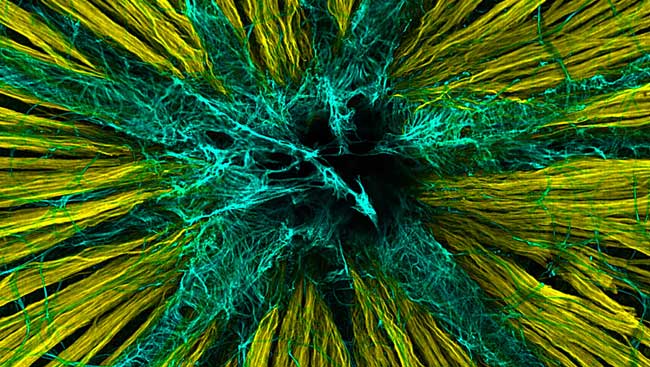 Article Professional Development“There are always new discoveries. It never ends,” says Angela Kim from Harvard Medical School on the most exciting aspect of studying neuroscience. As you prepare for another year of scientific discovery, professional development, and training, revisit Neuronline’s most popular resources from 2017. You’ll find fascinating scientific research, surprising facts about publishing a paper, a behind-the-scenes look at what goes into award-winning research, and more.Dec 12, 2017
 -
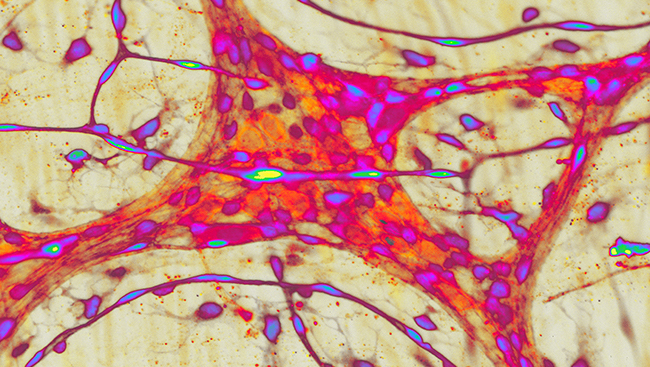 Article Annual Meeting Scientific ResearchMaterial below is adapted from the SfN Short Course, Adult Mouse Cortical Cell Taxonomy Revealed by Single-Cell Transcriptomics, by Bosiljka Tasic, PhD. Short Courses are day-long scientific trainings on emerging neuroscience topics and research techniques held just prior to SfN’s annual meeting. Single-cell RNA sequencing (RNA-seq) is a powerful tool that can help researchers look more deeply at individual cells, in order to better understand differences within tissues or groups of cells. One research team used RNA-seq to classify more than 1,600 cells from the cortex of adult male mice.Dec 12, 2017
 -
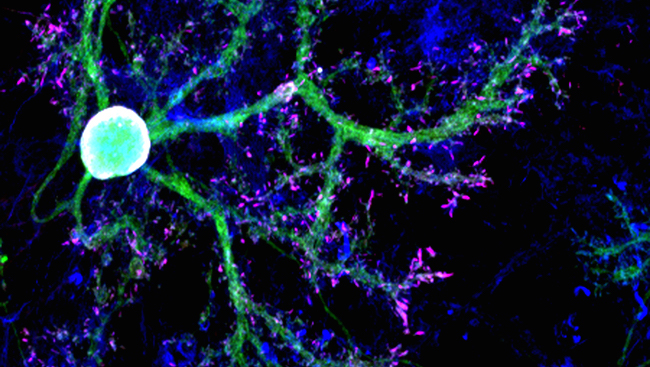 Article Career PathsPhillip West is an assistant professor of microbial pathogenesis and immunology at the Texas A&M University Health Science Center. He led a breakout group at the 2016 Neurobiology of Disease Workshop, From Pediatric Encephalopathy to Alzheimer's: Linking Mitochondria to Neurological Diseases, and presented in 2017 follow-up webinar, Linking Mitochondria to Neurological Disease. Here, he shares what led him to this research path and why it excites him. As told to, and edited by, SfN staff.Dec 6, 2017
 -
 Journal ArticleSpeech intelligibility declines with age and sensorineural hearing damage (SNHL). However, it remains unclear whether cochlear synaptopathy (CS), a recently discovered form of SNHL, significantly contributes to this issue. CS refers to damaged auditory-nerve synapses that innervate the inner hair cells and there is currently no go-to diagnostic test available. Furthermore, age-related hearing damage can comprise various aspects (e.g., hair cell damage, CS) that each can play a role in impaired sound perception. To explore the link between cochlear damage and speech intelligibility deficits, this study examines the role of CS for word recognition among older listeners. We first validated an envelope-following response (EFR) marker for CS using a Budgerigar model. We then applied this marker in human experiments, while restricting the speech material’s frequency content to ensure that both the EFR and the behavioral tasks engaged similar cochlear frequency regions. Following this approach, we identified the ...Feb 1, 2025
 -
 Journal ArticleThe use of supervised machine learning to approximate poses in video recordings allows for rapid and efficient analysis of complex behavioral profiles. Currently, there are limited protocols for automated analysis of operant self-administration behavior. We provide a methodology to (1) obtain videos of training sessions via Raspberry Pi microcomputers or GoPro cameras, (2) obtain pose estimation data using the supervised machine learning software packages DeepLabCut (DLC) and Simple Behavioral Analysis (SimBA) with a local high-performance computer cluster, (3) compare standard Med-PC lever response versus quadrant time data generated from pose estimation regions of interest, and (4) generate predictive behavioral classifiers. Overall, we demonstrate proof of concept to use pose estimation outputs from DLC to both generate quadrant time results and obtain behavioral classifiers from SimBA during operant training phases.Feb 1, 2025
 -
 Journal ArticleFood intake is controlled by multiple converging signals: hormonal signals that provide information about energy homeostasis and hedonic and motivational aspects of food and food cues that can drive nonhomeostatic or “hedonic” feeding. The ventral pallidum (VP) is a brain region implicated in the hedonic and motivational impact of food and food cues, as well as consumption of rewards. Disinhibition of VP neurons has been shown to generate intense hyperphagia, or overconsumption. While VP GABA neurons have been implicated in cue-elicited reward-seeking and motivation, the role of these neurons in the hyperphagia resulting from VP activation remains unclear. Here, we used designer receptors exclusively activated by designer drugs to activate VP GABA neurons in nonrestricted male and female rats during chow and sucrose consumption. We found that activation of VP GABA neurons increases consumption of chow and sucrose in male rats, but not female rats. Together, these findings suggest that activation of VP GABA...Feb 1, 2025
 -
Journal ArticleChronic pain is a debilitative disease affecting one in five adults globally and is a major risk factor for anxiety ( [Goldberg and McGee, 2011][1]; [Lurie, 2018][2]). Given the current dearth of available treatments for both individuals living with chronic pain and mental illnesses, there is a critical need for research into the molecular mechanisms involved in order to discover novel treatment targets. Cellular homeostasis is crucial for normal bodily functions, and investigations of this process may provide better understanding of the mechanisms driving the development of chronic pain. Using the spared nerve injury (SNI) model of neuropathic pain, we found contrasting roles for BECLIN-1 in the development of pain hypersensitivity and anxiety-like behaviors in a sex-dependent manner. Remarkably, we found that male SNI mice with impaired BECLIN-1 function demonstrated heightened mechanical and thermal hypersensitivity compared with male wild-type SNI mice, while female SNI mice with impaired BECLIN-1 func...Feb 1, 2025
-
Journal ArticleFunctional ultrasound (fUS) imaging is a well-established neuroimaging technology that offers high spatiotemporal resolution and a large field of view. Typical strategies for analyzing fUS data comprise either region-based averaging, typically based on reference atlases, or correlation with experimental events. Nevertheless, these methodologies possess several inherent limitations, including a restricted utilization of the spatial dimension and a pronounced bias influenced by preconceived notions about the recorded activity. In this study, we put forth single-voxel clustering as a third method to address these issues. A comparison was conducted between the three strategies on a typical dataset comprising visually evoked activity in the superior colliculus in awake mice. The application of single-voxel clustering yielded the generation of detailed activity maps, which revealed a consistent layout of activity and a clear separation between hemodynamic responses. This method is best considered as a complement...Feb 1, 2025
-
 Journal ArticleObserving lip movements of a speaker facilitates speech understanding, especially in challenging listening situations. Converging evidence from neuroscientific studies shows stronger neural responses to audiovisual stimuli compared with audio-only stimuli. However, the interindividual variability of this contribution of lip movement information and its consequences on behavior are unknown. We analyzed source-localized magnetoencephalographic responses from 29 normal-hearing participants (12 females) listening to audiovisual speech, both with and without the speaker wearing a surgical face mask, and in the presence or absence of a distractor speaker. Using temporal response functions to quantify neural speech tracking, we show that neural responses to lip movements are, in general, enhanced when speech is challenging. After controlling for speech acoustics, we show that lip movements contribute to enhanced neural speech tracking, particularly when a distractor speaker is present. However, the extent of this...Feb 1, 2025




