



Filter
-
(133)
-
(733)
-
(4)
-
(1)
-
(47832)
-
(91)
-
(25)
-
(14)
-
(433)
-
(7)
-
(181)
-
(8)
-
(33)
-
(17)
-
(7)
-
(9)
-
(9)
-
(5)
-
(21)
-
(8)
-
(12)
-
(9)
-
(3)
-
(10)
-
(10)
-
(56)
-
(45)
-
(12)
-
(3)
-
(7)
-
(6)
-
(5)
-
(8)
-
(7)
-
(11)
-
(58)
-
(13)
-
(30)
-
(8)
-
(5)
-
(10)
-
(5)
-
(14)
-
(4)
1381 - 1390
of 52753 results
-
 Video Professional DevelopmentIn this video, get advice on how to figure out if a summer undergraduate research program may be right for you. Catherine Ubri, a senior at Hunter College, also discusses how to approach your applications and time throughout the program and shares her own experience over the summer at the Center for Neural Science at New York University.Feb 26, 2018
 -
 Webinar AdvocacyIn preparation for SfN’s Capitol Hill Day in March 2018 and the annual appropriations process, this webinar will arm science advocates with timely and relevant information on how to best prepare for Hill meetings and how to tailor messages to the current political environment. The webinar will also help you take your science advocacy to the next level by understanding how to do targeted communications and actions.Feb 23, 2018
 -
 Article Professional DevelopmentIt’s not enough to know what you want out of a career in neuroscience. You also need to know how to get there.Feb 22, 2018
 -
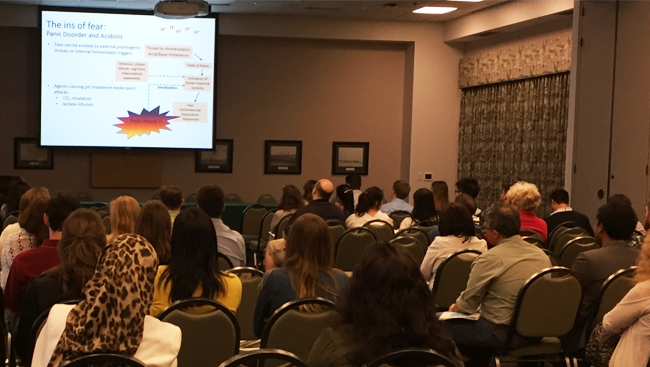 Article OutreachThe Ohio Miami Valley Chapter of SfN (OMV-SfN) is a regional community of trainees and researchers from a variety of backgrounds and focus areas. Lynn Hartzler, the president, attended a professional development event as a postdoc and has been involved ever since. Here, she highlights how scientists from all levels can benefit from this type of scientific community, and why, as a physiologist with a focus on neural tissue, she seeks out perspectives from different disciplines. What are OMV-SfN’s main activities? Our principle activity is our annual Neuroscience Day hosted by Wright State University, Miami University, and the University of Cincinnati in a three-year rotation cycle. The content and feel of Neuroscience Day differ based on the hosting institution, but generally it’s an opportunity for our trainees to present their work to researchers of all career stages in the Ohio Miami Valley.Feb 20, 2018
 -
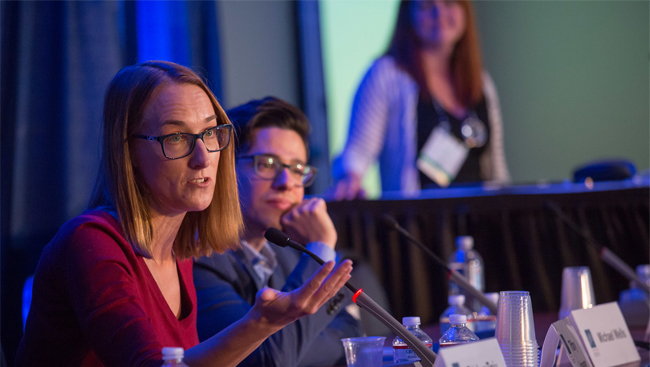 Annual Meeting Video OutreachIn a time when communication of neuroscience information to the public and policymakers is especially important, this workshop focuses on using social media to communicate with your SfN chapter members, other local SfN chapters, government representatives, industry, and the public. Perspectives from science advocacy and policy groups, individual members, and international SfN chapters are presented in a panel discussion. Learn strategies on how to engage with others, using several social media platforms, including Facebook and Twitter.Feb 20, 2018
 -
 Journal ArticleRecent findings have shifted the view of cholecystokinin (CCK) from being a cellular neuronal marker to being recognized as a crucial neuropeptide pivotal in synaptic plasticity and memory processes. Despite its now appreciated importance in various brain regions and abundance in the basal ganglia, its role in the striatum, which is vital for motor control, remains unclear. This study sought to fill this gap by performing a comprehensive investigation of the role of CCK in modulating striatal medium spiny neurons (MSN) membrane properties, as well as the secondary somatosensory cortex S2 to MSN synaptic transmission and plasticity in rodents. Using in-vivo optopatch-clamp recording in mice on identified medium spiny neurons (MSNs), we showed that the application of CCK receptor type 2 (CCK2R) antagonists decreases corticostriatal transmission in both direct and indirect pathway MSNs. Moving to an ex vivo rat preparation to maximize experimental access, we showed that CCK2R inhibition impacts MSN membrane p...Feb 14, 2025
 -
Journal ArticleThe striatum is the primary input nucleus of the basal ganglia, integrating a dense plexus of inputs from the cerebral cortex and thalamus to regulate action selection and learning. Neuroanatomical mapping of the striatum and its sub compartments has been carried out extensively in rats and mice, non-human primates, and cats allowing comparative neuroanatomy studies to derive heuristics about striatal composition and function. Here, we systematically map corticostriatal topography from motor, somatosensory, auditory, and visual cortices as well as thalamostriatal parafascicular (PfN) inputs in the Mongolian Gerbil. We also map a pathway reported in mice from medial vestibular nucleus to the PfN that could convey vestibular information to the striatum. Our findings align with those of similar studies in other rodents, indicating homologous neuroanatomical connectivity patterns within the corticostriatal projectome across rodentia. We observed corticostriatal peaks of dense labeling for each input with a dif...Feb 14, 2025
-
 Video DiversityThis is Lesson Six in the Implicit Bias Video Series from BruinX, the research and development unit within the University of California, Los Angeles's Office of Equity, Diversity and Inclusion. This video discusses three primary strategies for countering implicit bias: mindset, debiasing, and decoupling.Feb 14, 2018
 -
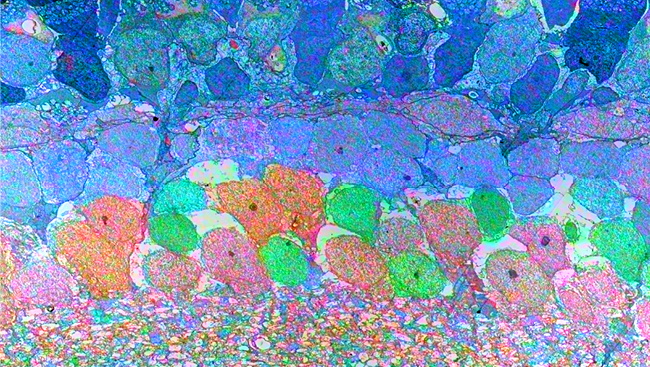 Article Scientific ResearchLocomotion represents motor behaviors that allow animals to move in physical environment. In legged animals, including mammals, locomotion results from coordinated rhythmic movements of limbs interacting with the ground. As in other rhythmic behaviors, such as breathing or scratching, locomotion is controlled by central neural circuits referred to as central pattern generators (CPGs). The CPGs are able to autonomously generate basic rhythmic activity without rhythmic inputs from the higher brain areas and without afferent feedback.Feb 13, 2018
 -
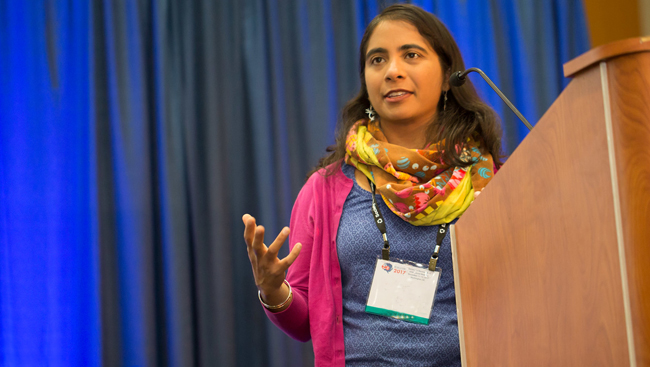 Annual Meeting Video OutreachJayatri Das, chief bioscientist at the Franklin Institute, discusses how museums can be channels for connecting scientists to new audiences through neuroscience outreach. Watch this video to see how this type of engagement can reach various communities, provoke interesting conversations, and expand brain awareness outreach impact.Feb 12, 2018




