



Filter
-
(133)
-
(733)
-
(4)
-
(1)
-
(47830)
-
(91)
-
(25)
-
(14)
-
(433)
-
(7)
-
(181)
-
(8)
-
(33)
-
(17)
-
(7)
-
(9)
-
(9)
-
(5)
-
(21)
-
(8)
-
(12)
-
(9)
-
(3)
-
(10)
-
(10)
-
(56)
-
(45)
-
(12)
-
(3)
-
(7)
-
(6)
-
(5)
-
(8)
-
(7)
-
(11)
-
(58)
-
(13)
-
(30)
-
(8)
-
(5)
-
(10)
-
(5)
-
(14)
-
(4)
901 - 910
of 52751 results
-
 Podcast OutreachIn this episode of History of SfN: 50th Anniversary, Nick Spitzer, inaugural editor-in-chief of BrainFacts.org, shares how BrainFacts.org came to be, his experience on SfN’s Public Education and Communication Committee, and the importance of scientific outreach.Jun 2, 2020
 -
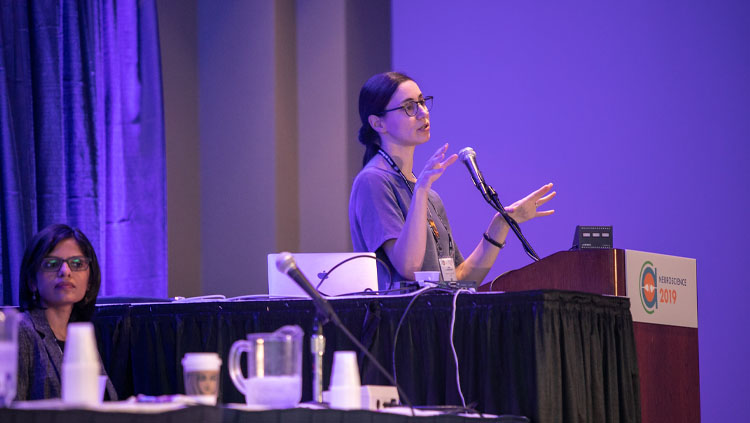 Annual Meeting Video Scientific ResearchMany new tools have been created to address barriers to reproducibility, but how do you know which ones to use? This workshop breaks down workflows and tools to help you improve the reproducibility of your work, organizing workflows and tools into four themes: organization, documentation, automation of analysis, and dissemination. You’ll come away with ideas to implement in your lab as well as ideas for enhancing reproducibility more broadly.May 28, 2020
 -
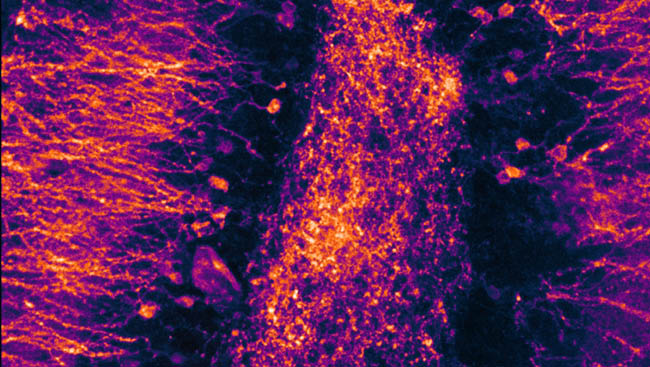 Article Professional DevelopmentNo two careers are identical. Yet, all neuroscientists will likely share certain commonalities: the first sparks of scientific curiosity, difficult challenges, resilience to press on, accomplishments large and small, hard-earned wisdom, and support from professional and personal communities. In this series, Notable Careers: Reflections on Science, Leadership, and Community, five neuroscientists reflect on their life’s work and share their hope for the future of the field. Here, Osvaldo Uchitel, whose last position was senior researcher at the University of Buenos Aires, focuses on what it was like to conduct high quality science and rebuild a community of neuroscientists in Argentina despite a volatile political climate and scarce funding and scientific support. What inspired you to get involved in neuroscience? I was born and educated in Argentina. In my first year of college, I went to a lecture given by Edward De Robertis, a neuroscientist who led the team that discovered synaptic vesicles. He showed us an electron microscope picture that captured my attention. From that moment, I wanted to learn more about cells and how they work. At first, I was more interested in research than clinical work. But then I started working on how nerves and muscles interact, bringing me closer to neuroscience and neurology.May 26, 2020
 -
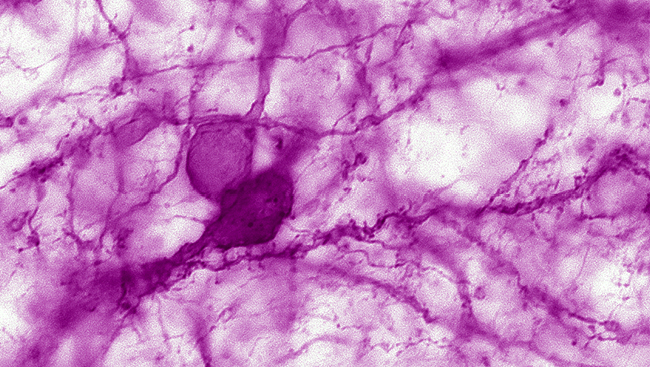 Webinar Scientific ResearchJoin experts Robert Calin-Jageman and Katherine Button as they discuss their work in estimation statistics and statistical power. Watch their short videos introducing this work, then join them along with moderator Christophe Bernard on Thursday, June 4 from 12:30 – 1:30 pm EDT to ask questions about how these statistical practices apply to your own work. This Ask an Expert event is part of SfN’s Foundations of Rigorous Neuroscience Research (FRN) program, which aims to increase awareness of the sociological and cultural factors that influence rigorous research practices.May 21, 2020
 -
 Video AdvocacyIn this series of videos from Improving Openness in Animal Research in Portugal, an event that coincided with the establishment of the Portuguese Transparency Agreement, learn why it’s important for scientists to be proactive in giving the public information on the use of animals in research. By hearing perspectives from a variety of speakers, each of whose work is connected to animal research in some way, you’ll better understand what the public want to know, what information is helpful to share, and how to communicate in a way that contributes to collective understanding of the importance of the responsible use of animals in research.May 15, 2020
 -
 Video AdvocacyAlthough in-person meetings are preferable, virtual one-on-one or small group conversations are important when building and maintaining relationships with your elected officials and their offices. These virtual meetings are much like ones carried out in-person and can be effective in helping your issue stand out. Whether by telephone or videoconference, the following tips will help you schedule and prepare for a successful virtual appointment.May 14, 2020
 -
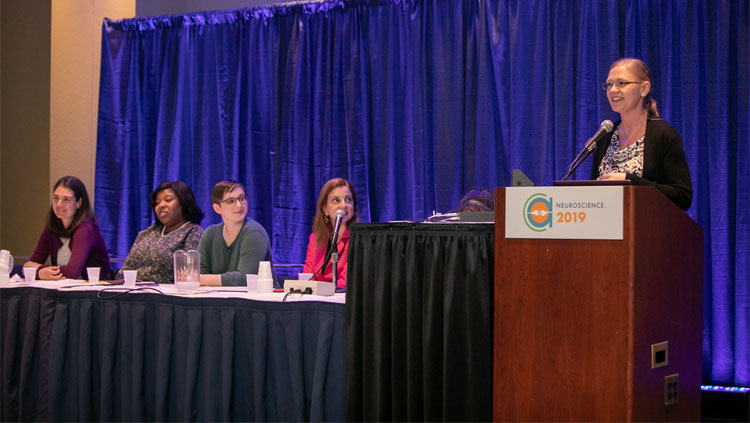 Video Professional DevelopmentIn this part of the How to Thrive as Women in Neuroscience panel at Neuroscience 2019, speakers focus on how having a mentor can help women to pursue successful neuroscience careers. In this video, learn how mentors can help you achieve your career goals, from conquering impostor syndrome to creating a positive work-life balance.May 12, 2020
 -
 Journal ArticleHippocampal synaptic activity is tightly regulated to ensure appropriate synaptic function and plasticity, which are important for critical cognitive processes such as learning and memory. Altered hippocampal synaptic function can lead to cognitive and behavioral deficits observed in neurodegenerative diseases such as Alzheimer’s Disease (AD), necessitating a deeper fundamental understanding of hippocampal synaptic control mechanisms. Glycerophosphodiester phosphodiesterase 2 (GDE2 or GDPD5) is a surface transmembrane enzyme that cleaves the glycosylphosphatidylinositol (GPI) anchor that tethers some proteins to the membrane. Mice lacking GDE2 ( Gde2 KO) display behavioral deficits in learning and memory that are hippocampal-dependent. However, roles for GDE2 in mouse hippocampal function are not known. Here, we show that GDE2 is expressed in pre- and post-synaptic compartments along apical dendrites in hippocampal CA1 cells. Gde2 KO CA1 cells showed increased dendritic length and complexity and increased ...Jul 9, 2025
 -
 Article Professional DevelopmentThe closure of the majority of neuroscience research laboratories at universities across the world has had a major impact on all aspects of the academic research mission. Many of you likely (and understandably) are anxious about the career development of trainees and junior faculty at your institution and progress on projects, to name only a few concerns.May 8, 2020
 -
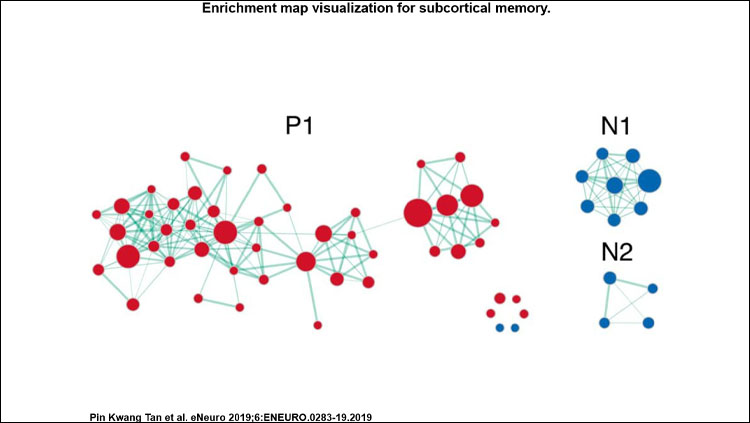 Article Scientific ResearchDespite a common involvement in memory, gene signatures of cortical and subcortical memory are largely distinct. Cortical memory genes are linked to immune and epigenetic regulation, while subcortical memory genes are associated with neurogenesis and the differentiation of glial cells. Overlapping genes between cortical and subcortical memory are involved in transcription regulation, synaptic plasticity, and glutamate receptor signaling.May 7, 2020




