



Filter
-
(133)
-
(734)
-
(4)
-
(1)
-
(47859)
-
(92)
-
(25)
-
(14)
-
(434)
-
(7)
-
(185)
-
(8)
-
(33)
-
(17)
-
(7)
-
(10)
-
(9)
-
(5)
-
(21)
-
(8)
-
(12)
-
(9)
-
(3)
-
(10)
-
(10)
-
(56)
-
(45)
-
(12)
-
(3)
-
(7)
-
(6)
-
(5)
-
(8)
-
(7)
-
(11)
-
(58)
-
(13)
-
(31)
-
(8)
-
(5)
-
(10)
-
(5)
-
(16)
-
(4)
7661 - 7670
of 52795 results
-
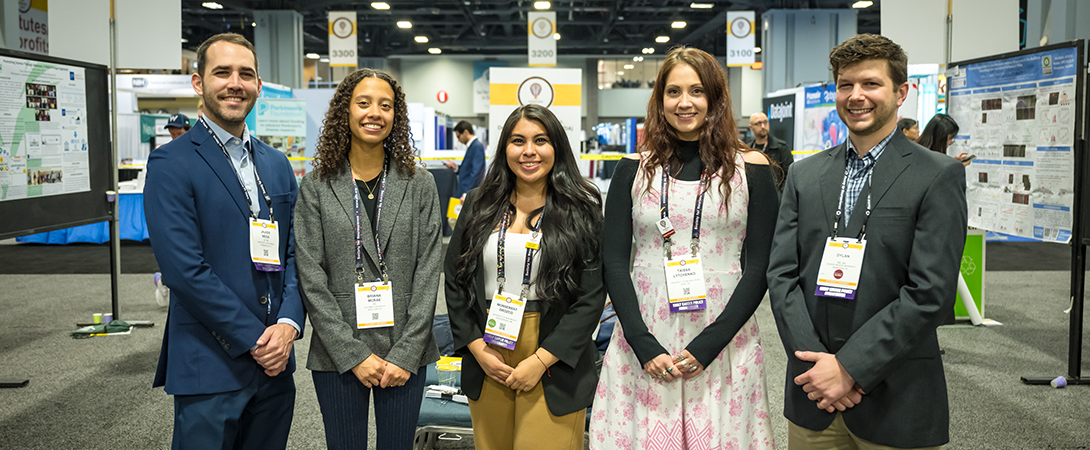 Meet the current class of Early Career Policy Ambassadors (ECPA)! The ECPA program, which started in 2013, is a 10-month program designed for early career scientists to learn how to advocate for science and interact with federal policymakers, as well as connect with fellow NeuroAdvocates.
 -
 Dinah L. Ramos-Ortolaza, PhD, earned her PhD in biology from the University of Puerto Rico, Río Piedras, where she received the F31 Ruth L. Kirschstein Predoctoral Fellowship from the National Institute on Drug Abuse to study neuropeptide involvement in cocaine-seeking behavior. She continued her training as a postdoctoral fellow at the Icahn School of Medicine at Mount Sinai and Nova Southeastern University, researching sex differences in morphine dependence. As a professor at the Pontifical Catholic University of Puerto Rico (PCUPR), Ramos-Ortolaza is dedicated to neuroscience research and education. Her work focuses on behavioral neuroscience and neurodegenerative disorders, using Caenorhabditis elegans as a model. She has mentored numerous students who have pursued successful careers in science and medicine.
 -
 When scientists advocate for increased research funding and other priorities, it makes a difference — and getting started is simple. Explore this collection of engaging training videos and expert-led webinars to learn about science communication fundamentals, key policy issues, public opinion research, and strategies that will help you advocate more effectively.
 -
 Meghan Van Zandt, PhD, is an associate research scientist at Yale University. Her research focuses on sex differences in various brain circuits. Van Zandt graduated from Salve Regina University and earned her PhD in biology in the laboratory of Janice Naegele at Wesleyan University. She recently published on sex differences in a histamine receptor mediated circuit regulating dopamine in the striatum as well as inherent differences in distribution of striatal interneurons and hopes to continue her work examining how changes in underlying brain circuitry, particularly those mediated by sex differences, can modulate both behavior and pathophysiology in rodent models and apply this knowledge to translational approaches.




