



Filter
-
(133)
-
(733)
-
(4)
-
(1)
-
(47833)
-
(91)
-
(25)
-
(14)
-
(433)
-
(7)
-
(182)
-
(8)
-
(33)
-
(17)
-
(7)
-
(9)
-
(9)
-
(5)
-
(21)
-
(8)
-
(12)
-
(9)
-
(3)
-
(10)
-
(10)
-
(56)
-
(45)
-
(12)
-
(3)
-
(7)
-
(6)
-
(5)
-
(8)
-
(7)
-
(11)
-
(58)
-
(13)
-
(30)
-
(8)
-
(5)
-
(10)
-
(5)
-
(15)
-
(4)
2081 - 2090
of 52756 results
-
 Video Professional DevelopmentThere are many reasons to do a postdoc position after graduating and in this video Michael Zigmond, professor at University of Pittsburgh, discusses how to best choose a postdoc lab and why it can be so beneficial to do your postdoc internationally.May 1, 2015
 -
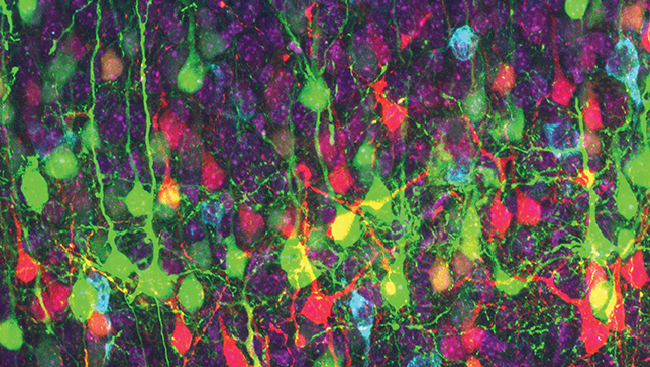 Video Annual Meeting Professional DevelopmentWhat do you do as a mentor, and why do you take the time to mentor? No matter the reason, it’s clear that mentoring is fundamental to the success of individuals and the development of the neuroscience field. Get inspired by these experts, who share what mentoring means to them.May 1, 2015
 -
 Video Annual Meeting Professional DevelopmentFrom the different kinds of NIH grants to advice on how to more easily navigate the review process, Roger Sorenson offers in-depth insights. Watch this video as you consider your options.May 1, 2015
 -
 Article CommunityRecruitment of new faculty is a core activity of academic institutions, and diversity contributes to excellence in all professions, including academia.May 1, 2015
 -
 Article Professional DevelopmentNetworking is crucial to establishing and growing in your career.May 1, 2015
 -
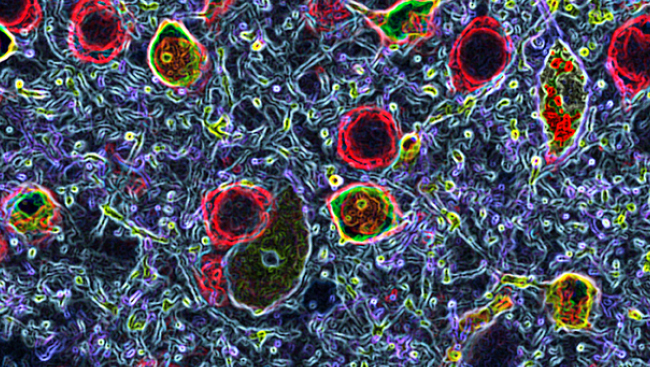 Webinar Scientific ResearchFrom stem cells to brain-computer interfaces, novel functional neuroimaging techniques to new animal model approaches, stroke research is pushing the boundaries of neuroscience. The Neurobiology of Disease Workshop provides students and early-career scientists with in-depth overviews of diseases of the nervous system. In this webinar, faculty from the 2014 Neurobiology of Disease Workshop will further develop topics introduced in the live session and explore the role of brain age in pediatric and neonatal strokes and gender effects.Apr 28, 2015
 -
 Journal ArticleSome visual neurons in the dragonfly ( Hemicordulia tau ) optic lobe respond to small, moving targets, likely underlying their fast pursuit of prey and conspecifics. In response to repetitive targets presented at short intervals, the spiking activity of these ‘small target motion detector’ (STMD) neurons diminishes over time. Previous experiments limited this adaptation by including inter-trial rest periods of varying durations. However, the characteristics of this effect have never been quantified. Here, using extracellular recording techniques lasting for several hours, we quantified both the spatial and temporal properties of STMD adaptation. We found that the time course of adaptation was variable across STMD units. In any one STMD, a repeated series led to more rapid adaptation, a minor accumulative effect more akin to habituation. Following an adapting stimulus, responses recovered quickly, though the rate of recovery decreased nonlinearly over time. We found that the region of adaptation is highly ...Sep 10, 2024
 -
Journal ArticleA goal of connectomics is to reveal the links between neural circuits and behavior. Larvae of the primitive chordate Ciona are well-suited to make contributions in this area. In addition to having a described connectome, Ciona larvae have a range of readily-quantified behaviors. Moreover, the small number of neurons in the larval CNS (∼180) holds the promise of a comprehensive characterization of individual neurons. We present single-neuron predictions for glutamate receptor (GlutR) expression based on in situ hybridization. Included are both ionotropic receptors (AMPA, NMDA, and Kainate), and metabotropic receptors. The predicted glutamate receptor expression dataset is discussed in the context of known circuits driving behaviors such as phototaxis, mechanosensation, and looming shadow response. The predicted expression of AMPA and NMDA receptors may help to resolve issues regarding the co-production of GABA and glutamate by a subset of photoreceptors. The targets of these photoreceptors in the midbrain a...Sep 10, 2024
-
Journal ArticleSpike-and-wave discharges (SWDs) and sleep spindles are characteristic electroencephalographic (EEG) hallmarks of absence seizures and non-rapid eye movement (NREM) sleep, respectively. They are commonly generated by the cortico-thalamo-cortical (CTC) network including the thalamic reticular nucleus (TRN). It has been reported that SWD development is accompanied by a decrease in sleep spindle density in absence seizure patients and animal models. However, whether the decrease in sleep spindle density precedes, coincides with, or follows, the SWD development remains unknown. To clarify this, we exploited Pvalb -tetracycline transactivator (tTA)::tetO-ArchT (PV-ArchT) double-transgenic mouse, which can induce an absence seizure phenotype in a time-controllable manner by expressing ArchT in PV neurons of the TRN. In these mice, EEG recordings demonstrated that a decrease in sleep spindle density occurred 1 week before the onset of typical SWDs, with the expression of ArchT. To confirm such temporal relationsh...Sep 10, 2024
-
 Video Scientific ResearchSusan Andersen, McLean Hospital, Harvard University, Belmont, USA, talks about Animal models of ADHD: What they can tell us about underlying pathology.Apr 24, 2015




