



Filter
-
(133)
-
(733)
-
(4)
-
(1)
-
(47833)
-
(91)
-
(25)
-
(14)
-
(433)
-
(7)
-
(182)
-
(8)
-
(33)
-
(17)
-
(7)
-
(9)
-
(9)
-
(5)
-
(21)
-
(8)
-
(12)
-
(9)
-
(3)
-
(10)
-
(10)
-
(56)
-
(45)
-
(12)
-
(3)
-
(7)
-
(6)
-
(5)
-
(8)
-
(7)
-
(11)
-
(58)
-
(13)
-
(30)
-
(8)
-
(5)
-
(10)
-
(5)
-
(15)
-
(4)
2061 - 2070
of 52756 results
-
 Article Professional DevelopmentWriting good NIH grant applications can be tricky. To help new and established applicants submit better applications, NIH’s Center for Scientific Review (CSR) has shared insights of six former study section chairs explaining common elements of impactful applications they’ve seen.May 8, 2015
 -
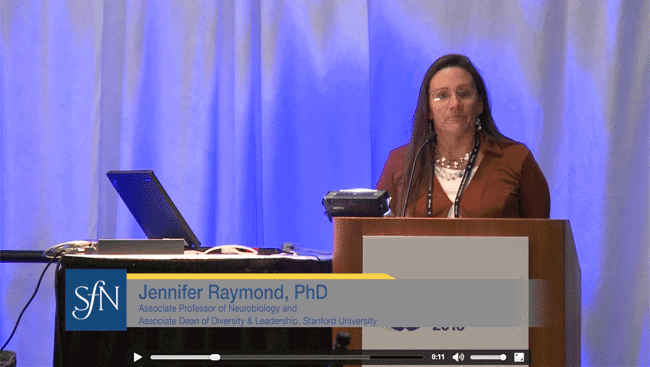 Video DiversityDiversity — or lack thereof — can make or break neuroscience discovery. With departments still struggling to retain women and underrepresented minorities, it’s clear that change is needed.May 8, 2015
 -
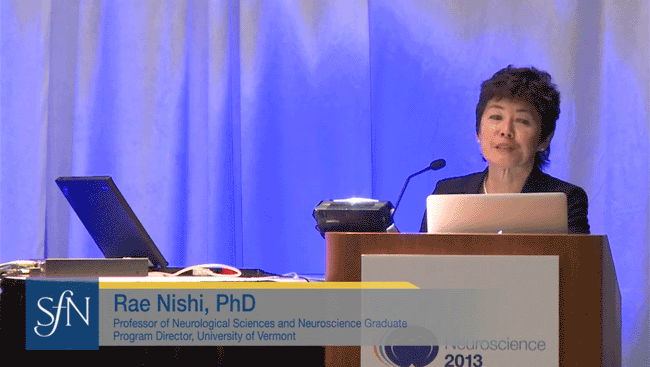 Video DiversityOne program’s progress in increasing diversity could hold important takeaways for you. Hear how Rae Nishi has led the University of Vermont’s neuroscience graduate program to prioritize and increase diversity, and what it means for the students and future of neuroscience.May 8, 2015
 -
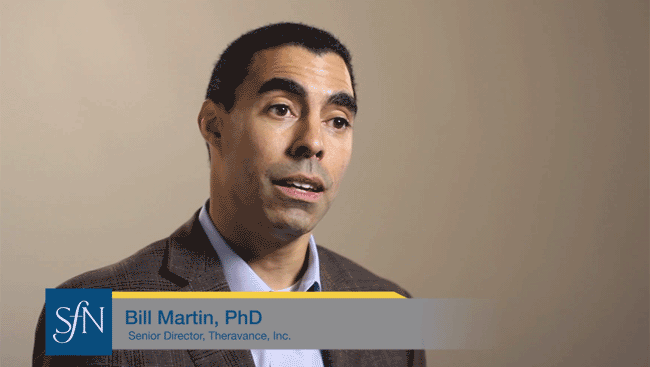 Video Career PathsPharmaceutical research allows scientists to work as a team on projects that develop cures for different neurological problems. Bill Martin discusses why working in industry aligned so well with his career goals and allows him to work on many aspects of each of the projects he contributes to.May 8, 2015
 -
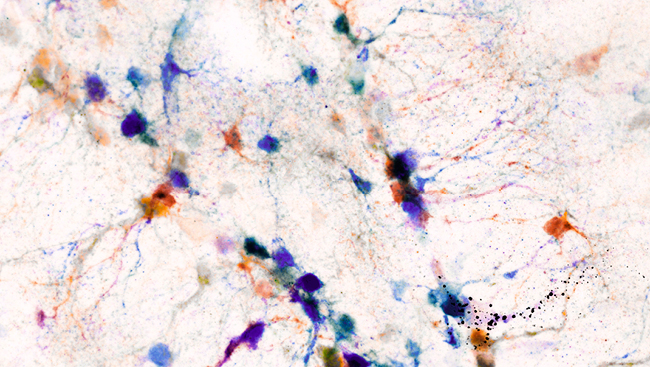 Article Career PathsDo you dream of researching treatments for Alzheimer’s or other neurological diseases? Do you have the tenacity and drive to withstand the challenges of drug discovery for neurological diseases?May 8, 2015
 -
 Article Professional DevelopmentUps and downs, achievements and challenges: your career will be full of them. Through these changes, there will be some constants.May 8, 2015
 -
 Webinar Career PathsIndividual Development Plans (IDPs) help mentors and mentees create customized goals and draw a training map that allows them to measure success.May 8, 2015
 -
 Video Annual Meeting Professional DevelopmentHow can mentors best adapt their advice to a changing field and prepare the next generation of neuroscientists?May 8, 2015
 -
 Article CommunityAttaining tenure and earning promotions are key milestones in an academic career.May 8, 2015
 -
 Journal ArticleCa2+-binding proteins (CaBPs; CaBP1-5) are a subfamily of neuronal Ca2+ sensors with high homology to calmodulin. Notably, CaBP4, which is exclusively expressed in rod and cone photoreceptors, is crucial for maintaining normal retinal functions. However, the functional roles of CaBP1, CaBP2, and CaBP5 in the retina remain elusive, primarily due to limited understanding of their expression patterns within inner retinal neurons. In this study, we conducted a comprehensive transcript analysis using single-cell RNA sequencing datasets to investigate the gene expression profiles of CaBPs in mouse and human retinal neurons. Our findings revealed notable similarities in the overall expression patterns of CaBPs across both species. Specifically, nearly all amacrine cell, ganglion cell, and horizontal cell types exclusively expressed CaBP1. In contrast, the majority of bipolar cell types, including rod bipolar (RB) cells, expressed distinct combinations of CaBP1, CaBP2, and CaBP5, rather than a single CaBP as previ...Sep 11, 2024




