



Filter
-
(133)
-
(733)
-
(4)
-
(1)
-
(47833)
-
(91)
-
(25)
-
(14)
-
(433)
-
(7)
-
(182)
-
(8)
-
(33)
-
(17)
-
(7)
-
(9)
-
(9)
-
(5)
-
(21)
-
(8)
-
(12)
-
(9)
-
(3)
-
(10)
-
(10)
-
(56)
-
(45)
-
(12)
-
(3)
-
(7)
-
(6)
-
(5)
-
(8)
-
(7)
-
(11)
-
(58)
-
(13)
-
(30)
-
(8)
-
(5)
-
(10)
-
(5)
-
(15)
-
(4)
1831 - 1840
of 52756 results
-
 Journal ArticleThe cortico-basal ganglia loop has traditionally been conceptualized as consisting of three distinct information networks: motor, limbic, and associative. However, this three-loop concept is insufficient to comprehensively explain the diverse functions of the cortico-basal ganglia system, as emerging evidence suggests its involvement in sensory processing, including the auditory systems. In the present study, we demonstrate the auditory cortico-basal ganglia loop by using transgenic mice and viral-assisted labelings. The caudal part of the external globus pallidus (GPe) emerged as a major output nucleus of the auditory cortico-basal ganglia loop with the cortico-striato-pallidal projections as its input pathway and pallido-cortical and pallido–thalamo–cortical projections as its output pathway. GABAergic neurons in the caudal GPe dominantly innervated the nonlemniscal auditory pathway. They also projected to various regions, including the substantia nigra pars lateralis, cuneiform nucleus, and periaqueduct...Nov 1, 2024
 -
 Journal ArticleThe growing field of social neuroscience is reliant on the development of robust, ecologically valid paradigms for simulating social interaction and measuring social cognition in highly controlled laboratory settings. Perspective taking is a key component of social cognition, and accordingly several paradigms aimed at measuring perspective taking exist. A relatively novel paradigm is the ball detection task, in which participants and a virtual agent form independent beliefs about the presence of a target stimulus behind an occluder. Previous studies have shown that incongruent trials (in which the participant's and the agent's beliefs differ) affect participant reaction times and elicit increased neural activity in the so-called mentalizing network. This paradigm has important advantages over previous ones, in that experimental conditions can be fully randomized, and ceiling effects are not found even for adult populations. Here, we combined this paradigm with a stress induction and a nonstressful control ...Nov 1, 2024
 -
 Journal ArticleNeurodevelopmental abnormalities are considered to be one of the important causes of schizophrenia. The offspring of methylazoxymethanol acetate (MAM)–exposed mice are recognized for the dysregulation of neurodevelopment and are well-characterized with schizophrenia-like phenotypes. However, the inhibition-related properties of the medial prefrontal cortex (mPFC) and hippocampus throughout adolescence and adulthood have not been systematically elucidated. In this study, both 10 and 15 mg/kg MAM-exposed mice exhibited schizophrenia-related phenotypes in both adolescence and adulthood, including spontaneous locomotion hyperactivity and deficits in prepulse inhibition. We observed that there was an obvious parvalbumin (PV) loss in the mPFC and hippocampus of MAM-exposed mice, extending from adolescence to adulthood. Moreover, the frequency of spontaneous inhibitory postsynaptic currents (sIPSCs) in pyramidal neurons at mPFC and hippocampus was significantly dampened in the 10 and 15 mg/kg MAM-exposed mice. Fu...Nov 1, 2024
 -
 Journal ArticleHere we test the stochastic dynamic operator (SDO) as a new framework for describing physiological signal dynamics relative to spiking or stimulus events. The SDO is a natural extension of existing spike-triggered average (STA) or stimulus-triggered average techniques currently used in neural analysis. It extends the classic STA to cover state-dependent and probabilistic responses where STA may fail. In simulated data, SDO methods were more sensitive and specific than the STA for identifying state-dependent relationships. We have tested SDO analysis for interactions between electrophysiological recordings of spinal interneurons, single motor units, and aggregate muscle electromyograms (EMG) of major muscles in the spinal frog hindlimb. When predicting target signal behavior relative to spiking events, the SDO framework outperformed or matched classical spike-triggered averaging methods. SDO analysis permits more complicated spike–signal relationships to be captured, analyzed, and interpreted visually and i...Nov 1, 2024
 -
 Journal ArticleSuccessful behavior depends on the attentional state and other factors related to decision-making, which may modulate neuronal activity differently. Here, we investigated whether attentional state and behavioral outcome (i.e., whether a target is detected or missed) are distinguishable using the power and phase of local field potential recorded bilaterally from area V4 of two male rhesus monkeys performing a cued visual attention task. To link each trial's outcome to pairwise measures of attention that are typically averaged across trials, we used several methods to obtain single-trial estimates of spike count correlation and phase consistency. Surprisingly, while attentional location was best discriminated using gamma and high-gamma power, behavioral outcome was best discriminated by alpha power and steady-state visually evoked potential. Power outperformed absolute phase in attentional/behavioral discriminability, although single-trial gamma phase consistency provided reasonably high attentional discrimi...Nov 1, 2024
 -
Journal ArticleSocial status and dominance are critical factors influencing well-being and survival across multiple species. However, dominance behaviors vary widely across species, from elaborate feather displays in birds to aggression in chimps. To effectively study dominance, it is essential to clearly define and reliably measure dominance behaviors. In laboratory settings, C57BL/6 mice are commonly used to study dominance due to their stable and linear social hierarchies. However, other mouse strains are also used for laboratory research. Despite substantial evidence for strain effects on behavioral repertoires, the impact of strain on dominance in mice remains largely unstudied. To address this gap, we compared dominance behaviors between CD1 and C57BL/6 male mice across four assays: observation of agonistic behaviors, urine marking, tube test, and a reward competition. We found that CD1 mice demonstrate increased fighting, increased territorial marking through urination, and increased pushing and resisting in the t...Nov 1, 2024
-
 Journal ArticleVisual working memory (VWM) requires precise feature binding. Previous studies have revealed a close relationship between the posterior parietal cortex (PPC) and feature binding during VWM; this study further examined their causal relationship through three transcranial direct current stimulation (tDCS) experiments. In Experiment 1 ( N = 57), participants underwent three sessions of tDCS separately, including PPC stimulation, occipital cortex stimulation, and sham stimulation, and completed delayed estimation tasks for orientations before and after stimulation. Results showed that tDCS over PPC selectively prolonged recall response time (RT) and increased the probability of nontarget responses (a.k.a. failure of feature binding, p NT). In Experiment 2 ( N = 29), combining metacognition estimation, we further investigated whether the effects of PPC stimulation were attributed to misbinding (i.e., participants self-reported “remembered” in nontarget responses) or informed guessing trials (participants self...Nov 1, 2024
 -
 Article Professional DevelopmentJoshua Levitz has developed new approaches to study G protein-coupled receptors, a type of receptor found in cell membranes. He created a method to manipulate the activity of these receptors with synthetic chemical photo-switches.Apr 19, 2016
 -
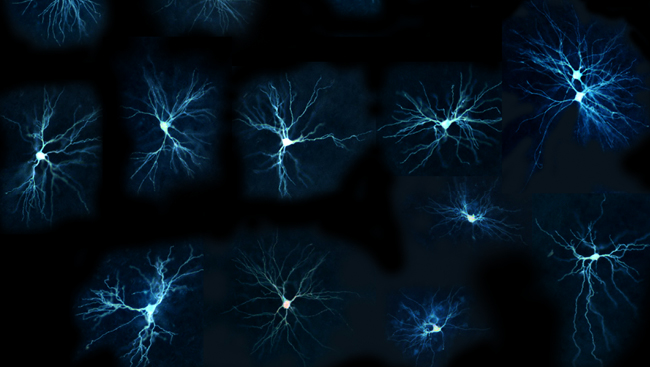 Article Professional DevelopmentIn its Gray Matters report, the United States Presidential Commission for the Study of Bioethical Issues underscored the importance of integrating ethics and neuroscience early and throughout the research endeavor.Apr 14, 2016
 -
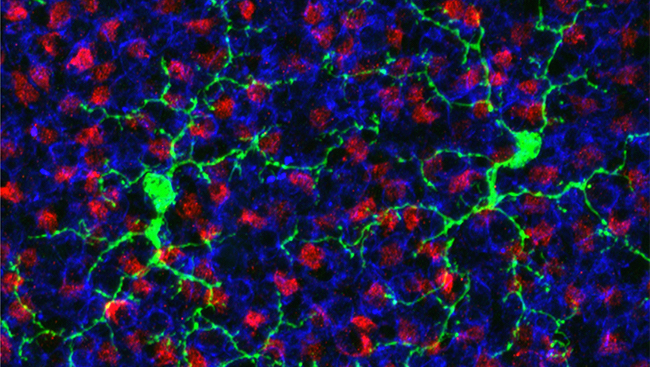 Article Scientific ResearchIn everyday life, emotional scenes captivate us, and we remember them more readily than ordinary scenes and events. Pathways that convey sensory signals reach neurons in the thalamus, which then convey the signals to the cerebral cortex, the brain’s outer rim.Apr 14, 2016




