



Filter
-
(133)
-
(733)
-
(4)
-
(1)
-
(47833)
-
(91)
-
(25)
-
(14)
-
(433)
-
(7)
-
(181)
-
(8)
-
(33)
-
(17)
-
(7)
-
(9)
-
(9)
-
(5)
-
(21)
-
(8)
-
(12)
-
(9)
-
(3)
-
(10)
-
(10)
-
(56)
-
(45)
-
(12)
-
(3)
-
(7)
-
(6)
-
(5)
-
(8)
-
(7)
-
(11)
-
(58)
-
(13)
-
(30)
-
(8)
-
(5)
-
(10)
-
(5)
-
(14)
-
(4)
1501 - 1510
of 52754 results
-
 Video Professional DevelopmentWayne Bowen, a professor at Brown University, and Kathryn Reissner, an associate professor at the University of North Carolina School of Medicine, offer tips to scientists looking to start their first lab, and share their personal experiences in launching their labs.Aug 8, 2017
 -
 Annual Meeting Video OutreachRepeated concussions and other sports-related brain injuries have been recently thrust into the center of public attention. This forum looks at several aspects of this issue from the science of concussions through athletes' perspectives on the competitive system that can put young athletes at risk of injury. Panelists raise questions about whether society can reconcile its insatiable appetite for competition with safety owed to those who risk being harmed by them.Aug 4, 2017
 -
 Poster Scientific ResearchExplore the key tenants, best practices, and other considerations, such as those related to funding, to learn what it means to conduct rigorous and reproducible neuroscience research.Aug 1, 2017
 -
 Webinar Professional DevelopmentLearn about the diverse training experiences facilitated by NIH Intramural Research Programs, including how to apply for various fellowship opportunities.Jul 28, 2017
 -
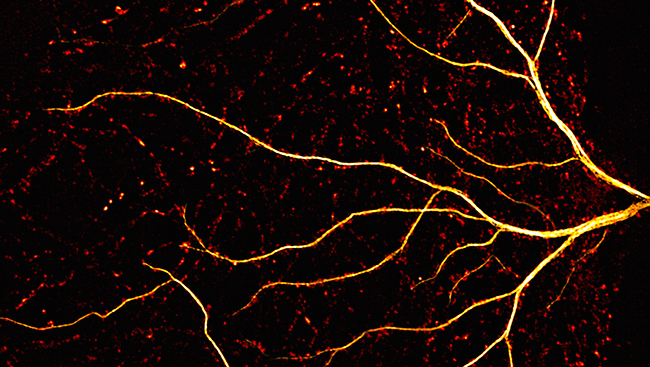 Article Scientific ResearchAn important characteristic of living systems/organisms is that they undergo cyclical episodes of rest and activity, which in higher species has evolved into sleep and waking.Jul 28, 2017
 -
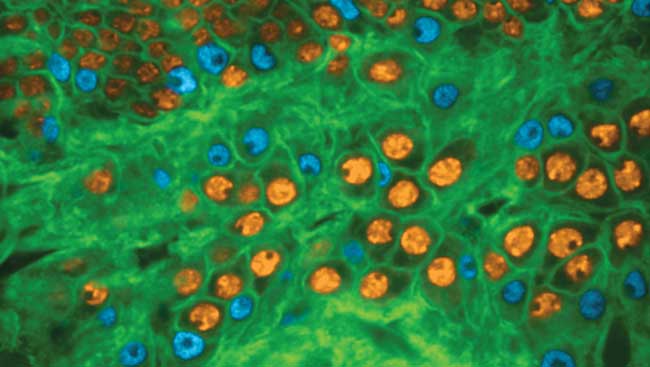 Article Scientific ResearchBrain rhythms, produced by the synchronized electrical activity of millions of neurons, are ubiquitous throughout the mammalian brain. Rhythmic — or oscillatory — activities can be detected using direct recordings in animals and electroencephalographic (EEG) recordings in humans and are seen across the brain at frequencies from less than one hertz to over 100 hertz.Jul 21, 2017
 -
Article Annual Meeting Scientific ResearchScientists do not always agree about how many different types of cells are found in the mammalian brain, nor do they understand all the variation in gene expression that exists even within well-studied categories of cells.Jul 19, 2017
-
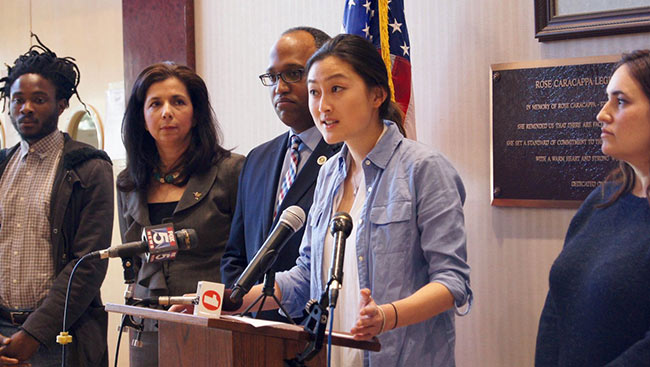 Article AdvocacyThis past April, I proudly marched in Washington, DC, with 100,000 fellow scientists and nonscientists to show our support for the role of science in policy-making.Jul 18, 2017
 -
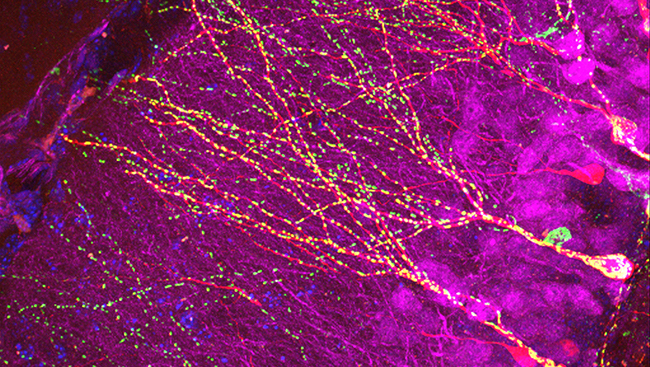 AdvocacyTime spent on applying for grants is on the rise, and many SfN members have also expressed uncertainty about the future of neuroscience funding in the United States. On August 10, from 12-1 pm, Michael Heintz, SfN's director of advocacy and training, will host a live chat in the Neuronline community to answer members' questions regarding the federal budget and its potential impact on NIH and NSF grants. During the live chat, Michael and his team will also answer member questions related to SfN’s advocacy efforts and the best approaches members can take for communicating with elected officials. Members are encouraged to submit their questions for Michael in advance of the live chat by posting in the live chat discussion thread in the Neuronline community.Jul 14, 2017
 -
 Article Scientific ResearchDisorders of the visual system often involve neuronal loss in the retina and in the higher visual centers of the brain, which eventually leads to low vision and blindness.Jul 13, 2017




