



Filter
-
(133)
-
(733)
-
(4)
-
(1)
-
(47832)
-
(91)
-
(25)
-
(14)
-
(433)
-
(7)
-
(181)
-
(8)
-
(33)
-
(17)
-
(7)
-
(9)
-
(9)
-
(5)
-
(21)
-
(8)
-
(12)
-
(9)
-
(3)
-
(10)
-
(10)
-
(56)
-
(45)
-
(12)
-
(3)
-
(7)
-
(6)
-
(5)
-
(8)
-
(7)
-
(11)
-
(58)
-
(13)
-
(30)
-
(8)
-
(5)
-
(10)
-
(5)
-
(14)
-
(4)
1391 - 1400
of 52753 results
-
 Webinar Professional DevelopmentIn this webinar, get advice from faculty members at a variety of career stages on how to give and assess academic chalk talks, which require you to summarize your short-term specific aims, long-term research plans, and funding sources, as well as demonstrate your speaking and teaching abilities.Feb 12, 2018
 -
 Journal ArticleFacial paralysis is characterized by an injury to the facial nerve, causing the loss of the functions of the structures that it innervates, as well as changes in the motor cortex. Current models have some limitations for the study of facial paralysis, such as movement restriction, the absence of studying awake animals in behavioral contexts, and the lack of a model that fully evaluates facial movements. The development of an algorithm capable of automatically inferring facial paralysis and overcoming the existing limitations is proposed in this work. In C57/BL6J mice, we produced both irreversible and reversible facial paralysis. Video recordings were made of the faces of paralyzed mice to develop the algorithm for detecting facial paralysis applied to mice, which allows us to predict the presence of reversible and irreversible facial paralysis automatically. At the same time, the algorithm was used to track facial movement during gustatory stimulation, and extracellular electrophysiological recordings in ...Feb 13, 2025
 -
 Article Career PathsIn A Look at One Neuroscientist’s Career in Pharma and Biotech, Khan Ozol, a neuroscientist and global head of talent scouting at Novartis, shared his career journey and how he got to where he is today. Here, in part two of this interview, Ozol describes the types of positions available to neuroscientists in industry and shares advice on how to be competitive candidates for them. Broadly speaking, what are different types of bench positions available in industry? There are many career opportunities for neuroscientists in industry — it just depends on where you’re at and what that company is focused on. Master’s students can work at the bench as research and senior research associates with different neuroscience specializations in many pharmaceutical and biotech companies in Europe and the United States.Feb 7, 2018
 -
 Article AdvocacyCharlotte Boettiger, who is actively involved in SfN’s North Carolina Triangle Chapter and serves on SfN’s Government and Public Affairs committee, shares why engaging policymakers at the local level is an important and powerful way to make the case for federal funding to support science research. Specifically, she highlights how to educate your local representatives about the importance of funding basic science research and ways to engage policymakers through your SfN chapter. Overall, why is it valuable to engage your policymakers to support biomedical research? Policymakers, in large part, are not scientists. So, it's our obligation, particularly if we are publicly funded scientists, to educate them about the funding that they provide, what that funding enables, and why their support is essential.Feb 6, 2018
 -
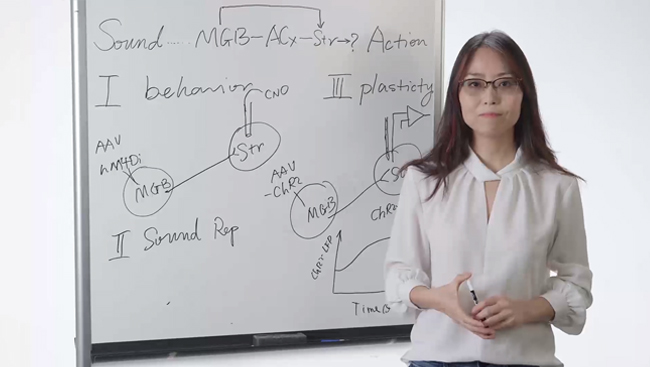 Video Professional DevelopmentWhat goes into a successful chalk talk? Qiaojie Xiong, an assistant professor at Stony Brook University, answers based on her own experience going through the process. In this video, she delivers a snapshot of her research plan to give you an idea of the structure, pacing, and tone. Additionally, below the video, she answers common questions, such as how to structure your talk and ways to get feedback. For more insights from faculty on how to prepare for and deliver an effective chalk talk, register for the upcoming webinar, Demystifying the Academic Chalk Talk. What is the purpose of a chalk talk? Chalk talks show your ability to teach. This is especially important for public institutions where teaching undergrads is a big component.Feb 6, 2018
 -
 Annual Meeting Video OutreachIn this Dialogues Between Neuroscience and Society lecture, Siddhartha Mukherjee engages in a conversation with Eric Nestler, past president of SfN, about the excitement and importance of communicating the promise of scientific inquiry to the public.Feb 1, 2018
 -
 Article Professional DevelopmentMachine learning refers to software that can learn from experience and is thus particularly good at extracting knowledge from data and for generating predictions. Recently, one powerful variant, deep learning, has become the staple of recent progress and hype in applied machine learning. Deep learning uses biologically inspired artificial neural networks with many processing stages. These deep networks, together with the ever-growing computing power and larger datasets for learning, now deliver groundbreaking performances.Jan 30, 2018
 -
 Webinar Scientific ResearchThe topics of scientific rigor and data reproducibility have been increasingly covered in the scientific and mainstream media, and are being addressed by publishers, professional organizations, and funding agencies, including NIH. This webinar — the first in a series titled Promoting Awareness and Knowledge to Enhance Scientific Rigor in Neuroscience— will address topics of scientific rigor as they pertain to pre-clinical neuroscience research.Jan 30, 2018
 -
Journal ArticleElectrophysiology recordings from the brain using laminar multielectrode arrays allow researchers to measure the activity of many neurons simultaneously. However, laminar microelectrode arrays move relative to their surrounding neural tissue for a variety of reasons, such as pulsation, changes in intracranial pressure, and decompression of neural tissue after insertion. Inferring and correcting for this motion stabilizes the recording and is critical to identify and track single neurons across time. Such motion correction is a preprocessing step of standard spike sorting methods. However, estimating motion robustly and accurately in electrophysiology recordings is challenging due to the stochasticity of the neural data. To tackle this problem, we introduce MEDiCINe ( M otion E stimation by Di stributional C ontrastive I nference for Ne urophysiology), a novel motion estimation method. We show that MEDiCINe outperforms existing motion estimation methods on an extensive suite of simulated neurophysiology rec...Feb 11, 2025
-
Journal ArticleMaintenance of normal structure of the enteric nervous system (ENS), which regulates key gastrointestinal functions, requires robust homeostatic mechanisms, since by virtue of its location within the gut wall, the ENS is subject to constant mechanical, chemical, and biological stressors. Using transgenic and thymidine analogue-based experiments, we previously discovered that neuronal turnover – where continual neurogenesis offsets ongoing neuronal loss at steady state – represents one such mechanism. Although other studies confirmed that neuronal death continues into adulthood in the myenteric plexus of the enteric nervous system (ENS), the complicated nature of thymidine analogue presents challenges in substantiating the occurrence of adult neurogenesis. Therefore, it's vital to employ alternative, well-recognized techniques to substantiate the existence of adult enteric neurogenesis in the healthy gut. Here, by using established methods of assessing nuclear DNA content and detecting known mitotic marker ...Feb 11, 2025




