



Filter
-
(133)
-
(733)
-
(4)
-
(1)
-
(47830)
-
(91)
-
(25)
-
(14)
-
(433)
-
(7)
-
(181)
-
(8)
-
(33)
-
(17)
-
(7)
-
(9)
-
(9)
-
(5)
-
(21)
-
(8)
-
(12)
-
(9)
-
(3)
-
(10)
-
(10)
-
(56)
-
(45)
-
(12)
-
(3)
-
(7)
-
(6)
-
(5)
-
(8)
-
(7)
-
(11)
-
(58)
-
(13)
-
(30)
-
(8)
-
(5)
-
(10)
-
(5)
-
(14)
-
(4)
1221 - 1230
of 52751 results
-
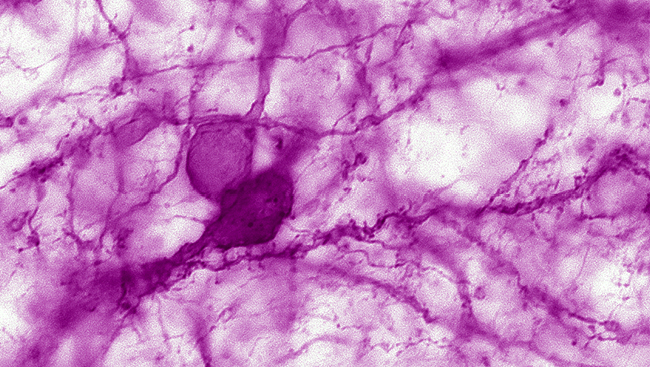 Article Scientific ResearchMaterial below summarizes the article, Dominant Neuropeptide Cotransmission in Kisspeptin-GABA Regulation of GnRH Neuron Firing Driving Ovulation, published on July 11, 2018, in JNeurosci and authored by Richard Piet, Bruna Kalil, Tim McLennan, Robert Porteous, Katja Czieselsky, and Allan E. Herbison. Fertility in all mammals is governed by a small population of neurons scattered in the basal forebrain that secrete gonadotropin-releasing hormone (GnRH). GnRH neurons project to the median eminence and release GnRH into the pituitary portal blood system. In the anterior pituitary, GnRH stimulates secretion into the blood of the gonadotropins follicle-stimulating hormone and luteinizing hormone (LH), which in turn act in the gonads to promote gametogenesis and sex steroid hormone production.Nov 15, 2018
 -
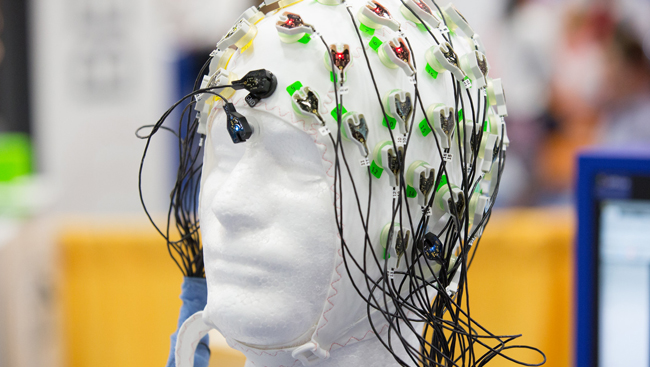 Article Professional DevelopmentDiagnosing schizophrenia can be complex, time-consuming, and expensive. The April seminar on The Future Now: (NEEDs) Neuroscience and Emerging Ethical Dilemmas at Emory focused on one innovative effort to improve this process in the flourishing field of digital phenotyping. Presenter and NeuroLex founder and CEO Jim Schwoebel had witnessed his brother struggle for several years with frequent headaches and anxiety, and saw him accrue nearly $15,000 in medical expenses before his first psychotic break. From there it took many more years and additional psychotic episodes before Jim’s brother began responding to medication and his condition stabilized.Nov 14, 2018
 -
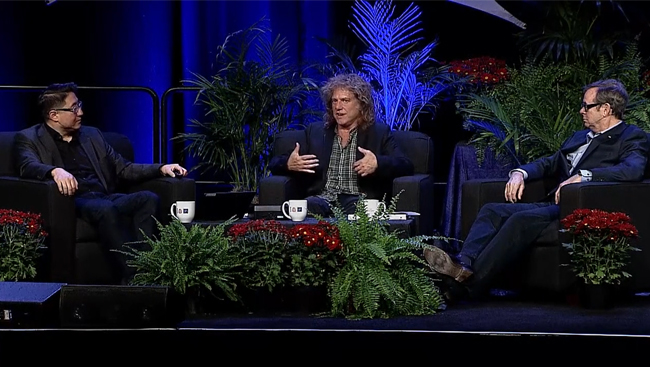 Video Annual Meeting Scientific ResearchMusic is a universal language and a powerful force in the world. It can have incredible impact on our brain and easily make us cry or make us joyful. Just a few notes of a song can cause us to remember memories long past. In this 2018 Dialogues Between Neuroscience and Society lecture, Pat Metheny discusses, with a panel of SfN members, the impact of music on the brain and on our emotions and memory; the process of creativity in music, art, and science; and the role of music in healing.Nov 7, 2018
 -
 Video Professional DevelopmentOrganized by the FENS-Kavli Network of Excellence (FKNE) under the umbrella of the FENS Committee of Higher Education and Training (CHET), this session focuses on topics relevant for senior postdocs and newly appointed PIs who want to start their own lab, including: - How to get your first PI position. - Selection of team members. - Application and management of funds. - Early career mobility. - Balancing family with career.Oct 29, 2018
 -
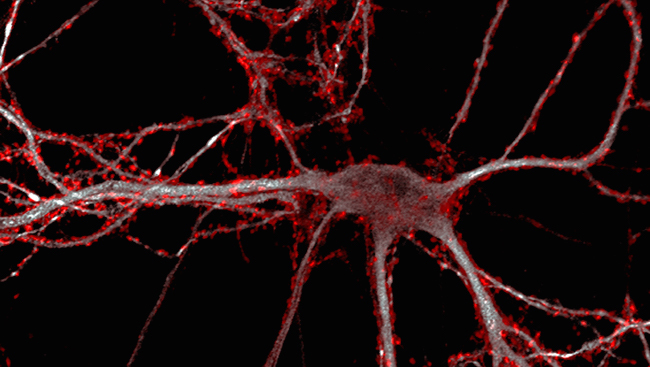 Video Professional DevelopmentThe crisis of reproducibility in biology, from which neuroscience is not immune, has many causes. This workshop covers the wide-ranging issues that contribute to irreproducibility. It focuses on the bias in dissemination of experimental data from the point of view of journals, funding agencies, and the general media.Oct 29, 2018
 -
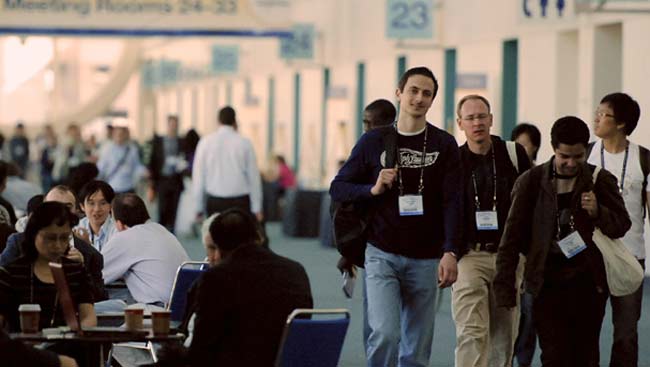 Annual Meeting Article Professional DevelopmentThe SfN annual meeting has excellent opportunities to make meaningful connections and seek real-time information. Here are a few ways you can personalize your experience.Oct 29, 2018
 -
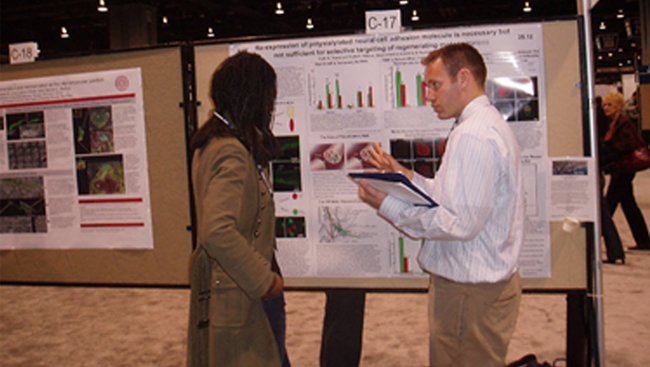 Article Annual Meeting Professional DevelopmentColin Franz, assistant professor at Northwestern University, shares his tips to end each day of SfN’s annual meeting with a feeling of accomplishment and make important career connections. What’s your key to a successful meeting? My advice for a first-time attendee would be, decide the one thing you want to accomplish for each half-day before you walk into the convention center.Oct 24, 2018
 -
 Journal ArticleHuman motor skill acquisition is improved by performance feedback and coupling such feedback with extrinsic reward (such as money) can enhance skill learning. However, the neurophysiology underlying such behavioral effect is unclear. To bridge this gap, we assessed the effects of reward on multiple forms of motor plasticity during skill learning. Sixty-five healthy participants divided in three groups performed a pinch-grip skill task with sensory feedback only, sensory and reinforcement feedback or both feedback coupled with an extrinsic monetary reward during skill training. To probe motor plasticity, we applied transcranial magnetic stimulation at rest, on the left primary motor cortex before, at an early training time-point and after training in the three groups and measured Motor Evoked Potentials from task relevant muscle of the right arm. This allowed us to evaluate the amplitude and variability of corticospinal output, GABA-ergic short-intracortical inhibition and use-dependent plasticity before tr...Mar 26, 2025
 -
 Video Outreach“The best thing to do when you’re communicating your animal research is to be completely straightforward about it,” explains Chris Barncard, science writer at the University of Wisconsin. “People recognize genuine sentiment when they see it. So we tell our researchers, even if they’re apprehensive about talking about their animal research, to try to be as straight and complete as they can with people about how animal research is conducted. Those interactions often turn out very positive.” Watch this video to hear the: - Benefits of speaking openly about animal research. - Approaches that can help researchers talk about animal research. - Key tips and strategies that you can incorporate into your conversations.Oct 18, 2018
 -
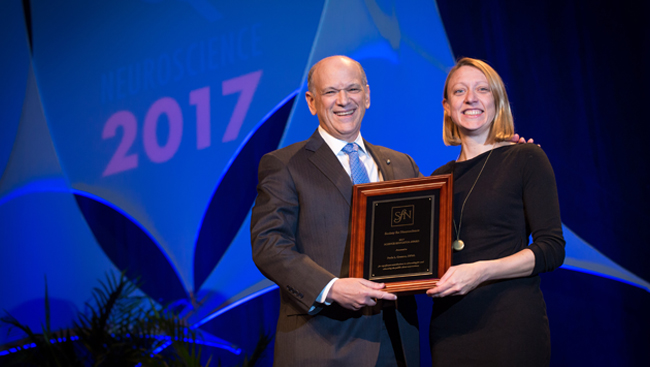 Article OutreachScience shapes all of our lives and Paula Croxson frequently shares how with many distinct audiences. She is the New York producer of The Story Collider, which features true, personal stories about science through live performances and a podcast. Croxson is a group leader of NeuWrite, an online collaboration space for writers, artists, radio producers, filmmakers, and scientists. Additionally, she blogs for Psychology Today and has presented at comedy shows, festivals, and other events. For creativity in science communication, she won the Science Educator and Outreach Award in 2017. Here, she talks about her passion for storytelling and approaches to build narratives that resonate. Where did your passion for scientific storytelling originate? I told my first story for The Story Collider as part of a Brain Awareness Week show in 2012. It was about my grandmother, who had Alzheimer’s disease. I initially thought I didn’t have anything worth sharing. I thought to myself, “Well, everyone knows someone with Alzheimer’s disease. There isn’t anything special about my story.” Even after I had worked on the story, weaving in my own work in memory research, I was convinced no one would care. During the performance, the lights were so bright I couldn’t see the audience’s reaction, so it wasn’t until I got down from the stage, shaking and feeling incredibly relieved, that I realized the impact of my words. With tears in their eyes, strangers asked to hug me and thanked me for sharing my experience. Suddenly, I got it.Oct 17, 2018




