



Filter
-
(133)
-
(733)
-
(4)
-
(1)
-
(47830)
-
(91)
-
(25)
-
(14)
-
(433)
-
(7)
-
(181)
-
(8)
-
(33)
-
(17)
-
(7)
-
(9)
-
(9)
-
(5)
-
(21)
-
(8)
-
(12)
-
(9)
-
(3)
-
(10)
-
(10)
-
(56)
-
(45)
-
(12)
-
(3)
-
(7)
-
(6)
-
(5)
-
(8)
-
(7)
-
(11)
-
(58)
-
(13)
-
(30)
-
(8)
-
(5)
-
(10)
-
(5)
-
(14)
-
(4)
1211 - 1220
of 52751 results
-
 Journal ArticleChronic pain affects millions globally, yet no universally effective treatment exists. The primary motor cortex (M1) has been a key target for chronic pain therapies, with electrical stimulation of the M1 (eMCS) showing promise. However, the mechanisms underlying M1-mediated analgesic effects are not fully understood. We investigated the role of the primary somatosensory cortex (S1) in M1-mediated analgesia using a neuropathic pain mouse model. In this model, neuropathic pain is associated with increased spontaneous activity of layer V pyramidal neurons (LV-PNs) in the S1, partly attributed to the reduced activity of somatostatin-expressing inhibitory neurons (SST+ INs), which normally suppress LV-PNs. While manipulation of either LV-PNs or SST+ INs has been shown to alleviate pain, the role of S1 in M1-mediated analgesia has not been identified. Using multichannel silicon probes, we applied eMCS to neuropathic mice and observed significant analgesia. Histological analyses revealed that eMCS activated SST+...Apr 1, 2025
 -
 Journal ArticleThe primary motor cortex (M1) is strongly engaged by movement planning and execution. However, the role of M1 activity in voluntary grasping is still not completely understood. Here we analyze recordings of M1 neurons during the execution of a delayed reach-to-grasp task, where monkeys had to actively grasp an object with either a side or a precision grip, and then pull it with a low or high amount of force. Single cell and neural populations analyses showed that grip type was robustly and specifically encoded by a large population of neurons, while force level was weakly and transiently encoded within mixed-selective neurons that also encoded grip type. Notably, the grip type was stably decoded from motor cortical populations during the preparation and execution epochs of the task. Our results are consistent with the idea that planning and performing specific grasping movements are high-level skills that strongly engage M1 neurons, while the execution of pulling force might be prominently encoded at lower...Apr 1, 2025
 -
 Journal ArticleIndividuals with normal hearing exhibit considerable variability in their capacity to understand speech in noisy environments. Previous research suggests the cause of this variance may be due to individual differences in cognition and auditory perception. To investigate the impact of cognitive and perceptual differences on speech comprehension, 25 adult human participants with normal hearing completed numerous cognitive and psychoacoustic tasks including the Flanker, Stroop, Trail Making, reading span, and temporal fine structure tests. They also completed a continuous multitalker spatial attention task while neural activity was recorded using electroencephalography. The auditory cortical N1 response was extracted as a measure of neural speech encoding during continuous speech listening using an engineered “chirped-speech” (Cheech) stimulus. We compared N1 component morphologies of target and masker speech stimuli to assess neural correlates of attentional gains while listening to concurrently played short...Apr 1, 2025
 -
 Journal ArticleWhat the basal ganglia do is an oft-asked question; answers range from the selection of actions to the specification of movement to the estimation of time. Here, I argue that how the basal ganglia do what they do is a less-asked but equally important question. I show that the output regions of the basal ganglia create a stringent computational bottleneck, both structurally, because they have far fewer neurons than do their target regions, and dynamically, because of their tonic, inhibitory output. My proposed solution to this bottleneck is that the activity of an output neuron is setting the weight of a basis function, a function defined by that neuron’s synaptic contacts. I illustrate how this may work in practice, allowing basal ganglia output to shift cortical dynamics and control eye movements via the superior colliculus. This solution can account for troubling issues in our understanding of the basal ganglia: why we see output neurons increasing their activity during behavior, rather than only decreas...Apr 1, 2025
 -
 Journal ArticleThe scientific landscape in the United States is experiencing a significant shift. Recent developments have created new challenges for US researchers, US institutions, and scientific societies worldwide that warrant our collective attention and thoughtful response. These changes present an opportunity to reaffirm the fundamental importance of scientific exchange. Recent policy changes have significantly altered funding for biomedical research in the United States. The National Institutes of Health (NIH) has announced substantial reductions in funding and has canceled study sections. Although the story is still unravelling, the decision to limit the overheads to 15% may threaten the very existence of some laboratories with obvious disastrous human consequences. This also includes the closure of NIH-core funded facilities and the firing of scientific personnel. The current climate has changed the way international researchers consider future travel to the United …Apr 1, 2025
 -
Journal ArticleIn the article “Nucleus Accumbens Microcircuit Underlying D2-MSN-Driven Increase in Motivation,” by Carina Soares-Cunha, Bárbara Coimbra, Ana Verónica Domingues, Nivaldo Vasconcelos, Nuno Sousa, and Ana João Rodrigues, …Apr 1, 2025
-
 Video Professional DevelopmentLisa Monteggia, incoming Barlow Family Director of the Vanderbilt Brain Institute, believes advocacy means “putting yourself out there” and “pushing someone forward,” ultimately “providing a base of support to really encourage someone to reach the goals they want to reach.” For Monteggia, advocacy is also about helping to train the next generation of neuroscientists. In this video, find out from her how to: - Leverage opportunities to advocate for yourself, such as awards, grants, and meetings. - Encourage and endorse others in simple yet meaningful ways. - Build your connections with mentors and peers to strengthen your network of support.Nov 21, 2018
 -
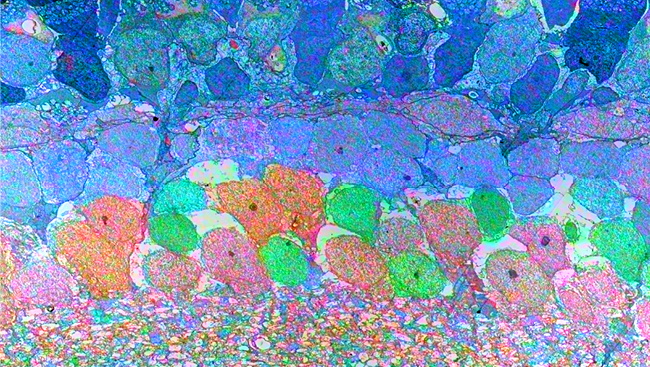 Article Scientific ResearchMaterial below is adapted from the SfN Short Course, Synapse Elimination and Learning Rules Coregulated by Major Histocompatibility Class I Protein H2-Db by Hanmi Lee, PhD, Lowry A. Kirkby, PhD, Barbara K. Brott, PhD, Jaimie D. Adelson, PhD, Sarah Cheng, BS, Marla B. Feller, PhD, Akash Datwani, PhD, and Carla J. Shatz, PhD. Short Courses are day-long scientific trainings on emerging neuroscience topics and research techniques held just prior to SfN’s annual meeting. Major histocompatibility complex class I (MHCI) proteins occur on nearly all vertebrate cells and function as a marquee for the immune system, displaying bits of non-self proteins from the cell’s cytosol on its surface. Now, researchers have shown in mice that a common MCHI protein, H2-Db, is required for shaping the synapses during the development of the retinogeniculate system.Nov 20, 2018
 -
 Article Professional DevelopmentI believe the key to an effective discussion about animal research is authenticity. I learned this firsthand during a lecture I gave at the University of California at Irvine’s Distinctive Voices Series organized by the National Academy of Sciences.Nov 19, 2018
 -
Journal ArticleParkinson’s disease (PD) is a progressive neurodegenerative disorder characterized by motor and non-motor symptoms. Its pathological hallmarks include the accumulation of misfolded alpha-Synuclein (α-Syn) in Lewy bodies (LBs) and Lewy neurites. Phosphorylation of α-Syn is a prominent feature of these inclusions, but its role in disease pathogenesis remains unclear. To identify the role of α-Syn phosphorylation in Synucleinopathy, we generated two Snca knock-in (KI) mouse models carrying phosphomimetic mutations at SncaY39 or SncaS129 ( SncaY39E or SncaS129D ) which manipulated epitopes phosphorylated in PD brain. Both SncaY39E and SncaS129D KI mice displayed increased α-Syn phosphorylation, enhanced oligomer formation, and a shift of α-Syn localization from membrane-bound to cytoplasm. However, neurodegeneration in substantia nigra was not observed up to 24 months of age. These findings demonstrate that mimicking the phosphorylation of Y39 or S129 can induce endogenous α-Syn phosphorylation. Still, a singl...Mar 31, 2025




