



Filter
-
(133)
-
(733)
-
(4)
-
(1)
-
(47830)
-
(91)
-
(25)
-
(14)
-
(433)
-
(7)
-
(181)
-
(8)
-
(33)
-
(17)
-
(7)
-
(9)
-
(9)
-
(5)
-
(21)
-
(8)
-
(12)
-
(9)
-
(3)
-
(10)
-
(10)
-
(56)
-
(45)
-
(12)
-
(3)
-
(7)
-
(6)
-
(5)
-
(8)
-
(7)
-
(11)
-
(58)
-
(13)
-
(30)
-
(8)
-
(5)
-
(10)
-
(5)
-
(14)
-
(4)
1061 - 1070
of 52751 results
-
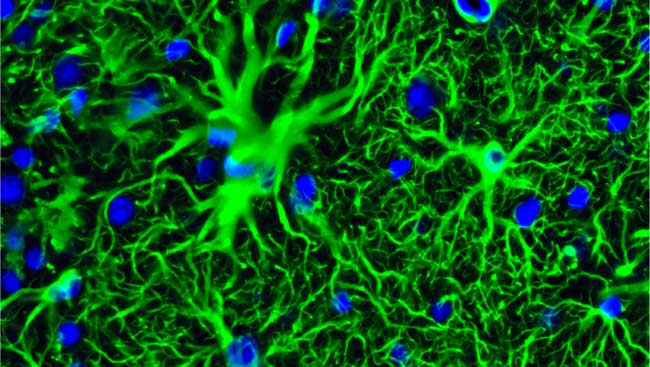 Podcast Scientific ResearchTransmembrane voltage measurements are of primary importance in understanding neuronal function. As part of a growing community of researchers developing genetically encoded voltage indicators, Michael Lin, an associate professor of neurobiology and bioengineering at Stanford University, will provide a short history of the development of voltage sensors and explain their advantages and applications to brain imaging, using data from his lab. He will also discuss how his scientific interests put him at the interface of chemistry and neuroscience, and share some of the unique opportunities and challenges of being a tool developer in the biological sciences.Aug 20, 2019
 -
 Journal ArticleWe have documented the early embryonic development of hypothalamic neurons expressing β-endorphin (β-End), α-melanocyte stimulating hormone (αMSH), neuropeptide Y (NPY) and kisspeptin (Kiss1) in Rhesus macaques, an animal model that is very similar to humans. Neurons expressing both β-End and αMSH are the first to develop and are initially located in the lateral basal hypothalamus (LBH) as early as day 32-34 of gestation. By day 45 of gestation, these neurons have migrated into the medial basal hypothalamic (MBH) area as their final destination. NPY neurons within the ARH develop later and are first documented at day 44 of fetal life, at which time a cluster of neurons are present within ARH-MBH area. NPY neurons continued to be expressed within the ARH area at all later fetal ages analyzed. Similarly, kisspeptin neurons develop later compared to β-End, although, only a few cells are present in the ARH by day 44 of gestation, at which time kisspeptin is also expressed in the developing anterior lobe of the...May 19, 2025
 -
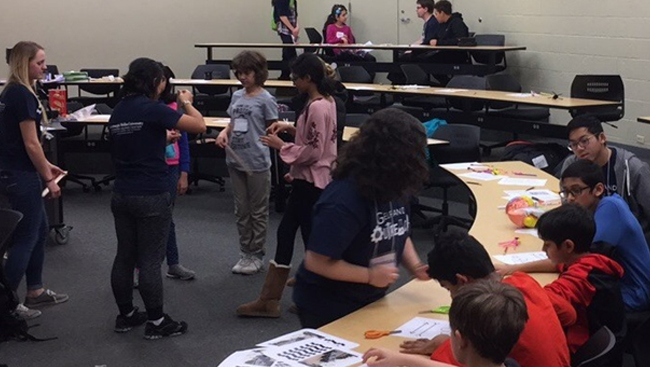 Article OutreachAs an undergraduate at Carnegie Mellon University, Meredith Schmehl co-founded a local chapter of Nu Rho Psi, an outreach-focused neuroscience honor society, and served as the group’s president for two years. In this article she shares best practices for forming and leading a student-led outreach group. In recent years, many institutions have begun to support student groups focused on educational outreach in the community. Throughout my time as the president of the Nu Rho Psi chapter at Carnegie Mellon, and now as a graduate student at Duke University, people have frequently asked me for advice on forming an outreach group. I recommend taking the following steps to found a successful student organization focused on educational engagement with the public. Assemble a Team Perhaps the most important step in establishing an outreach group is to form a leadership team. Find others who are also passionate about sharing science with the community, and invite them to be a part of the process. By assigning a specific role to each team member, you can split up tasks to make the process more manageable. A typical leadership team might include a president, vice president, secretary, and treasurer, as well as roles such as a webmaster or an event chair depending on the group’s unique needs. In addition, asking a faculty member or student life professional to serve as an advisor can provide a bridge with the university administration, helping to connect the group with the broader mission and resources of the institution. Identify Your NicheAug 14, 2019
 -
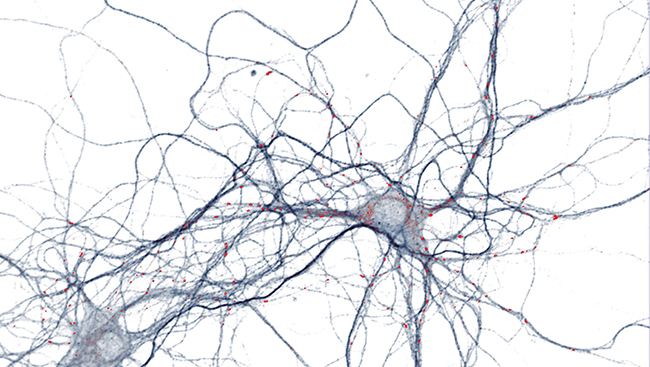 Article Scientific ResearchMaterial below is adapted from the SfN Short Course session Sex-Dependent Mechanisms of Synaptic Modulation, by Catherine S. Woolley. Short Courses are daylong scientific trainings on emerging neuroscience topics and research techniques held the day before the start of SfN’s annual meeting. The push to consider the sex of animals used in neuroscience research is largely based on emerging evidence of differences between males and females. If researchers do not pay attention to possible sex differences, they risk missing underlying mechanisms of brain function, which could have implications for not only basic science but for translational research, too. Many identified sex differences are quantitative, where differences of number exist between the sexes. One example of a quantitative sex difference is men and women have a difference in incidence of major depressive disorder. In the example of major depressive disorder, as well as in other quantitative sex differences, differences in incidence or number reflect fundamental differences in how male and female brains work. Another type of sex difference is the sex-specific effect, when one sex exhibits a behavior or phenotype but the other sex doesn’t at all or shows an opposite response. Some sex-specific effects are related to reproductive physiology, but others aren’t. For example, the steroid hormone 17β-estradiol (also called E2), which is made by the ovaries as well as by the brains of male and female mammals, has been shown to influence neural signaling in the hippocampus of the rat. Researchers found E2 suppresses inhibitory signaling in hippocampus of female rats that have had their ovaries removed, but not in male rats, suggesting molecular signals activated by steroid hormones can differ widely between the sexes.Aug 6, 2019
 -
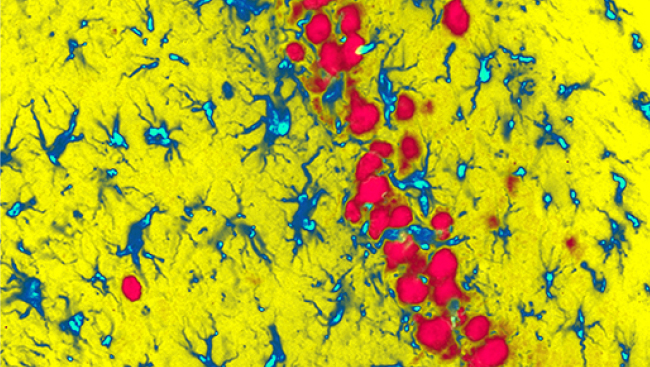 Article Scientific ResearchMaterial below summarizes the article Restrained Dendritic Growth of Adult-born Granule Cells Innervated by Transplanted Fetal GABAergic Interneurons in Mice with Temporal Lobe Epilepsy, published on March 27, 2019, in eNeuro and authored by Jyoti Gupta, Mark Bromwich, Jake Radell, Muhammad N. Arshad, Selena Gonzalez, Bryan W. Luikart, Gloster B. Aaron, and Janice R. Naegele. Highlights • Transplanting healthy inhibitory cells into the dentate gyrus of the hippocampus in mice was shown to inhibit new granule cells generated after temporal lobe epilepsy (TLE). • The inhibitory connections formed by the transplanted cells are linked to changes in the structure of new granule cells, including smaller dendritic arbors. • Many of these adult-born cells become highly abnormal in TLE and contribute to the development of spontaneous seizures, so these structural changes may be important for reducing the excitability of new granule cells in TLE and offer hope to people who suffer spontaneous seizures and sometimes seek relief through brain surgery.Aug 1, 2019
 -
Journal ArticleThe rodent brain contains 70,000,000+ neurons interconnected via complex axonal circuits with varying architectures. Neural pathologies are often associated with anatomical changes in these axonal projections and synaptic connections. Notably, axonal density variations of local and long-range projections increase or decrease as a function of the strengthening or weakening, respectively, of the information flow between brain regions. Traditionally, histological quantification of axonal inputs relied on assessing the fluorescence intensity in the brain region-of-interest. Despite yielding valuable insights, this conventional method is notably susceptible to background fluorescence, post-acquisition adjustments, and inter-researcher variability. Additionally, it fails to account for the non-uniform innervation across brain regions, thus overlooking critical data such as innervation percentages and axonal distribution patterns. In response to these challenges, we introduce AxoDen, an open-source semi-automated...May 16, 2025
-
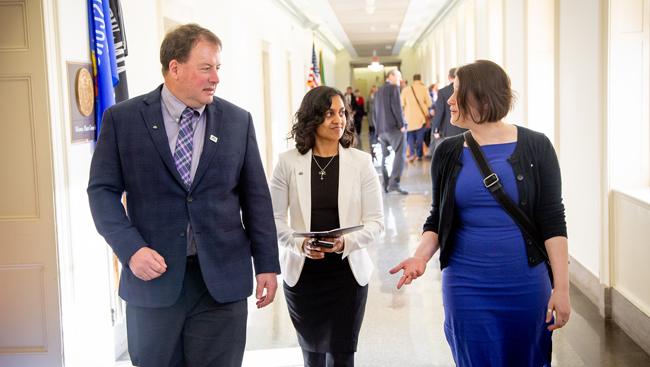 Article AdvocacyNeuroscience advocates hope to ensure the future of scientific discovery by sharing the importance of their research with members of Congress and their staff. But how what goes into an effective pitch? Here’s an inside look — from someone on the other side of the table — at what members of Congress want to know. What makes a pitch stand out? The best pitches don’t feel like pitches at all. They feel like a pathway to action. It succinctly identifies a problem, links that problem to existing or prospective constituent concerns, and then proposes a solution that considers the congressional Member’s perspective by addressing potential policy, political, or procedural barriers they may encounter. The single best way to strengthen your pitch is to individualize that pitch to the Member with whom you are meeting. Sometimes that means preparing specific questions designed to elicit responses that allow you to individualize your pitch as you are making it. It's definitely an art in its own right, but the most effective advocates have perfected it.Jul 30, 2019
 -
 Article Scientific ResearchWhen you hit your toe against the corner of your bed, you feel a sharp pain that may make you scream or swear. In the same way, you may become startled and scream when a barking dog suddenly jumps up from behind a fence next to you. Vocalizing when exposed to the stimulation of a frightening event is highly conserved throughout the animal kingdom. For instance, when a rat faces a danger, like an encounter with a predator or an aggressive conspecific, it vocalizes in the audible range and in the ultrasonic range (22kHz). These ultrasonic vocalizations reflect a negative emotional state and belong to the rat’s fear response repertoire. Fear behavior depends on interactions between the medial prefrontal cortex (mPFC) and the basolateral amygdala (BLA), and involves synchronized activity in theta and gamma oscillatory activities in these brain areas.Jul 25, 2019
 -
Journal ArticleSleep consists of two alternating states—rapid eye movement (REM) and non-REM (NREM) sleep. Neurons adjust their firing activity based on brain state, but how this modulation varies across neurons and brain regions remains poorly understood. This study analyzed previously acquired 17-h continuous recordings of single-unit activity and local field potentials in the ventral hippocampal CA1 region, prelimbic cortex layer 5, and basolateral nucleus of the amygdala of fear-conditioned rats. The findings indicate that more than half of the neurons fired faster during REM sleep than during NREM sleep, although a notable subset of neurons exhibited the opposite preference, firing preferentially during NREM sleep. During sleep, the firing activity of both REM- and NREM-preferring neurons decreased. However, fast network oscillations, including hippocampal sharp-wave ripples (SWRs), amygdalar high-frequency oscillations, cortical ripples, and cortical spindles, differentially modulated REM- versus NREM-preferring ne...May 15, 2025
-
Journal ArticleFrom lamprey to monkeys, the organization of the descending control of locomotion is conserved across vertebrates. Reticulospinal neurons ( RSNs ) form a bottleneck for descending commands, receiving innervation from diencephalic and mesencephalic locomotor centres and providing locomotor drive to spinal motor circuits. Given their optical accessibility in early development, larval zebrafish offer a unique opportunity to study reticulospinal circuitry. In fish, RSNs are few, highly stereotyped, uniquely identifiable, large neurons spanning from the midbrain to the medulla. Classically labelled by tracer dye injections into the spinal cord, recent advances in genetic tools have facilitated the targeted expression of transgenes in diverse brainstem neurons of larval zebrafish. Here, we provide a comparative characterization of four existing and three newly established transgenic lines in larval zebrafish. We determine which identified neurons are consistently labelled and offer projection-specific genetic ac...May 15, 2025




