



Filter
-
(133)
-
(733)
-
(4)
-
(1)
-
(47830)
-
(91)
-
(25)
-
(14)
-
(433)
-
(7)
-
(181)
-
(8)
-
(33)
-
(17)
-
(7)
-
(9)
-
(9)
-
(5)
-
(21)
-
(8)
-
(12)
-
(9)
-
(3)
-
(10)
-
(10)
-
(56)
-
(45)
-
(12)
-
(3)
-
(7)
-
(6)
-
(5)
-
(8)
-
(7)
-
(11)
-
(58)
-
(13)
-
(30)
-
(8)
-
(5)
-
(10)
-
(5)
-
(14)
-
(4)
881 - 890
of 52751 results
-
 Video Professional DevelopmentLearn about obstacles that can especially undermine the success of women in the field, including implicit and explicit bias, marginalization within organizations, impostor syndrome, balancing work and family, and more.Jun 16, 2020
 -
 Journal ArticleThe anterior cingulate cortex (ACC) plays a pivotal role in processing pain and emotion, communicating with both cortical and subcortical regions involved in these functions. The claustrum (CLA), a subcortical region with extensive connectivity to the ACC, also plays a critical role in pain perception and consciousness. Both ACC and CLA express Kappa (KOR), Mu (MOR), and Delta (DOR) opioid receptors, yet whether and how opioid receptors modulate this circuit is poorly understood. This study investigates the effects of opioid receptor activation on glutamatergic signaling in CLA-ACC circuitry using spatial transcriptomics, brain slice electrophysiology, optogenetics, and pharmacological approaches in mice of both sexes. Our results demonstrated that excitatory synaptic transmission generated by the CLA onto layer 5 pyramidal cells (L5 PYR) in the ACC are reduced by KOR, MOR, and DOR agonists. However, only KOR agonists reduce monosynaptic transmission from the CLA onto L5 ACC PYR cells, highlighting the uni...Jul 16, 2025
 -
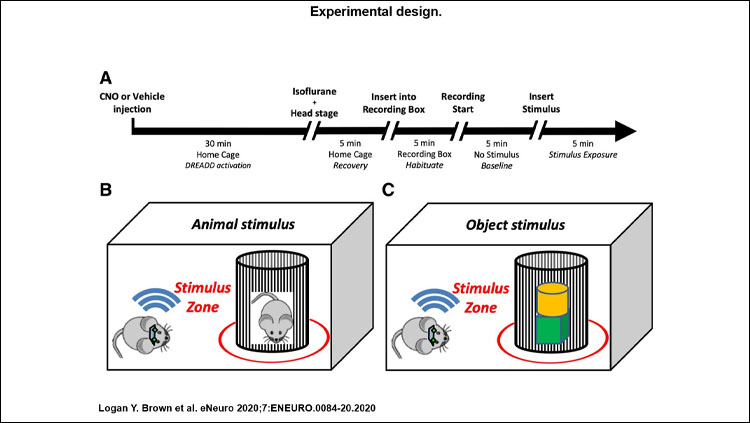 Article Scientific ResearchDoes CA2 contribute to gamma oscillations in CA1 during investigation of a social stimulus relative to a non-social one? Does CA2 organize gamma oscillations in CA1 in a manner reflective of CA2’s anatomical projections to CA1?Jun 11, 2020
 -
 Article Professional DevelopmentIt's true job seekers look at position titles, but they're also interested in who your company, organization, or university is. They want to know what your culture and values are, the impact they'll have on both the workplace and society, and what to expect from the role they're applying for.Jun 11, 2020
 -
 Article Professional DevelopmentEvery neuroscientist makes transitions for different reasons.Jun 10, 2020
 -
 Article Professional DevelopmentOver the course of my career, I’ve probably said “yes” to service opportunities more often than I’ve said “no.” In fact, service has been a key element of my professional development and is likely one of the reasons I moved from the bench into academic administration. I am now president of Trinity College. I enjoyed the opportunities collegewide and external service afforded me. I met interesting people and was constantly stimulated to learn something new and broaden my horizon. For example, during my second year as an assistant professor at Wellesley College, I was invited to serve on the presidential search committee because of my previous volunteer work. This wasn’t a burden but rather a unique opportunity to see academic leadership in action.Jun 10, 2020
 -
 Article Career PathsNo two careers are identical. Yet, all neuroscientists will likely share certain commonalities: the first sparks of scientific curiosity, difficult challenges, resilience to press on, accomplishments large and small, hard-earned wisdom, and support from professional and personal communities. Here, James Townsel, professor emeritus at Meharry Medical College, focuses on how his time in the military influenced his decision to become a neuroscientist, how he has actively supported and created opportunities for underrepresented minorities, what he’s most proud of, and more. “I believe in diversity because it enhances the overall effectiveness of the research,” says James Townsel, a professor emeritus at Meharry Medical College. A dream of both Townsel and Joe Martinez was to create a perpetual fund to facilitate training diverse scientists. The Scholarships to Enhance and Empower Diversity (SEED) fund, part of the American Psychological Foundation (APF) Fund for Racial and Ethnic Diversity, helps achieve their goal of supporting the training and mentoring of the brightest trainees in neuroscience from diverse backgrounds. Read this interview to learn how and why Townsel has devoted his career to making educational opportunities available to underrepresented minorities in the biomedical sciences, and how you can help do the same.Jun 10, 2020
 -
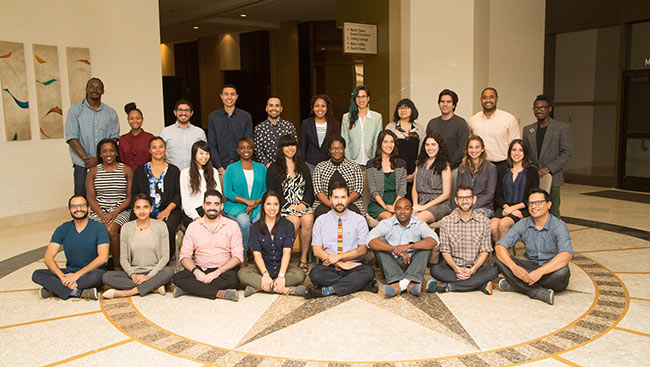 Article Professional DevelopmentSometimes, we forget that science is not just an individual quest. It is much more.Jun 10, 2020
 -
 Video Professional DevelopmentAs you’ve faced career growth — such as defending your thesis or starting a new position — have you grappled with feeling like a fraud, despite your accomplishments? What did you do to move forward? You’re not alone. Professionals from all backgrounds and across career stages and disciplines, both inside and outside of science, experience this phenomenon, called impostor syndrome. But by talking about it and sharing actionable strategies for accepting and working through it, people can help each other recognize their own value and trust in their abilities. “The important thing to remember is that most all of us, including the most famous neuroscientist you can think of, have experienced impostor syndrome sometime during our career,” says Wendy Suzuki, a professor of neural science and psychology at New York University.Jun 10, 2020
 -
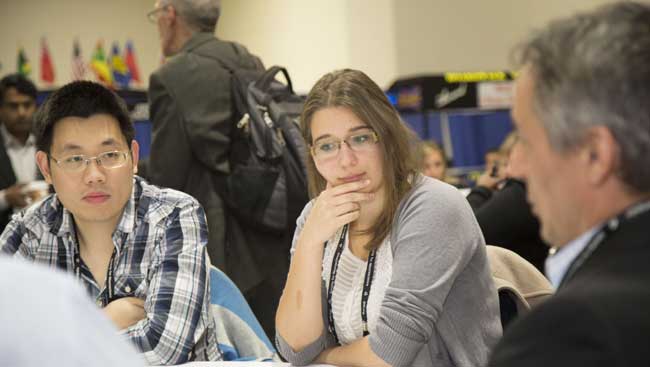 Article Professional DevelopmentIn a recent interview, Kenneth Maynard discussed a variety of topics, including tips for transitioning into the pharmaceutical industry and how to get the most out of your mentoring relationships.Jun 10, 2020




