



Filter
-
(133)
-
(733)
-
(4)
-
(1)
-
(47833)
-
(91)
-
(25)
-
(14)
-
(433)
-
(7)
-
(182)
-
(8)
-
(33)
-
(17)
-
(7)
-
(9)
-
(9)
-
(5)
-
(21)
-
(8)
-
(12)
-
(9)
-
(3)
-
(10)
-
(10)
-
(56)
-
(45)
-
(12)
-
(3)
-
(7)
-
(6)
-
(5)
-
(8)
-
(7)
-
(11)
-
(58)
-
(13)
-
(30)
-
(8)
-
(5)
-
(10)
-
(5)
-
(15)
-
(4)
1931 - 1940
of 52756 results
-
 Article Annual Meeting Professional DevelopmentDon't be daunted by the size of SfN’s annual meeting: reframe your thinking. More than 30,000 attendees means more than 30,000 opportunities to make connections. Maximize your interactions with these strategies.Oct 12, 2015
 -
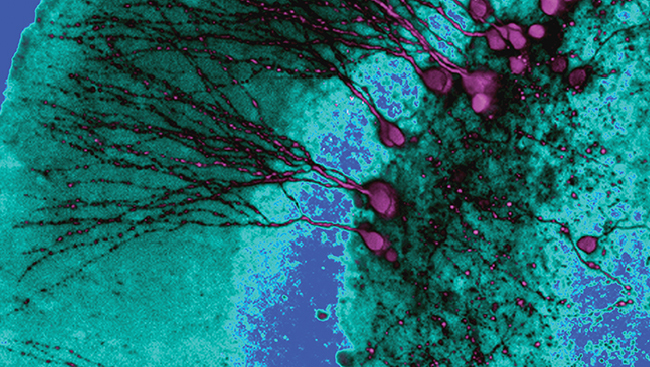 Article Scientific ResearchHuntington’s disease (HD) is an inheritable neurological disorder caused by a triplet repeat (CAG) expansion in the huntingtin (HTT) gene located in the short arm of chromosome four. Symptoms include uncontrollable dance-like movements (chorea), cognitive deficits, and psychiatric disturbances. Some of the early, or prodromic, symptoms include an inability to shift attention and other behavioral inflexibilities.Oct 8, 2015
 -
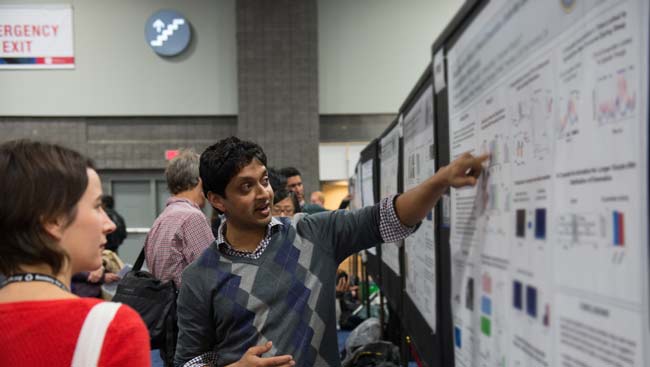 Article Annual Meeting Professional DevelopmentAre you getting ready for Neuroscience 2015? Maximize your time with these steps recommended by previous attendees.Oct 6, 2015
 -
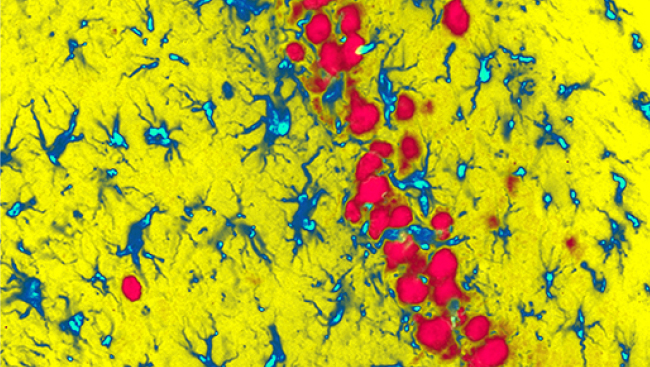 Annual Meeting Podcast Scientific ResearchIt never gets old to watch single channel currents, in real time, in a stochastic dance across the screen. The more you look the more you see — an unquestionable truism in science and an especially apt description of Diane Lipscombe’s current research on cell-specific control of calcium ion channel splicing. Calcium ion channel genes have the capacity to generate numerous isoforms but does each have unique function? Lipscombe reviews experimental approaches, including exon-specific targeting, to ask if individual sites of alternative splicing impact behavior and if isoforms have therapeutic value.Oct 1, 2015
 -
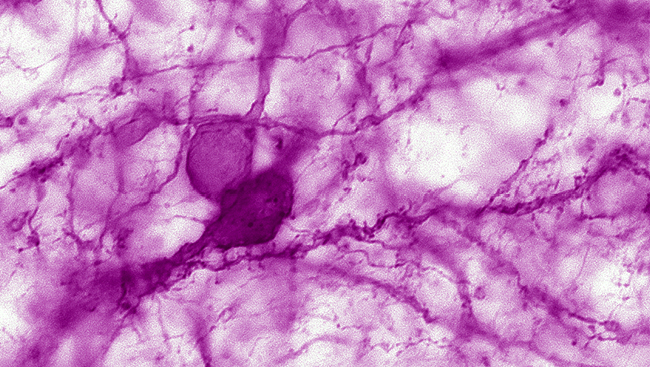 Article Annual Meeting Scientific ResearchUnderstanding all the parts of a neuronal circuit will ultimately help explain how the circuit — and the brain—gives rise to behavior. To investigate how a circuit functions, different types of neurons spread across the brain need to be monitored simultaneously, and the contribution of each neuron determined. This requires hardware capable of recording many individual neurons, methods to separate spikes, and a way to identify different neuronal types.Sep 29, 2015
 -
 Article Annual Meeting OutreachTwitter is the most interactive and real-time social forum at academic conferences. Whether you are attending a conference or following it from afar, Twitter offers you a chance to share session feedback, engage in science banter, job hunt, connect with colleagues, and see quick updates. To participate in the neuroscience Twitter-verse at Neuroscience 2015, get started with these tips.Sep 29, 2015
 -
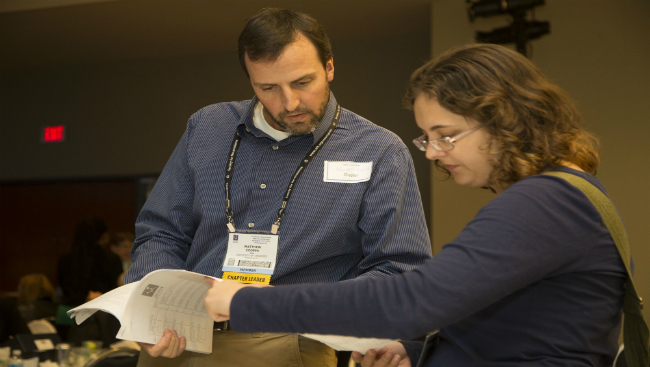 Video Annual Meeting OutreachDraw on the experiences of SfN chapters from around the world to develop programs, partner with local organizations, and procure funding. Local chapters share how they support the field through outreach and advocacy events, and provide valuable professional development opportunities for their members.Sep 29, 2015
 -
Article Annual Meeting OutreachTwitter is the most interactive and real-time social forum at academic conferences. Whether you are attending a conference or following it from afar, Twitter offers you a chance to share session feedback, engage in science banter, job hunt, connect with colleagues, and see quick updates. To participate in the neuroscience Twitter-verse at Neuroscience 2015, get started with these tips.Sep 29, 2015
-
 Article TrainingFellowship and other funding opportunities come in many forms, and from many sources. Here are resources to ensure you find the funding that fits your academic level and program.Sep 28, 2015
 -
 Webinar Career PathsAre you interested in a career in science policy and curious about different paths to explore? Discover tips on ways you can pursue a science policy careers and the types of skills you may need.Sep 25, 2015




