



Filter
-
(133)
-
(733)
-
(4)
-
(1)
-
(47830)
-
(91)
-
(25)
-
(14)
-
(433)
-
(7)
-
(181)
-
(8)
-
(33)
-
(17)
-
(7)
-
(9)
-
(9)
-
(5)
-
(21)
-
(8)
-
(12)
-
(9)
-
(3)
-
(10)
-
(10)
-
(56)
-
(45)
-
(12)
-
(3)
-
(7)
-
(6)
-
(5)
-
(8)
-
(7)
-
(11)
-
(58)
-
(13)
-
(30)
-
(8)
-
(5)
-
(10)
-
(5)
-
(14)
-
(4)
1031 - 1040
of 52751 results
-
 Journal ArticleModels of experience-dependent neuroplasticity predict that the acquisition and extensive use of a new skill trigger a nonlinear trajectory of neurostructural modifications, where initial expansion of relevant brain areas subsequently (once the skill is acquired) gives way to volumetric renormalization. Such predictions also apply in the domain of language during learning and/or simultaneous management of two (or more) linguistic systems. In a sample of 69 young adult Russian–English bilinguals, we tested the hypothesis that individual differences in bilingual engagement nonlinearly correlate with normalized volume of the hippocampus—a key learning-related brain region particularly amenable to experience-dependent plasticity. Results revealed an inverted U-shape association between second language engagement and left hippocampal gray matter volume. The present results replicate and expand the findings from aging populations, showing a nonlinear pattern of structural hippocampal plasticity in healthy young ...Jun 1, 2025
 -
 Journal ArticleMarker-based motion capture (MBMC) is a powerful tool for precise, high-speed, three-dimensional tracking of animal movements, enabling detailed study of behaviors ranging from subtle limb trajectories to broad spatial exploration. Despite its proven utility in larger animals, MBMC has remained underutilized in mice due to the difficulty of robust marker attachment during unrestricted behavior. In response to this challenge, markerless tracking methods, facilitated by machine learning, have become the standard in small animal studies due to their simpler experimental setup. However, trajectories obtained with markerless approaches at best approximate ground-truth kinematics, with accuracy strongly dependent on video resolution, training dataset quality, and computational resources for data processing. Here, we overcome the primary limitation of MBMC in mice by implanting minimally invasive markers that remain securely attached over weeks of recordings. This technique produces high-resolution, artifact-free...Jun 1, 2025
 -
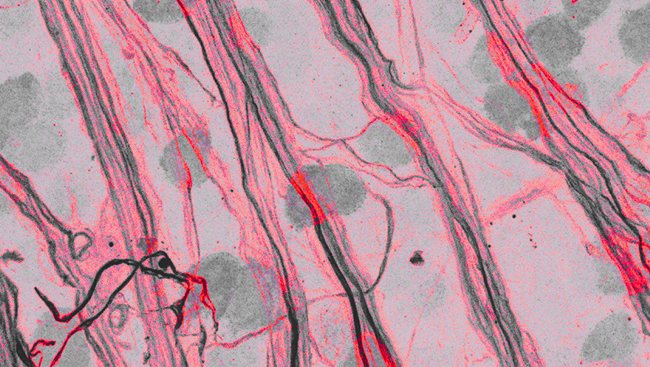 Article Professional DevelopmentWhat can neuroscience tell us about ethics? Some say nothing – ethics is a normative discipline that concerns the way the world should be, while neuroscience is normatively insignificant: it is a descriptive science which tells us about the way the world is. This seems in line with what is sometimes called “Hume’s Law”, the claim that one cannot derive an ought from an is. This claim is contentious and its scope unclear, but it certainly does seem true of demonstrative arguments, at the least. Neuroethics, by its name, however, seems to suggest that neuroscience is relevant for ethical thought, and indeed some have taken it to be a fact that neuroscience has delivered ethical consequences. It seems to me that there is some confusion about this issue, and so here I’d like to clarify the ways in which I think neuroscience can be relevant to ethics.Oct 23, 2019
 -
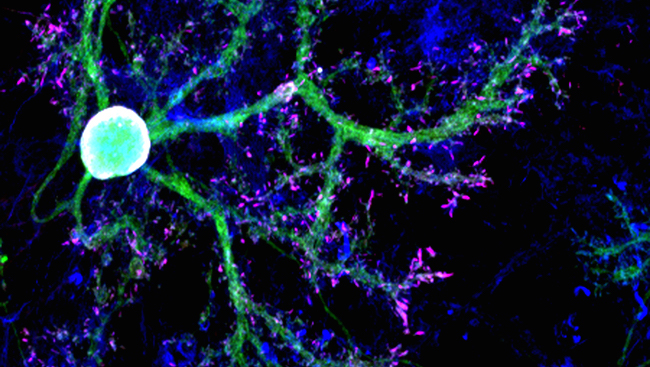 Article Scientific ResearchTrainingSpace (TS) is an online hub that aims to make neuroscience educational materials more accessible to the global neuroscience community. As a hub, TS provides users with access to: Multimedia educational content from courses, conference lectures, and laboratory exercises from some of the world’s leading neuroscience institutes and societies. Study tracks to facilitate self-guided study. Tutorials on tools and open science resources for neuroscience research. A Q&A forum. A neuroscience encyclopedia that provides users with access to over 1,000,000 publicly available datasets as well as links to literature references and scientific abstracts. Topics currently included in TS include: general neuroscience, clinical neuroscience, computational neuroscience, neuroinformatics, computer science, data science, and open science. All courses and conference lectures in TS include a general description, topics covered, links to prerequisite courses if applicable, and links to software described in or required for the course, as well as links to the next lecture in the course or more advanced related courses. To learn more about TrainingSpace, visit: https://training.incf.orgOct 15, 2019
 -
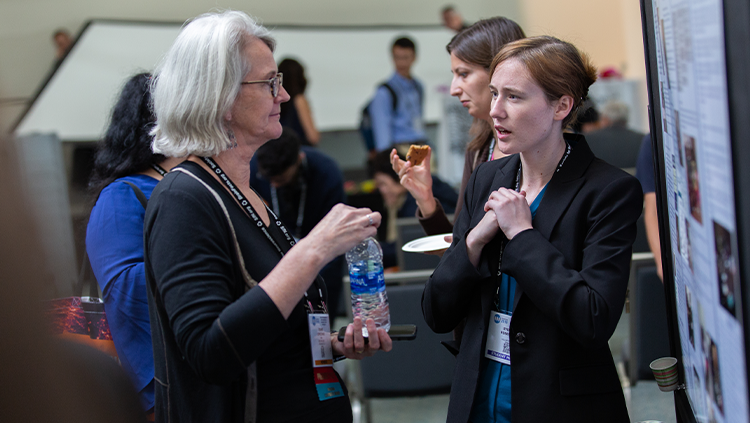 Webinar Scientific ResearchEffects of early life stress are found to be dependent on many factors, including sex and genetic background, the age of early exposure, and the age and context within which the long-term impact is examined. This webinar will discuss the resultant high individual variability of early life stress and its impact on coping abilities and cognitive functions later in life.Oct 14, 2019
 -
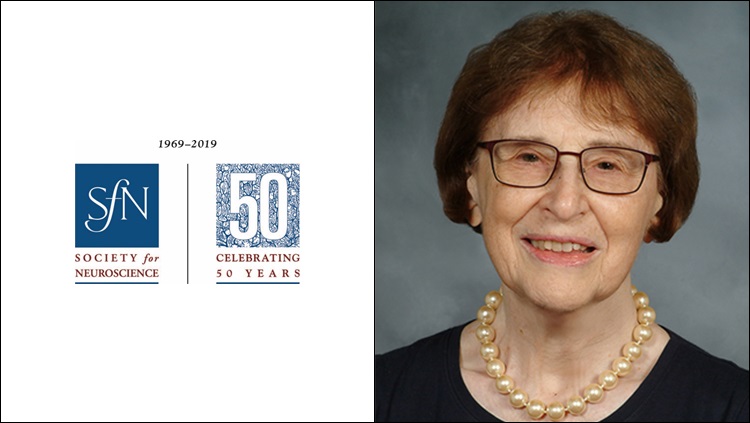 Podcast Scientific ResearchIn this episode of History of SfN: 50th Anniversary, Bernice Grafstein, Vincent and Brooke Astor Distinguished Professor in Neuroscience at Cornell University, Trustee and Vice-President of the Grass Foundation — and the first female president of the Society for Neuroscience — recounts how the formation of the Society for Neuroscience brought together neuroscientists of diverse backgrounds.Oct 10, 2019
 -
-Mickey-Goldberg-on-the-Expansion-of-SfN.jpg) Podcast OutreachIn its 50 years, the Society for Neuroscience has become an international society representing the interests of scientists from diverse backgrounds across the globe. In this episode of History of SfN: 50th Anniversary, Mickey Goldberg, David Mahoney Professor of Brain and Behavior at Columbia University, and a past president of the Society for Neuroscience, describes how the Society and meeting have evolved, including through the digitization of abstract submissions. History of SfN: 50th Anniversary is a limited series podcast highlighting stories from the history of the Society for Neuroscience, recounting groundbreaking moments in the growth of the Society from the perspectives of current, past, and future leaders. Alongside his scientific background and time as SfN president, Goldberg also offers a look at his involvement with science outreach and the importance of outreach to building public trust in science.Oct 10, 2019
Podcast OutreachIn its 50 years, the Society for Neuroscience has become an international society representing the interests of scientists from diverse backgrounds across the globe. In this episode of History of SfN: 50th Anniversary, Mickey Goldberg, David Mahoney Professor of Brain and Behavior at Columbia University, and a past president of the Society for Neuroscience, describes how the Society and meeting have evolved, including through the digitization of abstract submissions. History of SfN: 50th Anniversary is a limited series podcast highlighting stories from the history of the Society for Neuroscience, recounting groundbreaking moments in the growth of the Society from the perspectives of current, past, and future leaders. Alongside his scientific background and time as SfN president, Goldberg also offers a look at his involvement with science outreach and the importance of outreach to building public trust in science.Oct 10, 2019 -
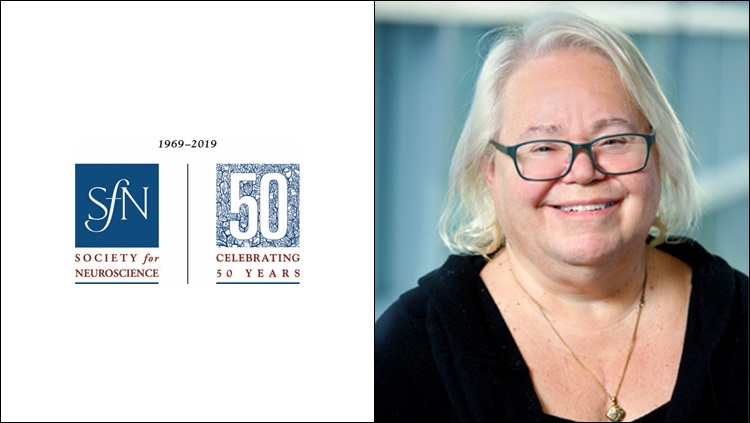 Podcast Scientific ResearchIn this episode of History of SfN: 50th Anniversary, Marder, Victor and Gwendolyn Beinfield Professor of Neuroscience at Brandeis University and a past president of the Society for Neuroscience, expands on this thought, sharing details from her time on SfN’s Program Committee and about the evolution of annual meeting programs, as well as her award-winning research on motor neurons.Oct 10, 2019
 -
 Podcast Scientific ResearchIn this episode of History of SfN: 50th Anniversary, Marina Picciotto, Charles B.G. Murphy Professor of Psychiatry at Yale University and the editor-in-chief of JNeurosci, notes how the journal has evolved in its nearly 40 years to mirror the changing ways in which research is shared.Oct 10, 2019
 -
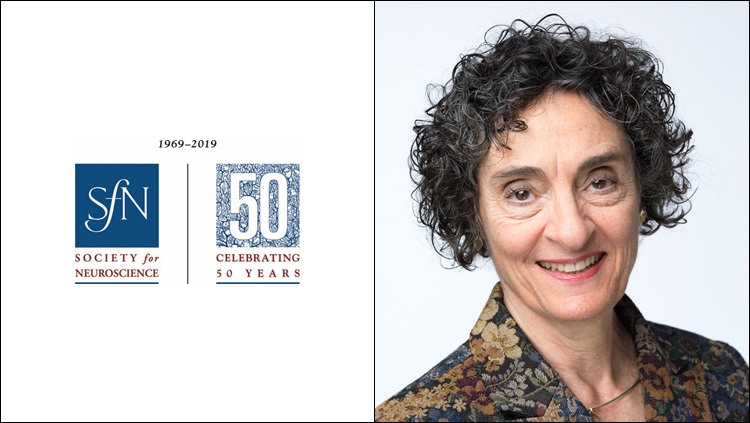 Podcast Scientific ResearchHistory of SfN: 50th Anniversary is a limited series podcast highlighting stories from the history of the Society for Neuroscience, recounting groundbreaking moments in the growth of the Society from the perspectives of current, past, and future leaders. Shatz, known for her discovery of the “fire together, wire together” phenomenon, offers insight into her research to understand how circuits change during developmental critical periods. She discusses both the advent of neuroscience as a field and the history of SfN’s annual meeting, including its 25th anniversary meeting.Oct 10, 2019




