



Filter
-
(133)
-
(733)
-
(4)
-
(1)
-
(47830)
-
(91)
-
(25)
-
(14)
-
(433)
-
(7)
-
(181)
-
(8)
-
(33)
-
(17)
-
(7)
-
(9)
-
(9)
-
(5)
-
(21)
-
(8)
-
(12)
-
(9)
-
(3)
-
(10)
-
(10)
-
(56)
-
(45)
-
(12)
-
(3)
-
(7)
-
(6)
-
(5)
-
(8)
-
(7)
-
(11)
-
(58)
-
(13)
-
(30)
-
(8)
-
(5)
-
(10)
-
(5)
-
(14)
-
(4)
841 - 850
of 52751 results
-
 Journal ArticleFiber photometry is a neuroscience technique that can continuously monitor in vivo fluorescence to assess population neural activity or neuropeptide/transmitter release in freely behaving animals. Despite the widespread adoption of this technique, methods to statistically analyze data in an unbiased, objective, and easily adopted manner are lacking. Various pipelines for data analysis exist, but they are often system specific, are only for preprocessing data, and/or lack usability. Current post hoc statistical approaches involve inadvertently biased user-defined time-binned averages or area under the curve analysis. To date, no post hoc user-friendly tool with few assumptions for a standardized unbiased analysis exists, yet such a tool would improve reproducibility and statistical reliability for all users. Hence, we have developed a user-friendly post hoc statistical analysis package in Python that is easily downloaded and applied to data from any fiber photometry system. This Fiber Photometry Post Hoc An...Aug 1, 2025
 -
 Journal ArticleTest–Retest Reliability of TRF-Derived Measures of Cortical Tracking of the Speech Envelope | eNeuroCortical tracking of the speech envelope is an emerging, noninvasive measure of neurophysiological processing of speech that is being widely adopted. It demonstrates good ecological validity, as it allows researchers to study human processing of continuous, naturalistic speech containing dynamic spectrotemporal variations and rich linguistic content. While measures of cortical tracking have strong clinical and research applications, there is a lack of research documenting the reliability of these measures, including how they are affected by the stimulus and how the stimulus is represented, as well as electroencephalography (EEG) acquisition and analysis parameters. In this study, we measured the test–retest reliability of cortical tracking of the speech envelope across different stimuli (an audiobook vs a podcast), stimulus features (broadband envelope and its derivative, multiband envelope and its derivative), reference electrodes (average mastoid vs common average reference), and EEG frequency bands (del...Aug 1, 2025
 -
 Journal ArticleSleep is a vital physiological phenomenon observed among almost all organisms. Although its exact purpose remains elusive, sleep has been linked to memory consolidation. In our present study, we investigated the role of sleep quality on sleep-dependent memory consolidation. Previous studies have shown that tequila , a serine protease, affects long-term memory (LTM) consolidation in flies. In the present study, we identified that the hypomorphic mutation in the tequila gene ( tequilaf01792 ) leads to increased daytime sleep fragmentation at a very early age in male flies. Intrigued by this observation, we delved into further understanding the role of tequila in sleep-dependent memory consolidation by manipulating sleep duration using pharmacological methods such as GABA-A agonist. Inducing sleep using GABA-A agonist resulted in improved sleep during the day. This further led to a significant improvement in the LTM of these flies when compared with the vehicle-treated flies. In conclusion, daytime-dependent ...Aug 1, 2025
 -
Journal ArticleComparative analyses of locomotor behavior and cellular electrical properties between wild-type and mutant Caenorhabditis elegans are crucial for exploring the gene basis of behaviors and the underlying cellular mechanisms. Although many tools have been developed by research labs and companies, their application is often hindered by implementation difficulties or lack of features specifically suited for C. elegans . Our system addresses these challenges with three key components: WormTracker , SleepTracker , and Action Potential (AP) Analyzer . WormTracker accurately quantifies a comprehensive set of locomotor and body bending metrics, incorporates user-identified dorsal and ventral orientation based on microscopic observation, continuously tracks the animal using a motorized stage, and seamlessly integrates external devices, such as a light source for optogenetic stimulation. SleepTracker detects and quantifies sleep-like behavior in freely moving animals. AP Analyzer assesses the resting membrane potenti...Aug 1, 2025
-
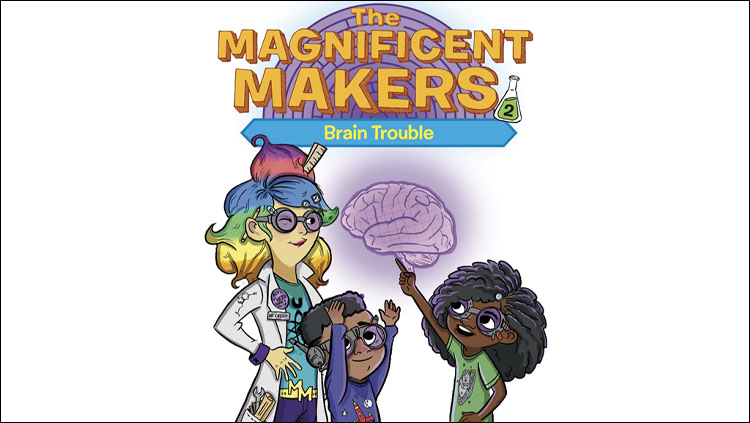 Article Career PathsSince I was a child, I’ve had two passions: science and storytelling. For the vast majority of my career, I’ve pursued the former. I majored in neuroscience at Smith College and went on to earn my doctorate at Northwestern University. I recently completed my postdoctoral training at Columbia and will soon open my independent laboratory in the Department of Physiology and Membrane Biology at the University of California Davis. Sounds like a typical climb up the academic ladder, right? Yet despite this traditional career trajectory, my passion for storytelling was ever-present. After nearly a decade as a scientist, I decided to combine it with my longstanding commitment to science education as a children’s book writer. My debut science adventure series, The Magnificent Makers, was recently published by Random House Children’s Books. As I delved into the world of writing for kids, I discovered four key aspects of my scientific training that were directly applicable to my journey as an author.Sep 1, 2020
 -
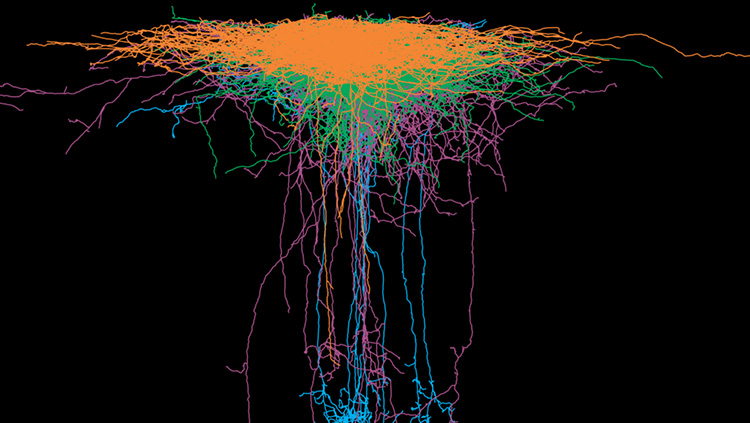 Article Professional DevelopmentThe following is an excerpt from a commentary in the Journal of Neuroscience, Recognizing Team Science Contributions in Academic Hiring, Promotion, and Tenure, that originated from two Neuroscience 2019 Professional Development workshops (watch them here and here). Read the full commentary here. The vision of a scientist as a lone investigator reaching an epiphany is a widely cherished narrative. Consistent with this ideal, single author papers were frequent 50 years ago, when the Society for Neuroscience started. However, the basic and translational questions and the public health challenges being addressed in current neuroscience research are increasingly interdisciplinary and multidimensional, and so the vast majority of significant studies require a team of investigators, working together collaboratively. This trend is evident in the increased number of authors per citation and the rapid expansion of collaborative grants. Unfortunately, academic culture has not yet caught up with the direction of the science. Hiring, promotions, and peer review tend to credit the first and last authors, with little consideration that the work required an entire team. At the 2019 SfN annual meeting, there were two workshops addressing team science. One workshop highlighted the challenges in team science for trainees, while the other focused on ways in which academic leaders could change our procedures to address the disconnect between overly narrow attention to individual first and last authorship in hiring, promotion, and tenure versus the collaborative nature of current research. This Commentary distills the ideas and recommendations brought forth by these workshops, to advocate for changes in academic recognition.Sep 1, 2020
 -
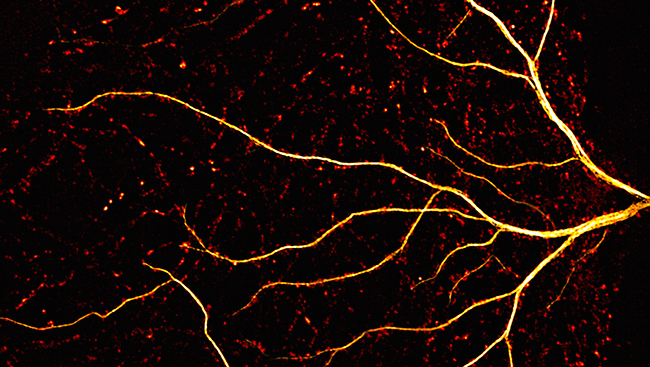 Article Professional DevelopmentThe history of Artificial Intelligence (AI) is inextricably intertwined with the history of neuroscience. Since the early days of AI, scientists turned to the human brain as a source of guidance for the development of intelligent machines. Unsurprisingly, many pioneers of AI such as Warren McCulloch were trained in the sciences of the brain. Modern AI borrowed most of its vocabulary from neurology and psychology. For instance, computational models consisting of networks of interconnected units —one of the most common approaches to AI— are called Artificial Neural Networks (ANN). Each unit is called an “artificial neuron.” Several areas of research in AI are labelled through neuropsychological categories such as computer vision, machine learning, natural language processing etc. It’s not just a matter of terminology. ANNs, for example, are actually inspired by and based on the functioning of biological neural networks that constitute animal nervous systems.Aug 27, 2020
 -
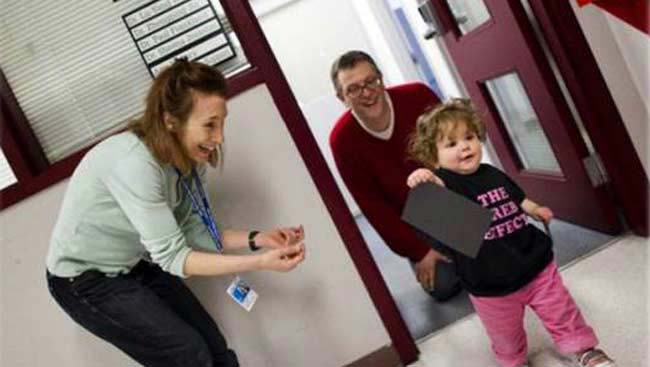 Article CommunityPeople often ask me, “Can you have it all?” I don’t know if you can, but I’m certainly having a good time trying. Here’s how.Aug 26, 2020
 -
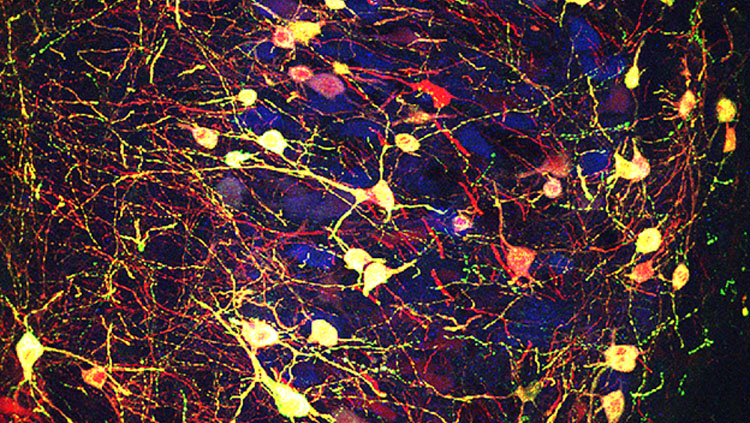 Article OutreachHuiquan Li is an assistant project scientist in the Spitzer Lab at the University of California, San Diego, where she studies neurotransmitter plasticity in the adult mouse brain and has worked since completing her graduate studies in China. Talented in strategizing how to get complex experiments to work and passionate about sharing neuroscience with anyone, in this interview she shares her advice for designing beautiful experiments. She also shares two anecdotes demonstrating that one-on-one interactions can improve individual lives while at the same time increasing understanding of the relevance of neuroscience to everyone. This interview is a complement to SfN's podcast series, History of SfN: 50th Anniversary. Guests on the podcast were asked to nominate individuals whose careers are making positive cultural or scientific impacts that will shape the next 50 years of neuroscience. Huiquan Li was nominated by Nick Spitzer, Atkinson Family Chair Distinguished Professor of Biological Sciences at University of California, San Diego.Aug 19, 2020
 -
Journal ArticleFiber photometry is a neuroscience technique that can continuously monitor in vivo fluorescence to assess population neural activity or neuropeptide/transmitter release in freely behaving animals. Despite the widespread adoption of this technique, methods to statistically analyse data in an unbiased, objective, and easily adopted manner are lacking. Various pipelines for data analysis exist, but they are often system-specific, only for pre-processing data, and/or lack usability. Current post hoc statistical approaches involve inadvertently biased user-defined time-binned averages or area under the curve analysis. To date, no post-hoc user-friendly tool with few assumptions for a standardised unbiased analysis exists, yet such a tool would improve reproducibility and statistical reliability for all users. Hence, we have developed a user-friendly post hoc statistical analysis package in Python that is easily downloaded and applied to data from any fiber photometry system. This Fi ber Pho tometry P ost H oc A...Jul 29, 2025




