



Filter
-
(133)
-
(733)
-
(4)
-
(1)
-
(47830)
-
(91)
-
(25)
-
(14)
-
(433)
-
(7)
-
(181)
-
(8)
-
(33)
-
(17)
-
(7)
-
(9)
-
(9)
-
(5)
-
(21)
-
(8)
-
(12)
-
(9)
-
(3)
-
(10)
-
(10)
-
(56)
-
(45)
-
(12)
-
(3)
-
(7)
-
(6)
-
(5)
-
(8)
-
(7)
-
(11)
-
(58)
-
(13)
-
(30)
-
(8)
-
(5)
-
(10)
-
(5)
-
(14)
-
(4)
811 - 820
of 52751 results
-
 Article CommunityInstitutional leaders play a crucial role in supporting underrepresented scientists. In this interview, Nii Addy and Marguerite Matthews share how departments and labs can build a community for their BIPOC members while addressing the issues of recruitment, retainment, and tokenism. This interview is a follow-up to SfN's recent webinar, Black Lives Matter and Neuroscience: Why This Moment Matters. Hear more from Addy and Matthews by watching the webinar on Neuronline or reading their recent live chat where they answer member questions directly.Oct 13, 2020
 -
 Webinar AdvocacyThe Society for Neuroscience and the American Brain Coalition, in cooperation with the Congressional Neuroscience Caucus, invite you to Exploring Recent Discoveries in Neuroscience Research. This congressional briefing will host esteemed neuroscientists discussing recent discoveries in neuroscience research. Panelists will review the transitional benefits provided by predictable federal funding of basic neuroscience research, to medical treatments and discoveries. Neuroscience topics to be discussed will include pain management and addiction, post-traumatic stress disorder, and dementia.Oct 12, 2020
 -
 Journal ArticleThe interface barrier between the brain surface and the adjacent meninges is important for regulating exchanges of fluid, protein and immune cells between the CNS and periphery. However, the cell types that form this important interface are not yet fully defined. To address this limitation, we used single cell RNA-sequencing (scRNA-seq) and single cell spatial transcriptomics together with morphological lineage tracing and immunostaining to describe the cell types forming the interface barrier of the adult murine cortex. We show that the cortical interface is comprised of three major cell types, leptomeningeal cells, border astrocytes and tissue-resident macrophages. On the non-parenchymal side the interface is comprised of transcriptionally distinct PDGFRα-positive leptomeningeal cells that are intermingled with macrophages. This leptomeningeal layer is lined by a population of transcriptionally distinct border astrocytes. The interface neighborhood is rich in growth factor mRNAs, including many leptomeni...Aug 8, 2025
 -
Journal ArticleGiven the observed interaction and reports of oxytocin, μ-opioid receptor, or κ-opioid receptor expression in brain regions important to emotion regulation (i.e., the central amygdala), we hypothesized that oxytocin ( oxtr ), μ-opioid ( oprm1 ), and κ-opioid ( oprk1 ) receptor mRNA were colocalized to the same cells in the central amygdala. RNAScope in situ hybridization using fresh frozen coronal brain sections was used to label cells containing oxtr , oprm1 , and/or oprk1 . The coronal sections were imaged using a 40X objective (widefield fluorescence) on a Leica Thunder Fluorescent Microscope and the images were processed using open-source ImageJ/Fiji software and analyzed using Imaris software. The central amygdala was identified using Paxinos and Watson's The Mouse Brain in Stereotaxic Coordinates (Paxinos and Franklin 2019). Eight distinct cell populations were enumerated; i.e., oxtr only, oprm1 only, oprk1 only, oxtr + oprm1 only, oxtr + oprk1 only, oprm1 + oprk1 only, oxtr + oprm1 + oprk1 , and non...Aug 8, 2025
-
Journal ArticleAdolescent nicotine use is particularly concerning due to increased susceptibility to long-term effects and dependence during this critical developmental period. This study investigates the therapeutic effects of thiamine on nicotine withdrawal-induced anxiety, anhedonia, and depression in rats. Adolescent rats received nicotine (2 mg/kg, s.c.) for 21 days, followed by 21 days of withdrawal. Thiamine (25 mg/kg or 50 mg/kg, i.p.) was administered during exposure and withdrawal. Behavioral assessments were used to evaluate anxiety- and depressive-like symptoms, and biochemical analyses measured oxidative stress markers, serotonin levels, MAO activity, BDNF, and GFAP as indicators of neuroinflammation in the prefrontal cortex (PFC). Nicotine withdrawal significantly elevated anxiety-, depression-, and anhedonia-like behaviors, increased oxidative stress, and upregulated MAO-A activity and GFAP expression, indicating neuroinflammatory effects. Notably, thiamine administration during both nicotine exposure and ...Aug 8, 2025
-
 Article Professional DevelopmentTake a moment to congratulate yourself. Being admitted to graduate school is a major accomplishment! If you’re deciding between multiple programs, there are important professional and personal considerations you should evaluate. Professional: 1. Are faculty members taking students in the areas of research of interest to you? Identifying a good research fit is critical. Find out if the program covers the areas of research you might want to pursue. If there are only one or two labs doing the type of work you’re interested in, you may have limited options, especially given that labs often undergo changes in space and funding.Oct 7, 2020
 -
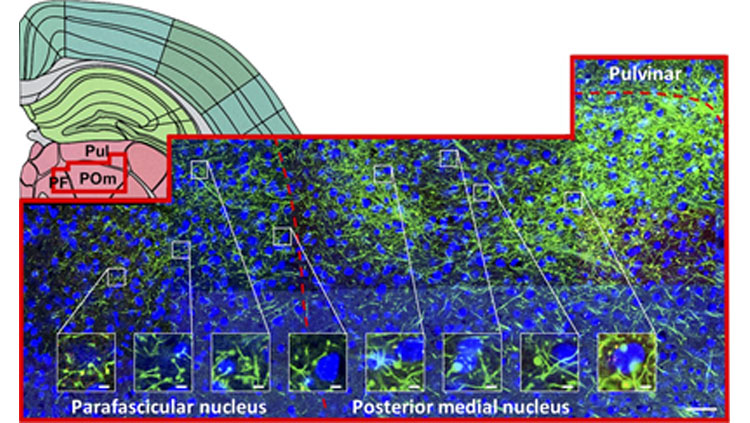 Article Scientific ResearchMaterial below summarizes the article Layer 5 Corticofugal Projections from Diverse Cortical Areas: Variations on a Pattern of Thalamic and Extrathalamic Targets, published on July 22, 2020, in JNeurosci and authored by Judy A. Prasad, Briana J. Carroll and S. Murray Sherman Highlights Across cortical areas, layer 5 neurons exhibit a general pattern of targeting both thalamus and extra-thalamic regions, including brainstem motor centers. Variations on the layer 5 efferent pattern depend on cortical area. Layer 5 terminals also vary in size, depending on cortical area and subcortical target.Oct 1, 2020
 -
Journal ArticleAutonomic imbalance — particularly reduced activity from brainstem parasympathetic cardiac vagal neurons (CVNs)—is a major characteristic of many cardiorespiratory diseases. Therapeutic approaches to selectively enhance CVN activity have been limited by the lack of defined, translationally relevant targets. Previous studies have identified an important excitatory synaptic pathway from oxytocin (OXT) neurons in the paraventricular nucleus of the hypothalamus (PVN) to brainstem CVNs, suggesting that OXT could provide a key selective excitation of CVNs. In clinical studies, intranasal OXT has been shown to increases parasympathetic cardiac activity, improve autonomic balance, and reduce obstructive event durations and oxygen desaturations in obstructive sleep apnea patients. However, the mechanisms by which activation of hypothalamic OXT neurons, or intranasal OXT, enhance brainstem parasympathetic cardiac activity remain unclear. CVNs are located in two cholinergic brainstem nuclei: the nucleus ambiguus (NA)...Aug 6, 2025
-
 Article Scientific ResearchMaterial below summarizes the article Dynamic Time-Locking Mechanism in the Cortical Representation of Spoken Words, published on June 8, 2020, in eNeuro and authored by Ali Faisal, Anni Nora, Hanna Renvall, Jaeho Seol, Elia Formisano, and Riitta Salmelin. Highlights Computational modeling of cortical responses highlights the importance of accurate temporal tracking of speech in the auditory cortices. This time-locked encoding mechanism is likely pivotal for transforming the acoustic features into linguistic representations. No similar relevance of time-locked encoding was observed for nonspeech sounds, including temporally variable human-made sounds such as laughter.Sep 24, 2020
 -
 Annual Meeting Video Scientific ResearchVideo games are almost as divisive as they are ubiquitous. While some claim they make people antisocial and inactive, others argue that video games could be the next frontier of education and healthcare. Jonathan Moreno, an ethics and philosophy professor at the University of Pennsylvania, moderates the Social Issues Roundtable, “The Neuroscience of Gaming,” at Neuroscience 2014.Sep 22, 2020




