



Filter
-
(133)
-
(733)
-
(4)
-
(1)
-
(47833)
-
(91)
-
(25)
-
(14)
-
(433)
-
(7)
-
(182)
-
(8)
-
(33)
-
(17)
-
(7)
-
(9)
-
(9)
-
(5)
-
(21)
-
(8)
-
(12)
-
(9)
-
(3)
-
(10)
-
(10)
-
(56)
-
(45)
-
(12)
-
(3)
-
(7)
-
(6)
-
(5)
-
(8)
-
(7)
-
(11)
-
(58)
-
(13)
-
(30)
-
(8)
-
(5)
-
(10)
-
(5)
-
(15)
-
(4)
1941 - 1950
of 52756 results
-
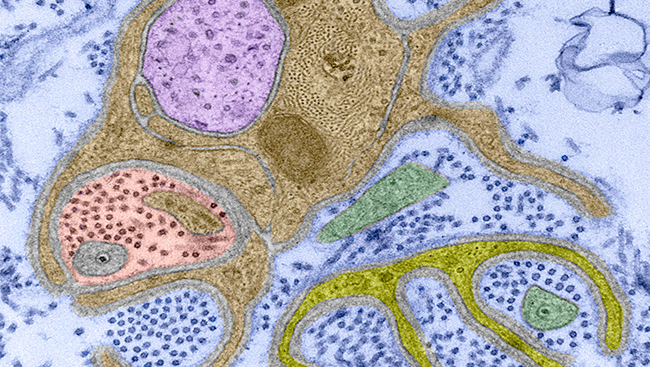 Video Career PathsSteve Roberds, chief scientific officer of the Tuberous Sclerosis Alliance, talks about how his PhD training shaped his work as a scientific adviser to a nonprofit organization.Sep 25, 2015
 -
 Article Annual Meeting DiversityJoin more than 300 of your colleagues to network and discuss the most pressing issues women in the field are facing at the Celebrating Women in Neuroscience (CWiN) Luncheon during Neuroscience 2015. Maria Neimark Geffen, assistant professor of otorhinolaryngology at the University of Pennsylvania Perelman School of Medicine, will deliver the keynote speech.Sep 24, 2015
 -
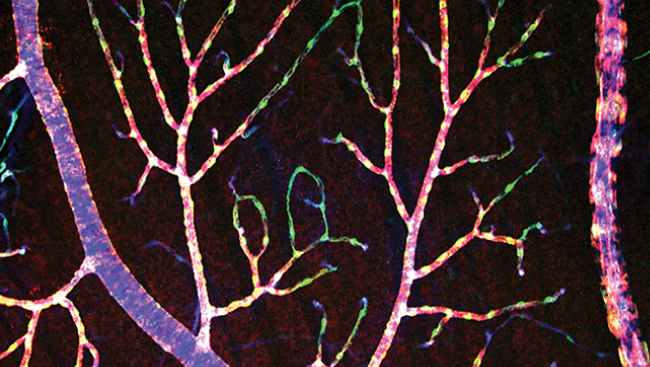 Article Scientific ResearchIn humans, several mutations in a particular calcium channel, the P/Q type, lead to neurological diseases, one of which manifests to ataxia. Ataxia is a disorder where an individual loses coordination or control of muscle movement. SCA6, or spinocerebellar ataxia type 6, is a movement disorder, which results in the loss of a special type of neuron in the cerebellum called Purkinje cells. These neurons process sensory information to coordinate movements. The disease has a late onset and develops in the second period of life. Patients are often wheelchair-bound, and no therapies are available.Sep 22, 2015
 -
 Journal ArticleHuman and mouse dorsal root ganglia (hDRG and mDRG) neurons are important tools in understanding the molecular and electrophysiological mechanisms that underlie nociception and drive pain behaviors. One of the simplest differences in firing phenotypes is that neurons are single-firing (exhibit only one action potential) or multi-firing (exhibit 2 or more action potentials). To determine if single- and multi-firing hDRG neurons exhibit differences in intrinsic properties, firing phenotypes, and AP waveform properties, and if these properties could be used to predict multi-firing, we measured 22 electrophysiological properties by whole-cell patch-clamp electrophysiology of 94 hDRG neurons from six male and four female donors. We then analyzed the data using several machine learning models to determine if these properties could be used to predict multi-firing. We used 1,000 iterations of Monte Carlo cross-validation to split the data into different train and test sets and tested the logistic regression, k -ne...Oct 1, 2024
 -
 Journal ArticleIschemic stroke (IS) poses a serious threat to patient survival. The inhibition of ferroptosis can effectively alleviate ischemia-reperfusion (I/R) injury, suggesting potential targets in the ferroptosis pathway for the treatment of IS. In this study, MCAO/R mice and OGD/R-induced HT22 cell were constructed. It was found that baicalein decreased ROS, MDA, and Fe2+ levels, upregulated GSH levels, and enhanced the expression of ferroptosis-related proteins (GPX4 and SLC7A11), downregulated the expression of proapoptotic proteins (Bax, cytochrome c , and cleaved caspase-3), and upregulated the expression of an antiapoptotic protein (Bcl-2), ameliorating cerebral I/R injury. In animal and cell models, Sirtuin6 (SIRT6) is downregulated, and Forkhead boxA2 (FOXA2) expression and acetylation levels are abnormally upregulated. SIRT6 inhibited FOXA2 expression and acetylation. Baicalein promoted FOXA2 deacetylation by upregulating SIRT6 expression. FOXA2 transcriptionally inhibits SLC7A11 expression. In conclusion,...Oct 1, 2024
 -
 Journal ArticleIllusionism is a general philosophical framework in which specific theories of consciousness can be constructed without having to invoke a magical mind essence. The advantages of illusionism are not widely recognized, perhaps because scholars tend to think only of the most extreme forms and miss the range of possibilities. The brain's internal models are never fully accurate, nothing is exactly as the brain represents it, and therefore some element of illusionism is almost certainly necessary for any working theory of consciousness or of any other property that is accessed through introspection. Here I describe the illusionist framework and propose six specific theories. One purpose of this article is to demonstrate the range of possibilities in a domain that is not yet sufficiently explored. The second purpose is to argue that even existing, popular theories, such as the integrated information theory or the global workspace theory, can be transformed and greatly strengthened by adding an illusionist layer...Oct 1, 2024
 -
 Journal ArticleConfirmation bias (CB) is a cognitive bias that allows us to fool ourselves by selectively filtering data and distorting analyses to support favored beliefs or hypotheses. In this article, I will briefly review some classic experiments from cognitive psychology that illustrate what a powerful, pernicious, and insidious force CB is. I will then discuss how to recognize CB in our own thinking and behavior and describe specific elements of good experimental design that can mitigate its effects. These elements—such as randomization and blinding—are conceptually straightforward but often difficult in practice and therefore not as widely implemented as they should be.Oct 1, 2024
 -
Journal ArticleObsessive–compulsive disorder (OCD) is a neuropsychiatric disorder characterized by obsessions and compulsions. Obsessions are intrusive thoughts or urges, and compulsions are repetitive behaviors that a person often performs to alleviate the anxiety related to these obsessions. The obsessions and compulsions associated with OCD can be debilitating, affecting the daily lives and overall quality of life for those with OCD (Pauls et al., 2014). OCD has a lifetime prevalence of ∼2–3% and although there are treatments for those diagnosed with OCD, unfortunately up to 50% of these patients continue to display symptoms (Dougherty et al., 2004). Better, more targeted treatment options are needed, and understanding the neurobiology of OCD is important in improving the treatment options for those affected by this disorder. Previous studies of OCD patients using neuroimaging techniques have identified increased activity of cortical and striatal regions (Pauls et al., 2014). Additionally, animal studies have also im...Oct 1, 2024
-
Journal ArticleExperimental evidence showed that an increase in intracellular chloride concentration <mml:math xmlns:mml="http://www.w3.org/1998/Math/MathML" display="inline"><mml:mo stretchy="false">(</mml:mo><mml:mrow><mml:msub><mml:mrow><mml:mo stretchy="false">[</mml:mo><mml:mrow><mml:mrow><mml:mi mathvariant="normal">C</mml:mi></mml:mrow><mml:msup><mml:mrow><mml:mi mathvariant="normal">l</mml:mi></mml:mrow><mml:mo>−</mml:mo></mml:msup></mml:mrow><mml:mo stretchy="false">]</mml:mo></mml:mrow><mml:mrow><mml:mi mathvariant="normal">i</mml:mi></mml:mrow></mml:msub></mml:mrow><mml:mo stretchy="false">)</mml:mo></mml:math> caused by gamma-aminobutyric acid (GABA) input can promote epileptic firing activity, but the actual mechanisms remain elusive. Here in this theoretical work, we show that influx of chloride and concomitant bicarbonate ion <mml:math xmlns:mml="http://www.w3.org/1998/Math/MathML" display="inline"><mml:mo stretchy="false">(</mml:mo><mml:mrow><mml:msubsup><mml:mrow><mml:mi mathvariant="normal">HCO</mml:mi...Oct 1, 2024
-
Journal ArticleAlcohol use disorder (AUD) is a significant global health issue. Despite historically higher rates among men, AUD prevalence and negative alcohol-related outcomes in women are rising. Loneliness in humans has been associated with increased alcohol use, and traditional rodent drinking models involve single housing, presenting challenges for studying social enrichment. We developed LIQ PARTI (Lick Instance Quantifier with Poly-Animal RFID Tracking Integration), an open-source tool to examine home cage continuous access two-bottle choice drinking behavior in a group-housed setting, investigating the influence of sex and social isolation on ethanol consumption and bout microstructure in C57Bl/6J mice. LIQ PARTI, based on our previously developed single-housed LIQ HD system, accurately tracks drinking behavior using capacitive-based sensors and RFID technology. Group-housed female mice exhibited higher ethanol preference than males, while males displayed a unique undulating pattern of ethanol preference linked ...Oct 1, 2024




