



Filter
-
(133)
-
(733)
-
(4)
-
(1)
-
(47833)
-
(91)
-
(25)
-
(14)
-
(433)
-
(7)
-
(182)
-
(8)
-
(33)
-
(17)
-
(7)
-
(9)
-
(9)
-
(5)
-
(21)
-
(8)
-
(12)
-
(9)
-
(3)
-
(10)
-
(10)
-
(56)
-
(45)
-
(12)
-
(3)
-
(7)
-
(6)
-
(5)
-
(8)
-
(7)
-
(11)
-
(58)
-
(13)
-
(30)
-
(8)
-
(5)
-
(10)
-
(5)
-
(15)
-
(4)
1811 - 1820
of 52756 results
-
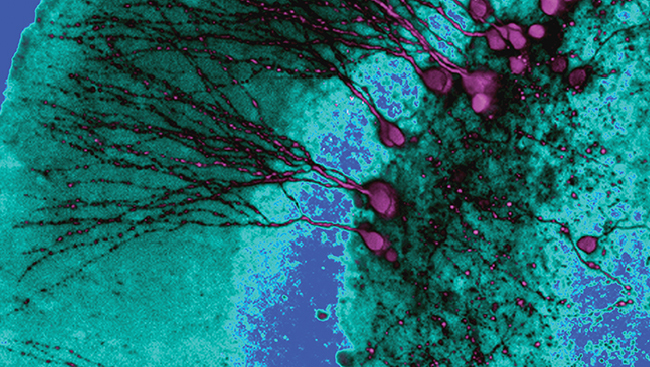 Webinar Scientific ResearchProper data handling standards, including appropriate use of statistical tests are integral to rigorous and reproducible neuroscience research. Training in quantitative neuroscience is a specific area of emphasis for the BRAIN Initiative, and rigorous statistical analysis methods are included in the recent Proposed Principals and Guidelines for Reporting Preclinical Research endorsed by NIH and multiple scientific associations, journals, and societies. This webinar — the third in SfN’s Promoting Awareness and Knowledge to Enhance Scientific Rigor in Neuroscience series — will cover best practices in post-experimental data analysis.Apr 22, 2016
 -
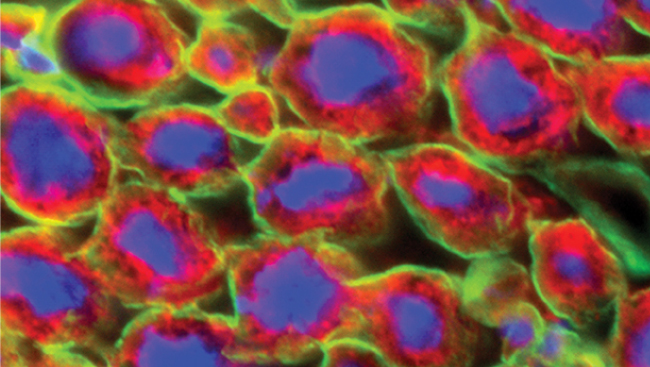 Article Scientific ResearchCircadian rhythms are altered by the aging process in humans and many other organisms.Apr 21, 2016
 -
 Journal ArticleEach olfactory cortical hemisphere receives ipsilateral odor information directly from the olfactory bulb and contralateral information indirectly from the other cortical hemisphere. Since neural projections to the olfactory cortex (OC) are disordered and nontopographic, spatial information cannot be used to align projections from the two sides like in the visual cortex. Therefore, how bilateral information is integrated in individual cortical neurons is unknown. We have found, in mice, that the odor responses of individual neurons to selective stimulation of each of the two nostrils are significantly correlated, such that odor identity decoding optimized with information arriving from one nostril transfers very well to the other side. Nevertheless, these aligned responses are asymmetric enough to allow decoding of stimulus laterality. Computational analysis shows that such matched odor tuning is incompatible with purely random connections but is explained readily by Hebbian plasticity structuring bilatera...Nov 1, 2024
 -
 Journal ArticleThe neural network, including the interstitial nucleus of Cajal (INC), functions as an oculomotor neural integrator involved in the control of vertical gaze holding. Impairment of the vestibulocerebellum (VC), including the flocculus (FL), has been shown to affect vertical gaze holding, indicating that the INC cooperates with the VC in controlling this function. However, a network between the INC and VC has not been identified. In this study, we aimed to obtain anatomical evidence of a neural pathway from the INC to the VC (the INC-VC pathway) in rats. Injection of dextran-conjugated Alexa Fluor 488 or adeno-associated virus 2-retro (AAV2retro) expressing GFP into the FL or another VC region (uvula/nodulus) did not reveal any retrogradely labeled neurons in the INC, suggesting that INC neurons do not project directly to the VC. Rabies virus-based transsynaptic tracing experiments revealed that the INC-VC pathway is mediated via synaptic connections with the prepositus hypoglossi nucleus (PHN) and medial ve...Nov 1, 2024
 -
 Journal ArticleAdeno-associated viral vector (AAV) serotypes vary in how effectively they express genes across different cell types and brain regions. Here we report a systematic comparison of the AAV serotypes 1, 2, 5, 8, 9, and the directed evolution derived AAVrg, in the inferior colliculus (IC) and cerebellum. The AAVs were identical apart from their different serotypes, each having a synapsin promotor and expressing GFP (AAV-hSyn-GFP). Identical titers and volumes were injected into the IC and cerebellum of adult male and female mice, and brains were sectioned and imaged 2 weeks later. Transduction efficacy, anterograde labeling of axonal projections, and retrograde labeling of somata were characterized and compared across serotypes. Cell-type tropism was assessed by analyzing the morphology of the GFP-labeled neurons in the cerebellar cortex. In both the cerebellum and IC, AAV1 expressed GFP in more cells, labeled a larger volume, and produced significantly brighter labeling than all other serotypes, indicating sup...Nov 1, 2024
 -
 Journal ArticleImpulsive individuals excessively discount the value of delayed rewards, and this is thought to reflect deficits in brain regions critical for impulse control such as the anterior cingulate cortex (ACC). Delay discounting (DD) is an established measure of cognitive impulsivity, referring to the devaluation of rewards delayed in time. This study used male Wistar rats performing a DD task to test the hypothesis that neural activity states in ACC ensembles encode strategies that guide decision-making. Optogenetic silencing of ACC neurons exclusively increased impulsive choices at the 8 s delay by increasing the number of consecutive low-value, immediate choices. In contrast to shorter delays where animals preferred the delay option, no immediate or delay preference was detected at 8 s. These data suggest that ACC was critical for decisions requiring more deliberation between choice options. To address the role of ACC in this process, large-scale multiple single-unit recordings were performed and revealed that...Nov 1, 2024
 -
 Journal ArticleNeuroinflammation can lead to chronic maladaptive pain affecting millions of people worldwide. Neurotransmitters, cytokines, and ion channels are implicated in neuroimmune cell signaling, but their roles in specific behavioral responses are not fully elucidated. Voltage-gated CaV2.2 channel activity in skin controls rapid and transient heat hypersensitivity induced by intradermal (i.d.) capsaicin via IL-1ɑ cytokine signaling. CaV2.2 channels are not, however, involved in mechanical hypersensitivity that developed in the i.d. capsaicin animal model. Here, we show that CaV2.2 channels are also critical for heat hypersensitivity induced by i.d. complete Freund adjuvant (CFA). i.d. CFA, a model of chronic neuroinflammation, involves ongoing cytokine signaling for days leading to pronounced edema and hypersensitivity to sensory stimuli. Peripheral CaV2.2 channel activity in the skin was required for the full development and week-long time course of heat hypersensitivity induced by i.d. CFA, but paw edema and me...Nov 1, 2024
 -
 Journal ArticleThe complexity of natural environments requires highly flexible mechanisms for adaptive processing of single and multiple stimuli. Neuronal oscillations could be an ideal candidate for implementing such flexibility in neural systems. Here, we present a framework for structuring attention-guided processing of complex visual scenes in humans, based on multiplexing and phase coding schemes. Importantly, we suggest that the dynamic fluctuations of excitability vary rapidly in terms of magnitude, frequency and wave-form over time, i.e., they are not necessarily sinusoidal or sustained oscillations. Different elements of single objects would be processed within a single cycle (burst) of alpha activity (7–14 Hz), allowing for the formation of coherent object representations while separating multiple objects across multiple cycles. Each element of an object would be processed separately in time—expressed as different gamma band bursts (>30 Hz)—along the alpha phase. Since the processing capacity per alpha cycle is...Nov 1, 2024
 -
 Journal ArticleTranscranial magnetic stimulation (TMS) is a noninvasive brain stimulation method that modulates brain activity by inducing electric fields in the brain. Real-time, state-dependent stimulation with TMS has shown that neural oscillation phase modulates corticospinal excitability. However, such motor evoked potentials (MEPs) only indirectly reflect motor cortex activation and are unavailable at other brain regions of interest. The direct and secondary cortical effects of phase-dependent brain stimulation remain an open question. In this study, we recorded the cortical responses during single-pulse TMS using electroencephalography (EEG) concurrently with the MEP measurements in 20 healthy human volunteers (11 female). TMS was delivered at peak, rising, trough, and falling phases of mu (8–13 Hz) and beta (14–30 Hz) oscillations in the motor cortex. The cortical responses were quantified through TMS evoked potential components N15, P50, and N100 as peak-to-peak amplitudes (P50-N15 and P50-N100). We further anal...Nov 1, 2024
 -
 Journal ArticleIn the article “Learning to Choose: Behavioral Dynamics Underlying the Initial Acquisition of Decision-Making,” by Samantha R. White, Michael W. Preston, Kyra Swanson, and Mark Laubach …Nov 1, 2024




