



Filter
-
(133)
-
(733)
-
(4)
-
(1)
-
(47832)
-
(91)
-
(25)
-
(14)
-
(433)
-
(7)
-
(181)
-
(8)
-
(33)
-
(17)
-
(7)
-
(9)
-
(9)
-
(5)
-
(21)
-
(8)
-
(12)
-
(9)
-
(3)
-
(10)
-
(10)
-
(56)
-
(45)
-
(12)
-
(3)
-
(7)
-
(6)
-
(5)
-
(8)
-
(7)
-
(11)
-
(58)
-
(13)
-
(30)
-
(8)
-
(5)
-
(10)
-
(5)
-
(14)
-
(4)
1341 - 1350
of 52753 results
-
 Journal ArticleHuman brain banks are essential for studying a wide variety of neurological and neurodegenerative diseases, yet the variability in postmortem interval (PMI)—the time from death to tissue preservation—poses significant challenges due to rapid cellular decomposition, protein alterations, and RNA degradation. Furthermore, the postmortem transcriptomic alterations occurring within distinct cell types are poorly understood. In this study, we analyzed the effect of a 3 h postmortem interval on single-nucleus RNA signatures in the brains of wild-type (WT) and PS19 mice, a common model of tauopathy. We observed that basic quality control metrics (such as the number of genes and reads per cell), total nuclei counts, and RNA integrity number (RINe) remained consistent across all samples, regardless of PMI or genotype. However, a 3 h PMI diminished the number of genes differentially expressed between PS19 and WT mice, suggesting an impact of delayed processing on the detection of disease-specific transcriptomic signa...Mar 1, 2025
 -
 Journal ArticleAlpha (8–12 Hz) oscillations and default mode network (DMN) activity dominate the brain's intrinsic activity in the temporal and spatial domains, respectively. They are thought to play crucial roles in the spatiotemporal organization of the complex brain system. Relatedly, both have been implicated, often concurrently, in diverse neuropsychiatric disorders, with accruing electroencephalogram (EEG)/magnetoencephalogram and functional magnetic resonance imaging (fMRI) data linking these two neural activities both at rest and during key cognitive operations. Prominent theories and extant findings thus converge to suggest a mechanistic relationship between alpha oscillations and the DMN. Here, we leveraged simultaneous EEG–fMRI data acquired before and after alpha-frequency transcranial alternating current stimulation ( α -tACS) and observed that α -tACS tightened the dynamic coupling between spontaneous fluctuations in alpha power and DMN connectivity (especially, in the posterior DMN, between the posterior c...Mar 1, 2025
 -
 Journal ArticleWe aimed to better understand the dynamics of cortical neurons during nonREM sleep—a state in which neuronal populations are silenced for ∼100 ms of every second due to delta wave fluctuations. This alternation between periods of population spiking (“UP states”) and silence (“DOWN states”) generally synchronizes populations at the 1 s timescale, although some prior work has shown that anticorrelations in nonREM can occur in pairs of neurons that are anticorrelated in wake. We used 24 h recordings of frontal cortical neurons in rats to measure cross-correlation between pairs of neurons in wake, nonREM, and REM. Surprisingly, while most pairs of neurons were synchronized, we found a minority of pairs that showed significant nonREM-induced desynchronization, as indicated by negative cross-correlations in nonREM without equivalent anticorrelation in wake or REM. Interestingly, the degree of anticorrelation within NREM epochs was positively modulated by oscillations in the low-frequency (i.e., “delta” or 1–4 Hz...Mar 1, 2025
 -
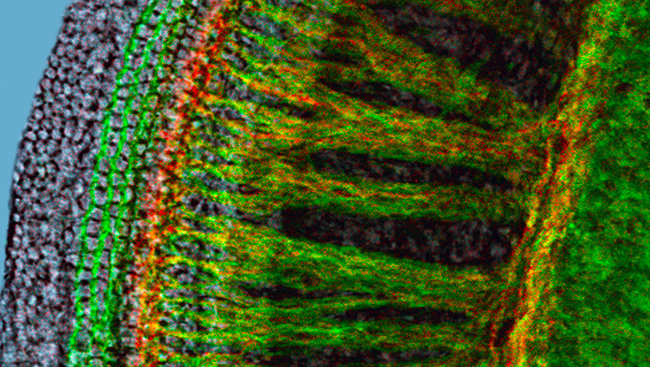 Annual Meeting Article Scientific ResearchMaterial below is adapted from the SfN Short Course, Multiple Sclerosis: From Bench to Bedside and Back Again, by Steven L. Hauser, MD. Short Courses are day-long scientific trainings on emerging neuroscience topics and research techniques held just prior to SfN’s annual meeting. The connection between the type of immune cells called B-cells and multiple sclerosis (MS) was confirmed after unblinding a phase II clinical trial in 2006. The story of the challenges and successes that clinicians and researchers have faced in studying this connection reveals that coupling laboratory and clinical research can improve the efficacy of translational medicine. MS is a disease in which the immune system attacks cells of the brain and spinal cord, yet symptoms observed in rodent models used in the 1970s likely came from problems with the peripheral nerves.May 15, 2018
 -
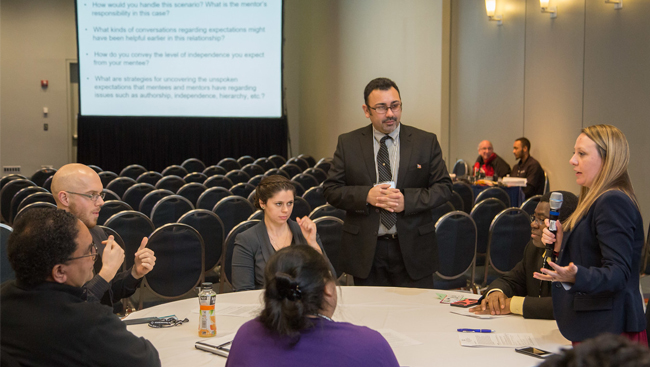 Annual Meeting Video Professional DevelopmentThis Neuroscience 2017 event, based on the Entering Mentoring series, is designed for mentors of diverse trainees. Through an evidence-based approach, you will learn effective strategies to gain an understanding of best practices in mentoring. This event is led by master facilitators from the NIH National Research Mentoring Network (NRMN), whose mission is to provide all trainees across the biomedical sciences with evidence-based mentorship and professional development programming.May 8, 2018
 -
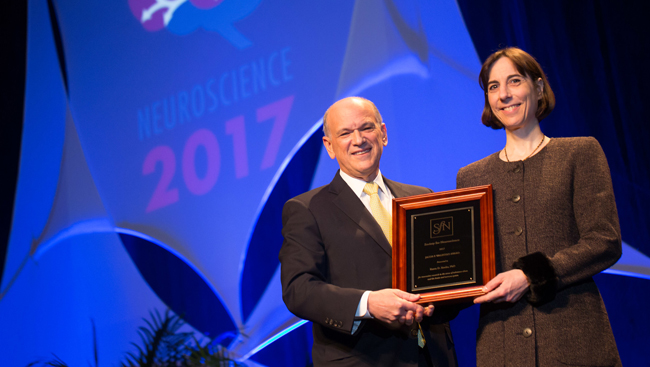 Annual Meeting Article Scientific ResearchKaren Ersche’s work focuses on the neurochemical processes underlying addictive behavior and how to translate these findings into therapies. Her findings have contributed to new behavioral and pharmacological approaches. For this work, she was awarded the Jacob P. Waletzky Award in 2017. What led you to study drug addiction, particularly cocaine addiction? My enthusiasm for drug addiction research is rooted in the potential it has to make a difference in people’s lives. Scientific advances have fundamentally changed the understanding of addiction from a deficit of character to a brain disorder, and I strongly believe it will also provide the pathway for developing more effective treatments. My research aims to tackle the problems surrounding cocaine addiction, which is a fairly common disorder in the United Kingdom with few effective treatments.May 7, 2018
 -
Journal ArticleEpilepsy, affecting millions globally, often leads to significant cognitive and psychiatric comorbidities, particularly in children. Anxiety and depression are particularly prevalent, with roughly a quarter of pediatric epilepsy patients having a comorbid diagnosis. Current treatments inadequately address these issues. Adrenocorticotropic hormone (ACTH), a melanocortin peptide, has shown promise in mitigating deficits after early life seizures (ELS), potentially through mechanisms beyond its canonical action on melanocortin 2 receptor (MC2R). This study explores the hypothesis that recurrent ELS is associated with long-term anxiety, and that treatment with ACTH can prevent this anxiety through a mechanism that involves melanocortin 4 receptors (MC4R) in the brain. Our findings reveal that ACTH ameliorates anxiety-like behavior associated with ELS, without altering seizure parameters, in wildtype (WT) but not in MC4R knockout (KO) male and female mice. Our findings also show that knocking-in MC4R in either ...Feb 27, 2025
-
Journal ArticleHuman brain banks are essential for studying a wide variety of neurological and neurodegenerative diseases, yet the variability in post-mortem interval (PMI)—the time from death to tissue preservation—poses significant challenges due to rapid cellular decomposition, protein alterations, and RNA degradation. Furthermore, the post-mortem transcriptomic alterations occurring within distinct cell types are poorly understood. In this study, we analyzed the effect of a 3-hour post-mortem interval on single-nucleus RNA signatures in the brains of wild-type (WT) and PS19 mice, a common model of tauopathy. We observed that basic quality control metrics (such as the number of genes and reads per cell), total nuclei counts, and RNA integrity number (RINe) remained consistent across all samples, regardless of PMI or genotype. However, a 3-hour PMI diminished the number of genes differentially expressed between PS19 and WT mice, suggesting an impact of delayed processing on the detection of disease-specific transcripto...Feb 27, 2025
-
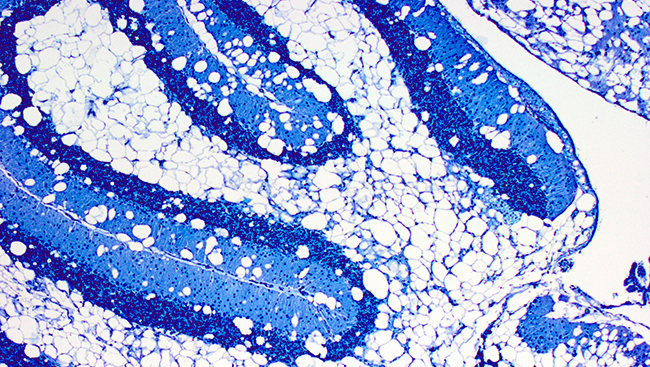 Video Scientific ResearchThis is a playlist of 19 videos from the 2016 FENS-Hertie Winter School. Since the groundbreaking description of patient H.M. in the 1950's, our understanding of human memory and the mechanisms underlying memory functions has increased dramatically in the last decades. Through extensive interactions with leaders in the field, the 2016 FENS-Hertie Winter School provided a comprehensive overview of both the basic and the latest knowledge about memory functions and their underlying mechanisms in humans.May 4, 2018
 -
 Annual Meeting Article Professional DevelopmentEmery Brown, professor of anesthesia at Harvard Medical School, discusses his career trajectory as a physician-scientist and his work-life balance. He delivered this talk during SfN’s Meet-the-Expert Series at Neuroscience 2017. The text below has been condensed and lightly edited and offer highlights from his talk. Listen to the audio recording above for the full remarks. Transitioning From Romance Languages to Circadian Rhythms I started out as an undergraduate at Harvard, majoring in romance languages. I knew I was going to go to medical school. I figured I would work for the World Health Organization, traveling around the world and stamping out diseases. However, in my sophomore year, my roommates concentrated in economics, and they talked like they understood the world. I then switched into economics, and in my junior year, I switched my major to applied mathematics. I also did an undergraduate thesis, and I wrote about studying outcomes from high-risk surgery. It was funded by the anesthesiology department at Massachusetts General Hospital. I didn't solve an earth-shattering problem, but it taught me how to formulate a problem, research it, and write it up.May 2, 2018




