



Filter
-
(133)
-
(733)
-
(4)
-
(1)
-
(47830)
-
(91)
-
(25)
-
(14)
-
(433)
-
(7)
-
(181)
-
(8)
-
(33)
-
(17)
-
(7)
-
(9)
-
(9)
-
(5)
-
(21)
-
(8)
-
(12)
-
(9)
-
(3)
-
(10)
-
(10)
-
(56)
-
(45)
-
(12)
-
(3)
-
(7)
-
(6)
-
(5)
-
(8)
-
(7)
-
(11)
-
(58)
-
(13)
-
(30)
-
(8)
-
(5)
-
(10)
-
(5)
-
(14)
-
(4)
1211 - 1220
of 52751 results
-
 Journal ArticleSubstantia nigra pars compacta (SNc) dopaminergic (DA) neurons are characterized by specific morphological and electrophysiological properties. First, in ∼90% of the cases, their axon arises from an axon-bearing dendrite (ABD) at highly variable distances from the soma. Second, they display a highly regular pattern of spontaneous activity (aka pacemaking) and a broad action potential (AP) that faithfully back-propagates through the entire dendritic arbor. In previous studies ( [Moubarak et al., 2019][1]; [Moubarak et al., 2022][2]), we demonstrated that the presence of a high density of sodium current in the ABD and the complexity of this dendrite played a critical role in the robustness of pacemaking and setting the half-width of the AP. In the current study, we investigated the postnatal development of both morphology and AP shape in SNc DA neurons in order to determine when and how the mature electrophysiological phenotype of these neurons was achieved. To do so, we performed electrophysiological record...Apr 1, 2025
 -
 Journal ArticleInvestigation of neural processes underlying motor control requires behavioral readouts that capture the richness of actions, including both categorical (choice-based) information and motor execution (kinematics). We present an open-source platform for behavioral training of head-fixed mice that combines a stationary or retractable forelimb-based joystick, sound-presentation system, capacitive lick sensor, and water reward dispenser. The setup allows for the creation of multiple behavioral paradigms, two of which are highlighted here: a two-alternative forced-choice auditory-motor discrimination paradigm and a two-armed bandit value-based decision-making task. In the auditory-motor paradigm, mice learn to report high- or low-frequency tones by pushing or pulling the joystick. In the value-based paradigm, mice learn to push or pull the joystick based on the history of rewarded trials. In addition to reporting categorical choices, this setup provides a rich dataset of motor parameters that reflect components...Apr 1, 2025
 -
 Journal ArticleThe re-emergence of task-related activation patterns during awake rest has been reported to play a role in memory consolidation and perceptual learning. This study aimed to test whether such reactivation occurs in the primary sensorimotor cortex following a visuomotor task. During functional magnetic resonance imaging (fMRI) scanning, 42 healthy participants (13 women and 29 men) learned visuomotor tracking, while a rotational perturbation was introduced between the cursor position and joystick angle. This visuomotor task block was interleaved with a control block, during which participants passively viewed a replay of their previously performed cursor movements. Half of the participants used their right hand, whereas the other half used their left hand to control the joystick. Resting-state scans were acquired before and after the visuomotor task sessions. A multivariate pattern classifier was trained to classify task and control blocks and was then tested on resting-state scans collected before and after...Apr 1, 2025
 -
 Journal ArticleAuditory masking—the interference of the encoding and processing of an acoustic stimulus imposed by one or more competing stimuli—is nearly omnipresent in daily life and presents a critical barrier to many listeners, including people with hearing loss, users of hearing aids and cochlear implants, and people with auditory processing disorders. The perceptual aspects of masking have been actively studied for several decades, and particular emphasis has been placed on masking of speech by other speech sounds. The neural effects of such masking, especially at the subcortical level, have been much less studied, in large part due to the technical limitations of making such measurements. Recent work has allowed estimation of the auditory brainstem response (ABR), whose characteristic waves are linked to specific subcortical areas, to naturalistic speech. In this study, we used those techniques to measure the encoding of speech stimuli that were masked by one or more simultaneous other speech stimuli. We presented...Apr 1, 2025
 -
 Journal ArticleResponse preparation is accomplished by gradual accumulation in neural activity until a threshold is reached. In humans, such a preparatory signal, referred to as the lateralized readiness potential (LRP), can be observed in the EEG over sensorimotor cortical areas before execution of a voluntary movement. Although well described for manual movements, less is known about preparatory EEG potentials for saccadic eye movements in humans and nonhuman primates. Hence, we describe a LRP over the frontolateral cortex in macaque monkeys. Homologous to humans, we observed lateralized electrical potentials ramping before the execution of both rewarded and nonrewarded contralateral saccades. This potential parallels the neural spiking of saccadic movement neurons in the frontal eye field (FEF), suggesting that it may offer a noninvasive correlate of intracortical spiking activity. However, unlike neural spiking in the FEF, polarization in frontolateral channels did not distinguish between saccade generation and inhib...Apr 1, 2025
 -
 Journal ArticleHumans can adapt their movements in response to expected and unexpected perturbations. The speed and accuracy of these movement corrections may depend on the type of sensory information driving the perception of these perturbations. While previous research has indicated that corrections based on somatosensory information, comprised of proprioceptive and tactile inputs, are faster than corrections based on visual information, other studies have found comparable correction speeds in response to visual and tactile inputs. The purpose of this study was to systematically investigate the latencies (how fast) and magnitudes (how large) of movement corrections in response to perturbations of external visual targets, as well as somatosensory (proprioceptive and tactile) and tactile targets on the non-reaching limb. Participants performed reaching movements to a light-emitting diode (i.e., visual target), the felt position of a brush touching the index finger of the non-reaching hand (i.e., a tactile target), and th...Apr 1, 2025
 -
 Journal ArticleAttention-deficit/hyperactivity disorder (ADHD) adversely affects the learning, social interaction, and daily living of affected children. Atomoxetine (ATX) hydrochloride (HCI) has been widely used in clinical practice. Electroencephalogram (EEG) biofeedback, as a nonpharmacological treatment approach, has also demonstrated potential in improving symptoms in children with ADHD. We aimed to investigate the clinical efficacy of combining ATX HCI with EEG biofeedback in the treatment of ADHD in children. We hypothesized that this combined therapy would be more effective in alleviating symptoms in children with ADHD. Ninety children with ADHD were randomly separated into the control group (receiving ATX HCI treatment for 12 weeks) and study group (receiving ATX HCI treatment for 12 weeks combined with 60 sessions of EEG biofeedback treatment; n = 45). Swanson, Nolan, and Pelham-IV (SNAP-IV) rating scale scores, integrated visual and auditory continuous performance test results, Conners parent symptom question...Apr 1, 2025
 -
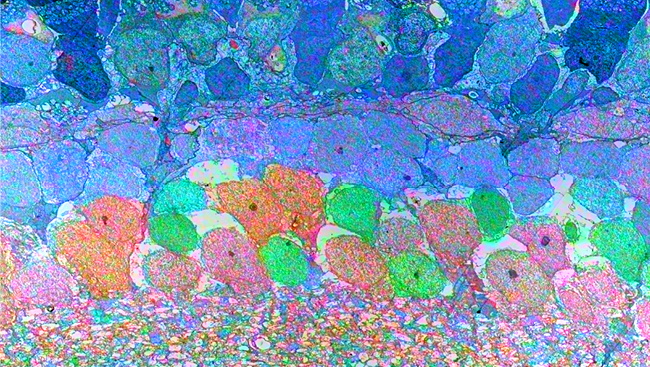 Article Scientific ResearchMaterial below is adapted from the SfN Short Course, Synapse Elimination and Learning Rules Coregulated by Major Histocompatibility Class I Protein H2-Db by Hanmi Lee, PhD, Lowry A. Kirkby, PhD, Barbara K. Brott, PhD, Jaimie D. Adelson, PhD, Sarah Cheng, BS, Marla B. Feller, PhD, Akash Datwani, PhD, and Carla J. Shatz, PhD. Short Courses are day-long scientific trainings on emerging neuroscience topics and research techniques held just prior to SfN’s annual meeting. Major histocompatibility complex class I (MHCI) proteins occur on nearly all vertebrate cells and function as a marquee for the immune system, displaying bits of non-self proteins from the cell’s cytosol on its surface. Now, researchers have shown in mice that a common MCHI protein, H2-Db, is required for shaping the synapses during the development of the retinogeniculate system.Nov 20, 2018
 -
 Article Professional DevelopmentI believe the key to an effective discussion about animal research is authenticity. I learned this firsthand during a lecture I gave at the University of California at Irvine’s Distinctive Voices Series organized by the National Academy of Sciences.Nov 19, 2018
 -
Journal ArticleParkinson’s disease (PD) is a progressive neurodegenerative disorder characterized by motor and non-motor symptoms. Its pathological hallmarks include the accumulation of misfolded alpha-Synuclein (α-Syn) in Lewy bodies (LBs) and Lewy neurites. Phosphorylation of α-Syn is a prominent feature of these inclusions, but its role in disease pathogenesis remains unclear. To identify the role of α-Syn phosphorylation in Synucleinopathy, we generated two Snca knock-in (KI) mouse models carrying phosphomimetic mutations at SncaY39 or SncaS129 ( SncaY39E or SncaS129D ) which manipulated epitopes phosphorylated in PD brain. Both SncaY39E and SncaS129D KI mice displayed increased α-Syn phosphorylation, enhanced oligomer formation, and a shift of α-Syn localization from membrane-bound to cytoplasm. However, neurodegeneration in substantia nigra was not observed up to 24 months of age. These findings demonstrate that mimicking the phosphorylation of Y39 or S129 can induce endogenous α-Syn phosphorylation. Still, a singl...Mar 31, 2025




