



Filter
-
(133)
-
(733)
-
(4)
-
(1)
-
(47830)
-
(91)
-
(25)
-
(14)
-
(433)
-
(7)
-
(181)
-
(8)
-
(33)
-
(17)
-
(7)
-
(9)
-
(9)
-
(5)
-
(21)
-
(8)
-
(12)
-
(9)
-
(3)
-
(10)
-
(10)
-
(56)
-
(45)
-
(12)
-
(3)
-
(7)
-
(6)
-
(5)
-
(8)
-
(7)
-
(11)
-
(58)
-
(13)
-
(30)
-
(8)
-
(5)
-
(10)
-
(5)
-
(14)
-
(4)
1141 - 1150
of 52751 results
-
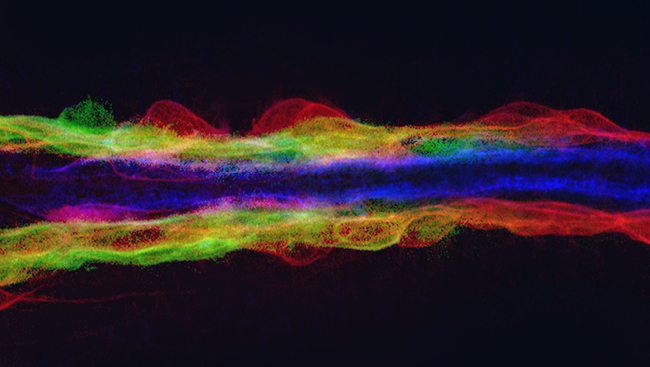 Video AdvocacyAs part of an effort to provide scientists with strategies to openly communicate about animal research with the wider public, the European Animal Research Association, a communications and advocacy organization promoting biomedical research across Europe, hosted a workshop series — Improving Openness in Animal Research in Germany — where speakers shared best practices for communicating about animal research. “Today, transparency and openness are the zeitgeist,” says EARA Executive Director Kirk Leech, who emphasizes that sharing information can help the public and media to understand the necessity of animal models and to support responsible animal research. Watch the workshop and panel discussion to learn how to: - Improve public understanding of the importance of animal research in basic and applied scientific research by explaining statistics on animal use and partnering with other countries to develop a unified message. - Increase trust among the broader public by talking to journalists, opening up your lab, and sharing emotions you’ve experienced as well as values you uphold in conducting your research. - Anticipate sensitive issues, respond to negative media campaigns, and work with your institution to follow a communications plan.Mar 26, 2019
 -
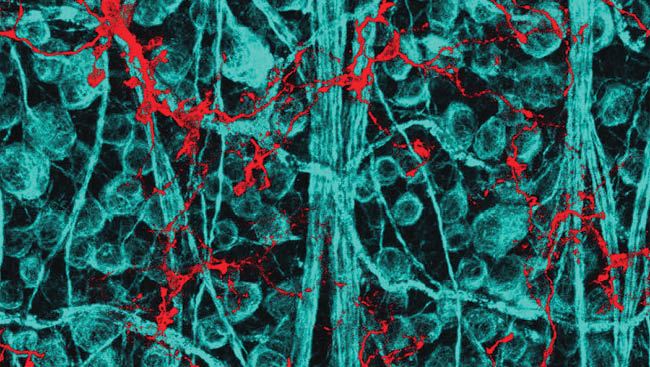 Podcast Scientific ResearchNeural recording technology has advanced significantly over the past sixty years, from Hubel and Wiesel’s tungsten wires to tetrodes to Neuropixels, a low-cost, high-channel-count silicon probe. In this Meet-the-Expert, Timothy Harris, who led the team that developed Neuropixels, discusses the technology that allows this new electrophysiological tool to contribute a long, dense array. He assesses alternative paths for high-channel-count recording sensors and the origin of limits for these devices. He also explains how they give researchers the ability to cover more tissue and how they can be combined with light sources, electrical stimulation, and photometry.Mar 21, 2019
 -
 Journal ArticleActivation of hypothalamic paraventricular oxytocin (OXTPVN) neurons by social or stress stimuli triggers OXT release to respectively promote social investigation or buffer adverse effects of stress. Astrocytes, a type of glial cells, can bidirectionally interact with hypothalamic neurons to participate in local activity regulation within the paraventricular nucleus (PVN). It remains unknown whether contextual factors related to stimuli, as well as biological factors such as sex, influence OXTPVN neuronal or astrocyte activity and/or their interactions. To address this question, we performed dual-color fiber photometry in freely behaving male and female mice to simultaneously record Ca2+ dynamics in OXTPVN neurons and astrocytes during acute social (i.e. interactions with familiar vs. unfamiliar conspecifics) and stress (i.e. looming shadow) stimuli. During social stimuli, we observed most pronounced Ca2+ changes in OXTPVN neurons in females, revealing sex- and familiarity context-specificity. No astrocyte...Apr 22, 2025
 -
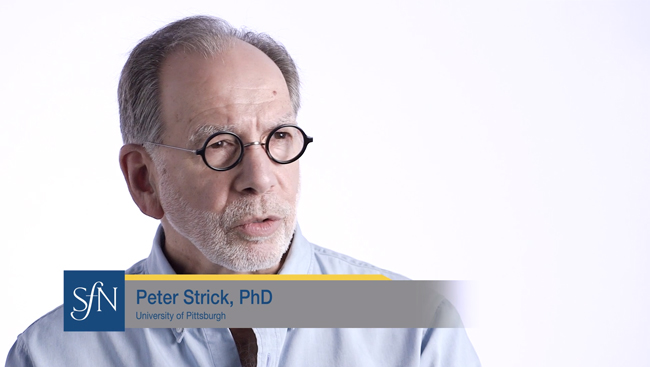 Video AdvocacyWatch this video with Chair of SfN’s Committee on Animals in Research Peter Strick to know how to more effectively advocate for the importance of working with animal models. You’ll also learn steps you can take to reframe public opinion of animal research, such as continuing to prioritize the well-being of animal subjects, increasing transparency, and partnering with advocacy groups. With increased public support for animal research, scientists can continue to develop treatments for brain diseases and disorders that are increasingly touching the lives of people across the world.Mar 20, 2019
 -
Journal ArticleSeizures affect a large proportion of the global population and occur due to abnormal neuronal activity in the brain. Unfortunately, widespread genetic and phenotypic heterogeneity contribute to insufficient treatment options. It is critical to identify the genetic underpinnings of how seizures occur to better understand seizure disorders and improve therapeutic development. We used the Drosophila melanogaster model to identify that IGF-II mRNA Binding Protein (Imp) is linked to the onset of this phenotype. Specific reduction of Imp in neurons causes seizures after mechanical stimulation. Importantly, gross motor behavior is unaffected, showing Imp loss does not affect general neuronal activity. Developmental loss of Imp is sufficient to cause seizures in adults, thus Imp-modulated neuron development affects mature neuronal function. Since Imp is an RNA-binding protein, we sought to identify the mRNA target that Imp regulates in neurons to ensure proper neuronal activity after mechanical stress. We find th...Apr 21, 2025
-
 Article Professional DevelopmentThere’s no one right way to set up a lab. From building a culture to purchasing supplies, determine what works best for you — and then run with it. Tim Mosca, an assistant professor at Thomas Jefferson University, shares what he’s learned and observed from setting up and running his own lab, including one of the most important elements to success: Talk to people. “Though it can feel like an isolating experience, as a new PI you’re not alone. There are people at your institution who have done it before you or who were hired at the same time as you,” he advises. “Listen to everything going on at your university to learn with whom you should talk.” Read on for his lab setup checklist, which includes hiring and motivating staff, purchasing supplies, growing as a manager, and more.Mar 13, 2019
 -
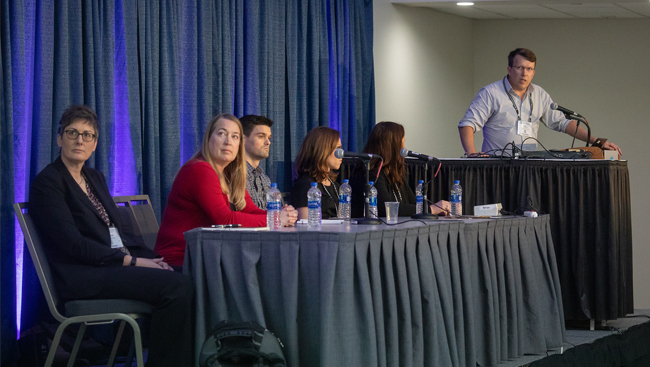 Annual Meeting Video Career PathsCareers in making medicines can take many forms. “Drug discovery doesn't only happen in the pharmaceutical industry. It happens in academia, small biotech companies, and government,” says Fiona Randall, head of external innovation at Eisai Andover Innovative Medicines Institute. This workshop provides an overview of career opportunities in making medicines. Through panelists’ personal stories, hear how basic science can inform drug discovery programs that lead to new medicines. Watch the recording above, and read on for a preview of their varied career paths and advice for scientists thinking about transitioning to industry.Mar 12, 2019
 -
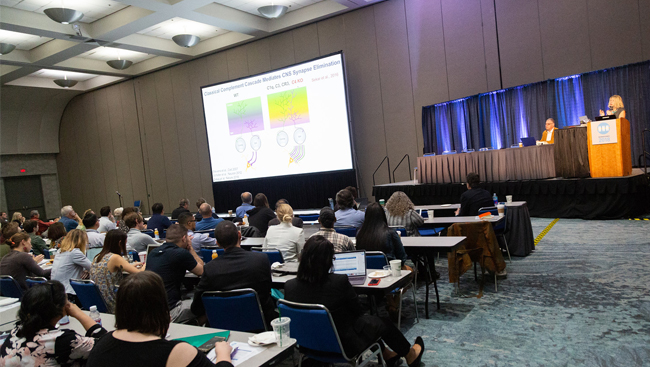 Annual Meeting Video Scientific ResearchNeuroinflammation is a major contributor to the pathophysiology of a variety of nervous system disorders. The innate immune system is an important mechanism that engages microglia, leads to neuroinflammation, and underlies clinical problems ranging from neurodevelopmental disorders to neurodegenerative diseases. Understanding how microglia develop and act in the brain and the pathways by which they cause neuroinflammation is a primary goal for finding treatments for such diseases. This Neurobiology of Disease Workshop, held at Neuroscience 2018, reveals ways in which neuroinflammation contributes to the pathophysiology of disorders of the central nervous system.Mar 7, 2019
 -
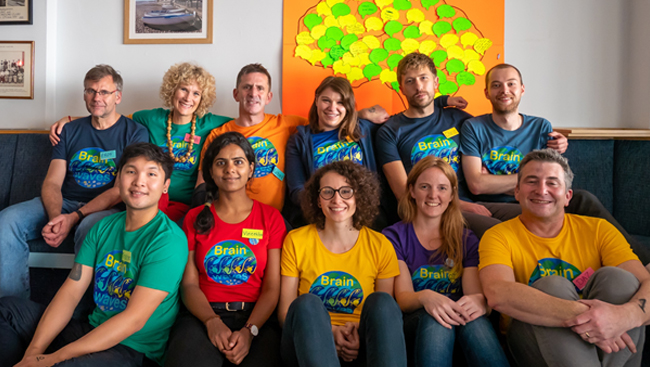 Article OutreachWhen you communicate brain science, have you considered how you can use the world around you to enhance impact? What does neuroscience look like in a forest, in an urban playground, or on the beach? We’ve been developing a reflexive approach to neuroscience outreach by using the resources we encounter in different environments to teach children about the brain. Using your imagination and the tools at hand, you can turn almost any environment into a classroom, where the lessons are always fresh and exciting. Introduction to The Event, Brainwaves Brainwaves was a one-day seashore-based neuroscience adventure conducted at the Sidmouth Science Festival in Devon, United Kingdom in October 2018. The science festival is one of a number of community-led festivals in the United Kingdom. There were 65 children, aged 8–9. Twelve neuroscientists, ranging from PhD candidates to principal investigators, designed and delivered the workshop. We recruited three local schools as participants to bring together children with different educational experiences. We used the fabric of the seashore — pebbles, tidal creatures, buckets and spades, and the terrain — to explore the structure of a neuron, how signals pass along cells, and how brain cells build connected networks. We explicitly wanted to use what we found on the beach and in rock pools to illustrate these concepts and show that connections to neuroscience are all around us.Mar 6, 2019
 -
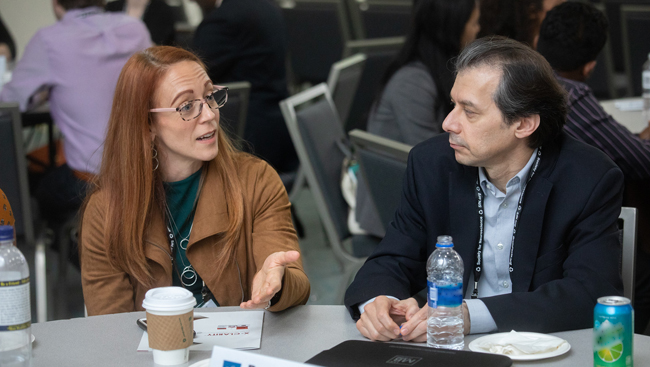 Annual Meeting Video TrainingIn this workshop, hear about key strategies postdoctoral training programs can use to help their trainees launch and sustain a successful career. You’ll learn about specific programs and policies that can reduce barriers to and create more opportunities for successful transitions to independent research careers. The panel discussion is based on The National Academies report, The Next Generation of Biomedical and Behavioral Science Researchers: Breaking Through.Mar 5, 2019




