



Filter
-
(133)
-
(733)
-
(4)
-
(1)
-
(47830)
-
(91)
-
(25)
-
(14)
-
(433)
-
(7)
-
(181)
-
(8)
-
(33)
-
(17)
-
(7)
-
(9)
-
(9)
-
(5)
-
(21)
-
(8)
-
(12)
-
(9)
-
(3)
-
(10)
-
(10)
-
(56)
-
(45)
-
(12)
-
(3)
-
(7)
-
(6)
-
(5)
-
(8)
-
(7)
-
(11)
-
(58)
-
(13)
-
(30)
-
(8)
-
(5)
-
(10)
-
(5)
-
(14)
-
(4)
721 - 730
of 52751 results
-
 Article TrainingAs a faculty member at a primarily undergraduate institution (PUI), research may look different than it did during your training, considering most of your time will be reserved for teaching. Even so, many schools encourage integrating research into courses, which can help you have an impact on more students than you would in a research lab.Mar 4, 2021
 -
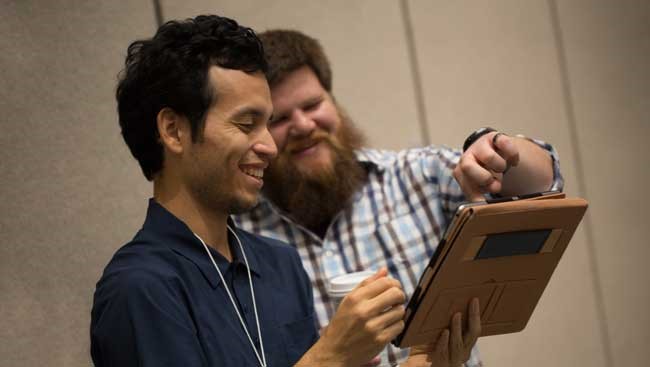 Article Professional DevelopmentAs Charles Yokoyama shared in an article detailing his career path journey, he was a bench scientist and senior editor at Neuron before taking on his current roles in global communication, collaboration, and research development for the RIKEN Brain Science Institute.Mar 3, 2021
 -
 Article Scientific ResearchThis resource was featured in the NeuroJobs Career Center. Visit today to search the world’s largest source of neuroscience opportunities. Researchers desire to make the most eye-catching discoveries to have a sensational impact on the academic community and general public. For this reason, researchers strive to obtain results that support their claims to the greatest extent possible. This "sexy science" has led to a spate of vigorous publications by researchers, and has shaped the scientific glory of today. However, the results of such studies are sometimes unreproducible or derived from falsification. No matter how eye-catching a study is, if it is not credible, it is completely meaningless. Follow the advice in this article to introduce rigorous practices to your research.Mar 2, 2021
 -
 Podcast Scientific ResearchHow can researchers shape modern scientific culture to incentivize more sustainable, rigorous science? Hear from Michael Lehman, Ghazaleh Sadri-Vakili, and Tanita Casci as they cover the critical importance of incentivizing rigorous research today, as well as ways you can advance rigorous research practices at any level in your career to invigorate the field.Feb 26, 2021
 -
 Podcast Scientific ResearchAlthough there are many hurdles to enhancing rigor in neuroscience, one fact is clear: implementing rigorous research practices today will enhance the credibility of the field tomorrow. Wrap up this series with Emily Sena, Eric Nestler, and Walter Koroshetz as they discuss the rewards to conducting rigorous research, how institutions, journals, and funders can step up to enhance rigor across the field, and ways for individuals to shift the needle in tackling this collective challenge.Feb 26, 2021
 -
 Podcast Scientific ResearchThe Society for Neuroscience’s (SfN’s) Foundations of Rigorous Neuroscience Research (FRN) program aims to inform and empower neuroscientists at all career stages to enhance the rigor and reproducibility of their research. Begin this series with Oswald Steward and Lique Coolen as they cover the genesis of the FRN program, the objectives of the podcast series, and the resources that you can access to enhance rigorous research practices in neuroscience.Feb 26, 2021
 -
 Podcast Scientific ResearchWhen developing a study, there are many sources of biases that can affect experimentation or interpretation of results. Join Christie Fowler, Olavo Amaral, and Kip Ludwig as they discuss the various considerations neuroscientists must face to conduct research while minimizing bias and maximizing objectivity.Feb 26, 2021
 -
 Podcast Scientific ResearchJoin neuroscientists Letisha Wyatt, Jane Roskams, and Maryann Martone as they delve into the challenges neuroscience has faced regarding data storage, management, and sharing. They discuss the historical transition from analog to digital data, the complexities of neuroscience data, and paths forward to foster more sound data stewardship for the larger scientific community.Feb 26, 2021
 -
 Video Professional DevelopmentIn this video, Elba Serrano, Regents Professor of biology at New Mexico State University (NMSU), shares her experience as a leader in her lab. Serrano stresses the importance of facilitating inspiration because the lab is a place of innovation, where risks and possible failure can be frequent. Focusing on connecting people’s interests and curiosity to the bigger picture of the scientific research questions the lab is facing is for her a key component of leadership. Serrano takes her leadership one step further and applies those same principles of inspiration and innovation beyond the bench.Feb 25, 2021
 -
 Poster Scientific ResearchNeuromatch Academy aims to introduce traditional and emerging tools of computational neuroscience to trainees. It is appropriate for student population ranging from undergraduates to faculty in academic settings and also includes industry professionals. In addition to teaching the technical details of computational methods, Neuromatch Academy also provide a curriculum centered on modern neuroscience concepts taught by leading professors along with explicit instruction on how and why to apply models. This course provides an overview of generalized linear models (GLM).Feb 24, 2021




