



Filter
-
(133)
-
(735)
-
(4)
-
(1)
-
(47859)
-
(93)
-
(25)
-
(14)
-
(434)
-
(7)
-
(186)
-
(8)
-
(33)
-
(17)
-
(7)
-
(10)
-
(9)
-
(5)
-
(21)
-
(8)
-
(12)
-
(9)
-
(3)
-
(10)
-
(10)
-
(56)
-
(46)
-
(12)
-
(3)
-
(7)
-
(6)
-
(5)
-
(8)
-
(7)
-
(11)
-
(58)
-
(13)
-
(31)
-
(8)
-
(5)
-
(10)
-
(5)
-
(16)
-
(4)
7151 - 7160
of 52800 results
-
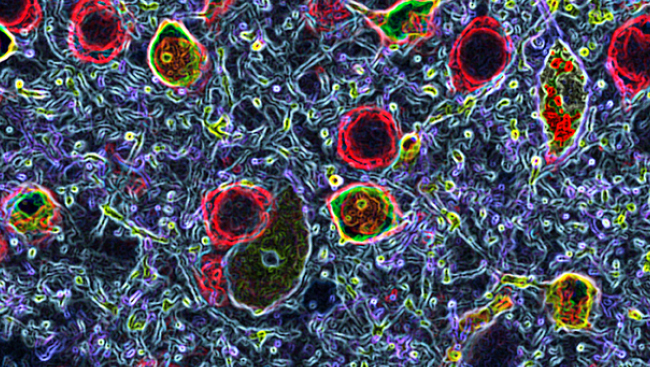 Video TrainingIn this video, Iva Kelava discusses her research using organoids to model the developing human brain.
 -
 Video TrainingIn this video, Heather Rhodes and her undergraduate students will demonstrate how to set up, conduct, and interpret results from an inquiry-based laboratory exercise using optogenetics in C. elegans. Specifically, Rhodes will: - Explain how to assemble simple, low-cost equipment to run an inquiry-based optogenetics experiment with undergraduate students. - Demonstrate optogenetics stimulation to manipulate motor behavior in C. elegans with her students. After watching this video, you should be able to better understand how to integrate optogenetic approaches into laboratory exercises for undergraduate and high school students.
 -
 TrainingIn this presentation, Madeline Lancaster will: - Introduce development of three-dimensional neural organoids. - Describe various three-dimensional methods: emphasizing strengths and limitations. - Provide an overview of neurological conditions so far modeled with organoid systems.
 -
 TrainingIn this presentation, Martin Kampmann will introduce functional genomics approaches in iPSC-derived neurons and glia. Specifically, Kampmann will: - Cover CRISPRi (interference) and CRISPRa (activation) control of gene expression. - Describe how to implement CRISPRi/a in iPSC-derived cells. - Introduce large-scale genetic screens based on survival, fluorescent readouts of cell function, single-cell RNA sequencing, and high-content imaging - Use of functional genomics to understand mechanisms underlying disease-linked genes and potential therapeutic strategies.




