



Filter
-
(133)
-
(733)
-
(4)
-
(1)
-
(47830)
-
(91)
-
(25)
-
(14)
-
(433)
-
(7)
-
(181)
-
(8)
-
(33)
-
(17)
-
(7)
-
(9)
-
(9)
-
(5)
-
(21)
-
(8)
-
(12)
-
(9)
-
(3)
-
(10)
-
(10)
-
(56)
-
(45)
-
(12)
-
(3)
-
(7)
-
(6)
-
(5)
-
(8)
-
(7)
-
(11)
-
(58)
-
(13)
-
(30)
-
(8)
-
(5)
-
(10)
-
(5)
-
(14)
-
(4)
321 - 330
of 52751 results
-
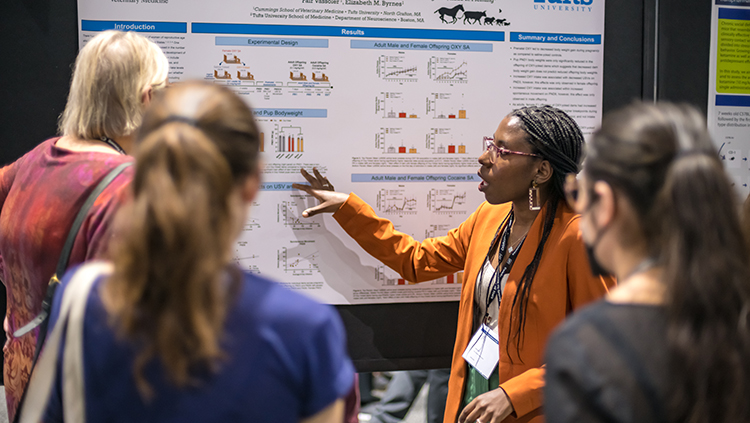 Video Professional DevelopmentIn this one-hour long webinar, we will discuss key points of poster preparation and presentation, including where to start, how to visualize your ideas using text and figures, how to present to different audiences, how to handle questions and discussions at your poster, and how to follow up with your audience.Sep 18, 2023
 -
 Video Scientific ResearchJoin this interactive session as Julie-Anne Balouek and Catherine Jensen Peña discuss their paper, “Reactivation of early-life stress-sensitive neuronal ensembles contributes to lifelong stress hypersensitivity”, with JNeurosci Reviewing Editor . Mary Kay Lobo. Attendees can submit questions at registration and live during the webinar.Sep 12, 2023
 -
 Video Scientific ResearchNeuronline is a benefit of SfN membership. Renew your membership now to make sure you don’t lose access.Sep 6, 2023
 -
 Journal ArticleAge-related alterations in myelin are a prominent feature of brain aging, yet how myelin-associated markers and oligodendrocyte lineage cell populations change across the primate lifespan remains incompletely characterized. Here, we provide a multimodal, cross-sectional analysis of myelin-related imaging and cellular markers in the prefrontal cortex (PFC) of age-matched both male and female rhesus macaques across postnatal development and aging using a multimodal approach combining magnetic resonance imaging (MRI), histological analysis, immunohistochemistry, and RNAscope in situ hybridization. We quantified regional gray and white matter volumes and myelin water fraction measures in prefrontal cortex (PFC) subregions BA9 and BA46 across four age groups: 5, 10, 15, and 30 years. Myelin water fraction and regional brain volumes exhibited age-dependent increases from childhood through adolescence, peaking at 15 years, followed by a decline in aged animals. Histological analyses revealed age-associated change...Apr 2, 2026
 -
Journal ArticleTrafficking of intracellular cargoes along the neuronal axon microtubule tracks is a motor-protein-dependent process. Here we use a targeted genetic approach to knockdown candidate kinesin genes involved in trafficking organelles in male and female Drosophila melanogaster . Live-imaging experiments revealed intracellular trafficking changes, and kinesins 1 and 3 were identified as critical regulators. Disruptions in either gene product reduce rates of axonal trafficking in motor neurons, and lead to the formation of large intracellular aggregates. Kinesin disruptions led to significant changes in neuropeptide abundance at boutons, and changes in synaptic morphology. Confocal imaging revealed fewer neuropeptides trafficking through, or getting captured by synapses in kinesin knockdown experiments, and a dramatic reduction in neuropeptide release at motor neuron terminals. A profound reduction in neuromuscular transduction, and excitation-contraction coupling in kinesin 1 knockdowns, but not for kinesin 3 wa...Apr 2, 2026
-
 Video Professional DevelopmentIn this webinar, we will briefly discuss the advantages and limitations of various graphics editing software.Aug 30, 2023
 -
Journal ArticleProteomic studies have generated robust assessments of protein abundance changes in Alzheimer’s disease (AD); however, identifying how the protein abundance changes affect specific biological processes remains a challenge. To address these hurdles, we used a multi-network computational analysis approach that integrated dendritic spine morphometry data with mass spectrometry-based proteomics from the same individuals. The samples exhibited a range of AD neuropathology and were categorized into three groups: controls, asymptomatic AD, and AD cases. Multiplex tandem mass tag mass spectrometry proteomic data (N = 8,212 proteins) was generated on Brodmann area 46 (BA46) dorsolateral prefrontal cortex (DLPFC) human samples (N = 41, 23 males and 18 females), from which dendritic spine morphometry analysis existed. To integrate the multi-scale data types, two computational network analysis methods were performed, including WeiGhted co-expression network analysis (WGCNA) and SpeakEasy2 (SE2). Both WGCNA and SE2 rev...Apr 1, 2026
-
Journal ArticleFragile X syndrome is a leading cause of intellectual disability and autism spectrum disorder, for which therapies are limited. A mouse model of Fragile X syndrome, the Fmr1 knockout (KO) mouse, has been particularly valuable for interrogating the molecular, cellular, and circuit mechanisms that underlie the neurological deficits seen in this syndrome. Key deficits in Fragile X syndrome include impairments in social behaviors, cognition, and motor learning. Given the difficulties in extrapolating complex human behaviors to mouse models, motor behaviors are a particularly tractable form of learning to study in the mouse. We investigated a form of forelimb reach learning in both male and female Fmr1 KO mice, quantifying different parameters of the task using both manual analysis and DeepLabCut-based tracking of reach trajectories. While Fmr1 KO mice show impaired learning overall, our results showed that the presence or absence of a cue that signals reward alleviated some of the deficits. In addition to a si...Apr 1, 2026
-
Journal ArticleElucidating the neural substrates of Pavlovian reward learning requires reliable behavioral readouts. In conditioned magazine approach studies, rodents express reward expectancy by approaching the food magazine during cues that predict reward. This behavior is typically quantified using one of three measures: number of head entries, percentage of time in the magazine, or latency to respond. Yet these measures often diverge within the same discrimination task, making reliance on a single metric problematic. At the individual level, some animals express discrimination learning most clearly in one measure while showing little or no learning in the others, and animals may even switch their preferred measure across training. Reporting only one measure therefore risks underestimating the ability of a subset of animals. At the group level, sampling error can produce apparent differences across replications of the same design, limiting replicability. Moreover, brain manipulations can alter response topography, suc...Apr 1, 2026
-
 Journal ArticleThe amount of time previously spent awake or asleep strongly impacts the sleep electroencephalogram (EEG), especially slow waves during nonrapid-eye-movement (NREM) sleep. These effects on the sleep EEG meaningfully interact with age and to a lesser extent developmental disorders such as attention-deficit hyperactivity disorder (ADHD). We aimed to determine whether EEG oscillations during wakefulness were likewise affected by the interaction of sleep and development, using data collected from 163 participants aged 3–25 years old (62 female). We analyzed age- and sleep-dependent changes in two measures of oscillatory activity (amplitudes and density) and aperiodic activity (offsets and exponents). Finally, we compared wake EEG in children with ADHD ( N = 58) to neurotypical controls, with habitual good sleep quality required for inclusion. We found that oscillation amplitudes exhibited the same dynamics as sleep slow waves: decreasing with age, decreasing after sleep, and the overnight decrease decreasing ...Apr 1, 2026




