



Filter
-
(133)
-
(733)
-
(4)
-
(1)
-
(47833)
-
(91)
-
(25)
-
(14)
-
(433)
-
(7)
-
(181)
-
(8)
-
(33)
-
(17)
-
(7)
-
(9)
-
(9)
-
(5)
-
(21)
-
(8)
-
(12)
-
(9)
-
(3)
-
(10)
-
(10)
-
(56)
-
(45)
-
(12)
-
(3)
-
(7)
-
(6)
-
(5)
-
(8)
-
(7)
-
(11)
-
(58)
-
(13)
-
(30)
-
(8)
-
(5)
-
(10)
-
(5)
-
(14)
-
(4)
1371 - 1380
of 52754 results
-
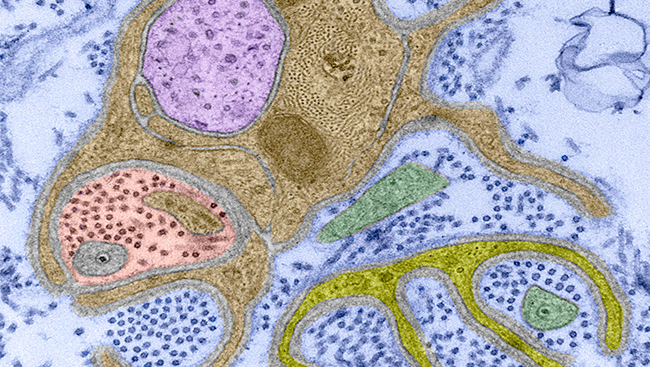 Article Scientific ResearchMaterial below summarizes the article, Obesity Accelerates Alzheimer-Related Pathology in APOE4 but not APOE3 Mice, published on June 12, 2017, in eNeuro and authored by V. Alexandra Moser and Christian J. Pike. Alzheimer’s disease (AD) is a complex, multi-factorial disease for which a number of genetic, environmental, and lifestyle risk factors have been identified. For the vast majority of those afflicted, AD does not result from any single factor, but rather the interactive effects of multiple risk factors. Despite the importance of interactions among risk factors, our understanding of how the combination of these variables affects development and progression of AD is poorly understood. In this paper, we investigated the gene-environment interaction between two well-established AD risk factors, apolipoprotein E4 (APOE4) and obesity. APOE4 is the most significant genetic risk factor for late-onset AD. APOE4 is not a genetic mutation, but rather a polymorphism. Specifically, the APOE gene has three normal alleles termed APOE2, APOE3, and APOE4, which code for proteins that differ at only two amino acids.Mar 22, 2018
 -
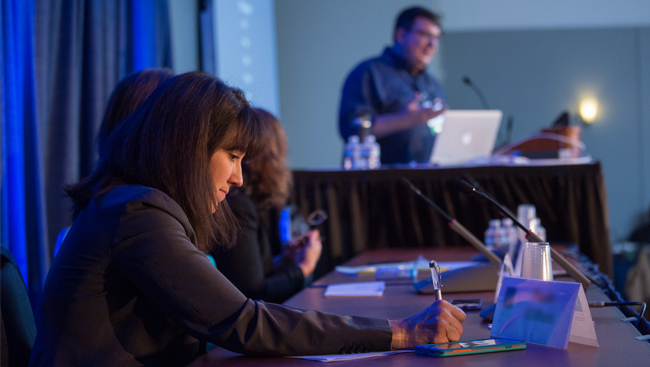 Video Annual Meeting OutreachIn today's environment, animal researchers need to engage with different audiences to promote understanding of and the need for animal models. However, scientists often face specific challenges when discussing this matter with the public, policymakers, and the press. This interactive panel from Neuroscience 2017 provides engagement strategies and showcases how to connect with various audiences on the importance and benefits of animal research.Mar 21, 2018
 -
 Article Professional DevelopmentThe qualities of a good mentor include effective communication, trust, flexibility, kindness, patience, tolerance, trust, and transparency.Mar 20, 2018
 -
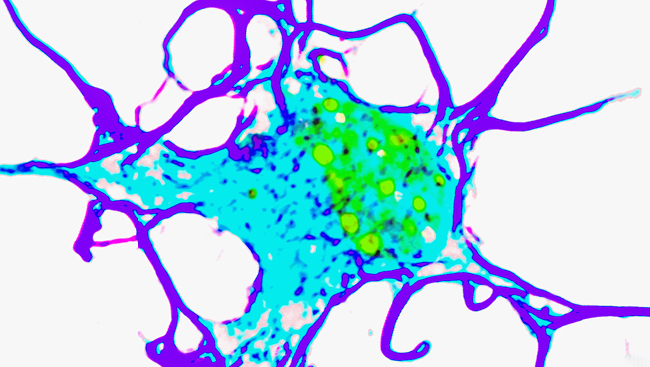 Article Professional DevelopmentNo two careers are identical. Yet, all neuroscientists will likely share certain commonalities: the first sparks of scientific curiosity, difficult challenges, resilience to press on, accomplishments large and small, hard-earned wisdom, and support from professional and personal communities. In this series, Notable Careers: Reflections on Science, Leadership, and Community, five neuroscientists reflect on their life’s work and share their hope for the future of the field. Here, Marie-Françoise Chesselet, professor emeritus at the University of California, Los Angeles, focuses on what it was like moving from France (her home country), to pursue science and a life in the United States, why leading large collaborative groups was so valuable to her, and more. What inspired you to become a neuroscientist? I felt neuroscience would be the area of biology in which there would be the most drastic and significant advances in my lifetime. When I started my career, neuroscience was just emerging as a separate science. I was fascinated mostly by mental illness and the potential of neurochemistry to better understand the complexity and diversity of communication processes in the brain to learn how the brain works and dysfunctions.Mar 16, 2018
 -
 Article Professional DevelopmentThese are the stories of five retired neuroscientists who built a life’s work through scientific discovery and personal connection. In this interview series, Connie Atwell, Marie-Françoise Chesselet, Michael Oberdorfer, Osvaldo Uchitel, and James Townsel reflect on how they found their place in and helped grow a developing neuroscience field, what influenced them throughout their career, and what advice they have for neuroscientists at all stages.Mar 16, 2018
 -
 Article Career PathsNo two careers are identical. Yet, all neuroscientists will likely share certain commonalities: the first sparks of scientific curiosity, difficult challenges, resilience to press on, accomplishments large and small, hard-earned wisdom, and support from professional and personal communities. In this series, Notable Careers: Reflections on Science, Leadership, and Community, five neuroscientists reflect on their life’s work and share their hope for the future of the field. Here, Connie Atwell, whose last position was extramural research director at the National Institute of Neurological Disorders and Stroke, focuses on what it was like transitioning from academia to research administration, and why the role was so fulfilling.Mar 16, 2018
 -
 Article Professional DevelopmentNo two careers are identical. Yet, all neuroscientists will likely share certain commonalities: the first sparks of scientific curiosity, difficult challenges, resilience to press on, accomplishments large and small, hard-earned wisdom, and support from professional and personal communities. In this series, Notable Careers: Reflections on Science, Leadership, and Community, five neuroscientists reflect on their life’s work and share their hope for the future of the field. Here, Michael Oberdorfer, whose last position was program director of NIH’s National Eye Institute (NEI) extramural research program, shares his initial childhood curiosity with science and nature, highlights from his training years, what it was like to attend SfN’s first annual meeting, and more. What inspired you to become a neuroscientist? As long as I can remember, even as a little kid, I've been interested in nature. I spent some of my early years in Kensington, Maryland. Our house backed up against a deep woods, and I was always bringing home critters — snakes, frogs, turtles — and it didn’t stop there (it drove my mother crazy).Mar 16, 2018
 -
 Annual Meeting Video Professional DevelopmentThis workshop introduces three emerging best practices to improve the rigor and reproducibility of neuroscience research: 1. Sample-size planning. 2. Pre-registration. 3. The Teaching Integrity in Empirical Research (TIER) Protocol for conducting reproducible data analysis. Each discussion provides a 30-minute overview of the topic and include resources and tips for advancing towards mastery.Mar 14, 2018
 -
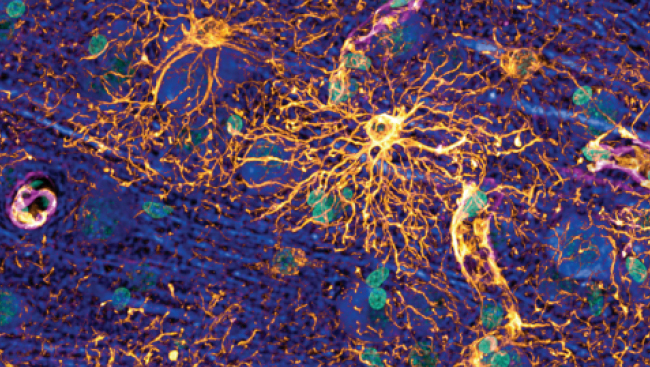 Article Professional DevelopmentBy Stephen J. Morse The discovery of functional magnetic resonance imaging (fMRI) in 1991, which permits non-invasive imaging of brain function, and the wide availability of scanners for research starting in about 2000 fueled claims that what we would learn about the brain and behavior would transform and perhaps revolutionize criminal law. Most commonly, many thought traditional notions of criminal responsibility would be undermined for various reasons, such as demonstrating people really cannot control themselves as well as we believe, or as indicating more action was automatic, thoughtless, and non-rational than we think. Most radically, the neuroexuberants argued that neuroscience shows no one is really responsible because we are not agents — rather, we are victims of neuronal circumstances that mechanistically produce our epiphenomenal thoughts and our bodily movements.Mar 12, 2018
 -
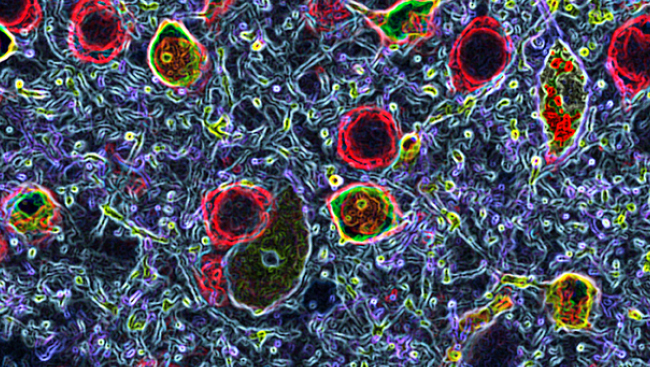 Article Scientific ResearchMaterial below summarizes the article, Sleep Deprivation and Caffeine Treatment Potentiate Photic Resetting of the Master Circadian Clock in a Diurnal Rodent, published on April 19, 2017, in JNeurosci and authored by Pawan Kumar Jha, Hanan Bouâouda, Sylviane Gourmelen, Stephanie Dumont, Fanny Fuchs, Yannick Goumon, Patrice Bourgin, Andries Kalsbeek, and Etienne Challet. The states of being awake and falling asleep are regulated by interaction of wake and sleep promoting areas in the mammalian brain. The master clock in the suprachiasmatic nucleus (SCN) of the hypothalamus provides a temporal pattern of sleep and wake that — like many other behavioral and physiological rhythms — is oppositely phased between nocturnal (night active) and diurnal (day active) animals. The SCN primarily uses environmental light, perceived through the retina, to synchronize endogenous circadian rhythms with the 24-hour light/dark cycle of the outside world. The light responsiveness of SCN is similar in both nocturnal and diurnal species.Mar 1, 2018




