



Filter
-
(133)
-
(733)
-
(4)
-
(1)
-
(47830)
-
(91)
-
(25)
-
(14)
-
(433)
-
(7)
-
(181)
-
(8)
-
(33)
-
(17)
-
(7)
-
(9)
-
(9)
-
(5)
-
(21)
-
(8)
-
(12)
-
(9)
-
(3)
-
(10)
-
(10)
-
(56)
-
(45)
-
(12)
-
(3)
-
(7)
-
(6)
-
(5)
-
(8)
-
(7)
-
(11)
-
(58)
-
(13)
-
(30)
-
(8)
-
(5)
-
(10)
-
(5)
-
(14)
-
(4)
981 - 990
of 52751 results
-
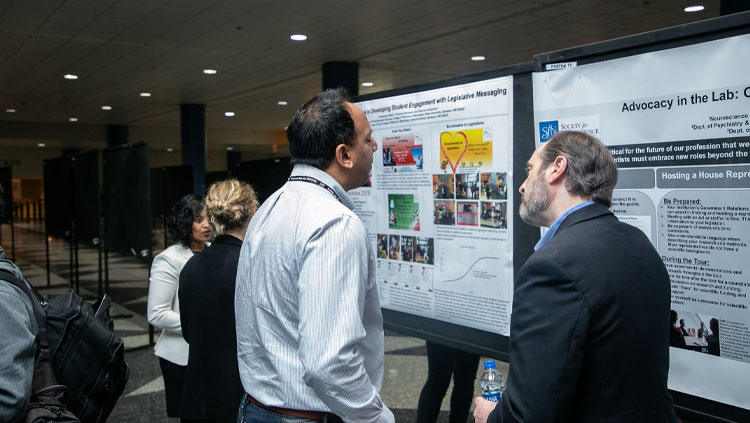 Article AdvocacyMaybe you’re interested in advocating for science but are waiting to have more time in your career. Or maybe you don’t know where to find groups that can show you how. Either way, this advice from three scientist-advocates from across the career spectrum will help you get started.Jan 15, 2020
 -
 Article Career PathsYasemin Gürsoy-Özdemir leads the neuroscience graduate program at Koç University in Istanbul, Turkey. This program seeks to increase innovative translational research. In this interview, she offers insight into key skills for a translational research career and how studying abroad and working with global collaborators can enrich your training. What was your training path? I started my education at Hacettepe University, Faculty of Medicine. After I got my degree, I entered the residency program in neurology. At that time, I realized doing the clinical work was not enough, as I wanted to understand the mechanisms underlying the neurological diseases. There was a neuroscience PhD program at Hacettepe University, so I enrolled. After finishing my PhD education, I went to Massachusetts General Hospital to do my postdoctoral studies. I stayed for two and a half years, after which I returned to Turkey and worked at my previous university. Four years ago, I moved to Koç University, in Istanbul. Currently I’m the director of the neuroscience PhD program, as well as the director of the Graduate School of Health Sciences.Jan 14, 2020
 -
 Journal ArticleThe endocannabinoid (eCB) signaling system is robustly expressed in the cerebellum from embryonic developmental stages to adulthood. It plays a key role in regulating cerebellar synaptic plasticity and excitability, suggesting that impaired eCB signaling could lead to deficits in cerebellar adjustments of ongoing behaviors and cerebellar learning. Indeed, human mutations in DAGLα are associated with neurodevelopmental disorders. In this study, we show that selective deletion of the eCB synthesizing enzyme diacylglycerol lipase alpha (Daglα) from mouse cerebellar Purkinje cells (PCs) alters motor and social behaviors, disrupts short-term synaptic plasticity in both excitatory and inhibitory synapses, and reduces PC activity during social exploration. Our results provide the first evidence for cerebellar-specific eCB regulation of social behaviors and implicate eCB regulation of synaptic plasticity and PC activity as the neural substrates contributing to these deficits. Significance statement Deletion of th...Jun 16, 2025
 -
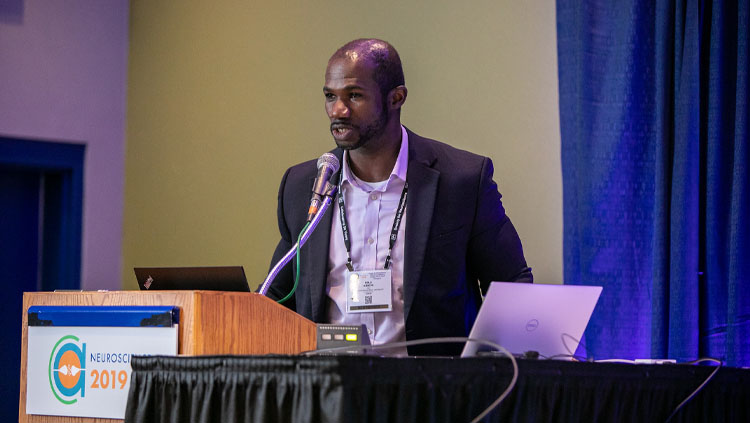 Video Annual Meeting Professional DevelopmentAs neuroscience becomes more interdisciplinary, it also requires expertise from more subdisciplines, leading to collaborations within and outside of academia. In this workshop, you’ll learn about different types of "team science” projects to help you have more productive collaborations across disciplines. Watch to hear how the featured projects were conceived and managed and to learn the pros and cons of working with scientists from different backgrounds toward a common goal.Jan 8, 2020
 -
 Video CommunityErich Jarvis, a neuroscientist and molecular biologist who is a professor at Rockefeller University and a Howard Hughes Medical Institute investigator, shares highlights from his science research, personal and professional journey, and lessons learned as an underrepresented scientist in this town hall talk at the Icahn School of Medicine at Mount Sinai.Dec 19, 2019
 -
 Article Professional DevelopmentMentorship is critical to a scientist’s career, whether you’re a mentor, a mentee, or both. By investing in the personal and professional development of their mentees, mentors can serve as guides to early career scientists, shaping their careers and research fields. In turn, mentees can play a significant role in the progress of lab work by conducting research, making intellectual contributions to papers and grants, and mentoring other students in the lab. The key to ensuring a successful mentoring relationship at any career stage is setting expectations that both sides agree to and which are flexible enough to evolve over the course of the relationship. Follow the advice below to help you set expectations and establish a healthy power dynamic for your own mentor-mentee relationship.Dec 18, 2019
 -
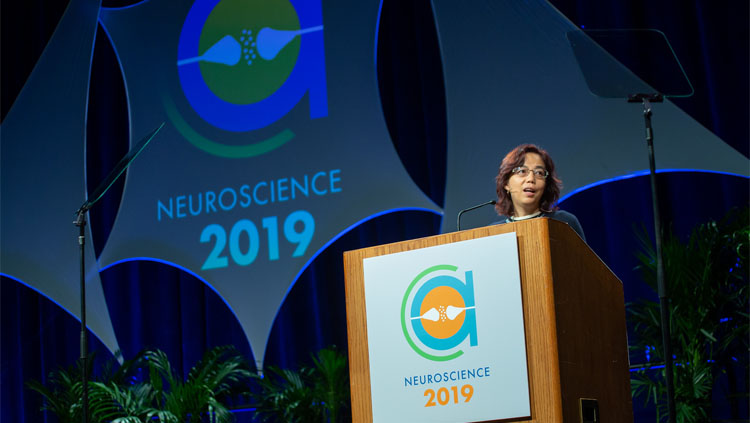 Video Annual Meeting Scientific ResearchFei-Fei Li, codirector of the Stanford Institute for Human-Centered Artificial Intelligence, is both a scientist and an ethical leader advocating for artificial intelligence that makes improving human lives its goal. In this 2019 Dialogues Between Neuroscience and Society lecture, Li discusses the transformative potential of AI for society in relation to the three parts of “human-centered AI”: that its development must be guided by concern for human impact, that it should augment, not replace, humans, and that it should be inspired by human intelligence. She also describes her research and collaborations in the field of computer vision.Dec 17, 2019
 -
 Article Professional DevelopmentAs 2019 comes to a close, taking time to reflect on how you’ve grown professionally can help you set intentions and go farther in your career. What follows is some of Neuronline’s most popular content from the year. Use these resources to help you accomplish your goals in the year ahead.Dec 11, 2019
 -
Journal ArticleAnimal studies and human tissue experiments have demonstrated that traumatic brain injury (TBI) causes damage in the extracellular matrix (ECM). To test the hypothesis that TBI causes disruption of sulfated glycosaminoglycan (sGAG) in the ECM, we measured levels of sGAG in the cerebrospinal fluid (CSF), blood, and urine, in patients with severe TBI in the acute post-injury period. Samples of CSF, blood, and urine were obtained within 72 hours of injury in patients who received external ventricular drains as part of their treatment of severe TBI. Levels of chondroitin and heparan sGAGs were measured, along with their disaccharide constituents. Demographic information, presence of polytrauma, brain injury load, and distance of radiologically visible parenchymal injury from the ventricle were analyzed for correlation with total subtype sGAG levels. Levels were measured in 14 patients ranging in age from 17-90 years. CSF sGAG levels were variable among patients, with higher sGAG levels in plasma compared to CS...Jun 10, 2025
-
 Article Scientific ResearchMaterial below is adapted from the SfN Short Course session Neuroinflammation and Neurosteroidogenesis: Reciprocal Modulation During Injury to the Adult Zebra Finch Brain, by Alyssa L. Pedersen, Jenna L. Brownrout, and Colin J. Saldanha. Short Courses are daylong scientific trainings on emerging neuroscience topics and research techniques held the day before the start of SfN’s annual meeting. Steroid hormones have a wide-ranging influence on brain development and behavior. One hormone in particular — 17β-estradiol, also known as E2, which is made in the brain, ovaries, placenta, and fat tissue — can influence male and female sexual behaviors in adult and juvenile mammals. Studies have also shown recently that E2 can protect neurons and neural circuits, as well as influence neuroplasticity, in healthy and injured brains.Dec 10, 2019




