



Filter
-
(133)
-
(733)
-
(4)
-
(1)
-
(47832)
-
(91)
-
(25)
-
(14)
-
(433)
-
(7)
-
(181)
-
(8)
-
(33)
-
(17)
-
(7)
-
(9)
-
(9)
-
(5)
-
(21)
-
(8)
-
(12)
-
(9)
-
(3)
-
(10)
-
(10)
-
(56)
-
(45)
-
(12)
-
(3)
-
(7)
-
(6)
-
(5)
-
(8)
-
(7)
-
(11)
-
(58)
-
(13)
-
(30)
-
(8)
-
(5)
-
(10)
-
(5)
-
(14)
-
(4)
1421 - 1430
of 52753 results
-
 Journal ArticleTransgenic mice provide unprecedented access to manipulate and visualize neural circuits, however, those on a C57BL/6 background develop progressive hearing loss, significantly confounding systems-level and behavioral analysis. While outbreeding can limit hearing loss, it introduces strain variability and complicates the generation of complex genotypes. Here, we propose an approach to preserve hearing by crossing transgenic mice with congenic B6.CAST- Cdh23Ahl+ mice, which maintain low-threshold hearing into adulthood. Widefield and two-photon imaging of the auditory cortex revealed that 2.5-month-old C57BL/6 mice exhibit elevated thresholds to high frequency tones and widespread cortical reorganization, with most neurons responding best to lower frequencies. In contrast, Ahl+ C57BL/6 mice exhibited robust neural responses across tested frequencies and sound levels (4-64 kHz, 30-90 dB SPL) and retained low thresholds into adulthood. Our approach offers a cost-effective solution for generating complex genot...Feb 3, 2025
 -
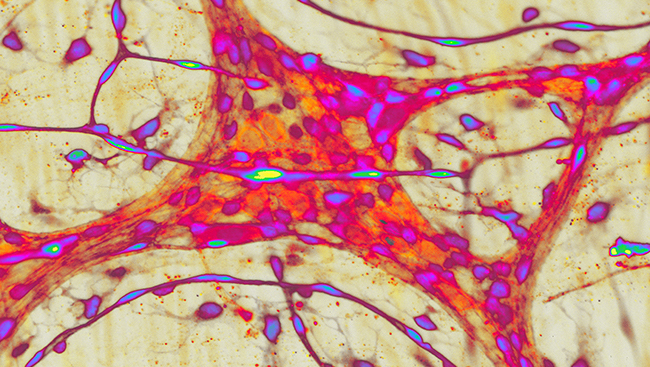 Article Annual Meeting Scientific ResearchMaterial below is adapted from the SfN Short Course, Adult Mouse Cortical Cell Taxonomy Revealed by Single-Cell Transcriptomics, by Bosiljka Tasic, PhD. Short Courses are day-long scientific trainings on emerging neuroscience topics and research techniques held just prior to SfN’s annual meeting. Single-cell RNA sequencing (RNA-seq) is a powerful tool that can help researchers look more deeply at individual cells, in order to better understand differences within tissues or groups of cells. One research team used RNA-seq to classify more than 1,600 cells from the cortex of adult male mice.Dec 12, 2017
 -
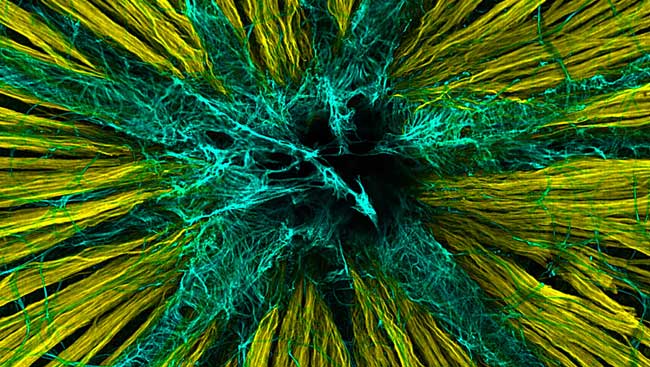 Article Professional Development“There are always new discoveries. It never ends,” says Angela Kim from Harvard Medical School on the most exciting aspect of studying neuroscience. As you prepare for another year of scientific discovery, professional development, and training, revisit Neuronline’s most popular resources from 2017. You’ll find fascinating scientific research, surprising facts about publishing a paper, a behind-the-scenes look at what goes into award-winning research, and more.Dec 12, 2017
 -
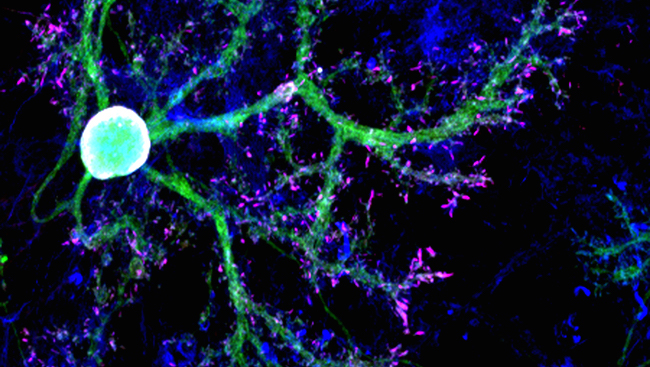 Article Career PathsPhillip West is an assistant professor of microbial pathogenesis and immunology at the Texas A&M University Health Science Center. He led a breakout group at the 2016 Neurobiology of Disease Workshop, From Pediatric Encephalopathy to Alzheimer's: Linking Mitochondria to Neurological Diseases, and presented in 2017 follow-up webinar, Linking Mitochondria to Neurological Disease. Here, he shares what led him to this research path and why it excites him. As told to, and edited by, SfN staff.Dec 6, 2017
 -
Journal ArticleHigh-frequency stimulation (HFS)-induced long–term potentiation (LTP) is generally regarded as a homosynaptic Hebbian-type LTP, where synaptic changes are thought to occur at the synapses that project from the stimulation site and terminate onto the neurons at the recording site. In this study, we first investigated HFS-induced LTP on urethane-anesthetized rats and found that cortical HFS enhances neural responses at the recording site through the strengthening of local connectivity with nearby neurons at the stimulation site rather than through synaptic strengthening at the recording site. This enhanced local connectivity at the stimulation site leads to increased output propagation, resulting in signal potentiation at the recording site. Additionally, we discovered that HFS can also nonspecifically strengthen distant afferent synapses at the HFS site, thereby expanding its impact beyond local neural connections. This form of plasticity exhibits a neo-Hebbian characteristic as it exclusively manifests in ...Feb 1, 2025
-
 Journal ArticleHearing impairment (HI) disrupts social interaction by hindering the ability to follow conversations in noisy environments. While hearing aids (HAs) with noise reduction (NR) partially address this, the “cocktail-party problem” persists, where individuals struggle to attend to specific voices amidst background noise. This study investigated how NR and an advanced signal processing method for compensating for nonlinearities in Electroencephalography (EEG) signals can improve neural speech processing in HI listeners. Participants wore HAs with NR, either activated or deactivated, while focusing on target speech amidst competing masker speech and background noise. Analysis focused on temporal response functions to assess neural tracking of relevant target and masker speech. Results revealed enhanced neural responses (N1 and P2) to target speech, particularly in frontal and central scalp regions, when NR was activated. Additionally, a novel method compensated for nonlinearities in EEG data, leading to improved...Feb 1, 2025
 -
Journal ArticleAcute ischemic stroke (AIS) is a severe neurological disease associated with Th17/Treg cell imbalance and dysregulation of the Wnt/β-catenin signaling pathway. This study investigates whether miR-155 inhibition can activate Wnt/β-catenin signaling, improve Th17/Treg balance, and provide neuroprotection against stroke. We conducted a multilevel experimental design, including high-throughput sequencing, bioinformatics analysis, in vivo mouse models, and in vitro cell experiments. High-throughput sequencing revealed significant differential gene expression between the miR-155 antagomir–treated and control groups (BioProject: PRJNA1152758). Bioinformatics analysis identified key genes linked to Wnt/β-catenin signaling and Th17/Treg imbalance. In vitro experiments confirmed that miR-155 inhibition activated Wnt/β-catenin signaling and improved Th17/Treg ratios. In vivo studies demonstrated that miR-155 antagomir treatment provided significant neuroprotection against AIS. These findings suggest that targeting mi...Feb 1, 2025
-
 Journal ArticleTo develop reparative therapies for neurological disorders like multiple sclerosis (MS), we need to better understand the physiology of loss and replacement of oligodendrocytes, the cells that make myelin and are the target of damage in MS. In vivo two-photon fluorescence microscopy allows direct visualization of oligodendrocytes in the intact brain of transgenic mouse models, promising a deeper understanding of the longitudinal dynamics of replacing oligodendrocytes after damage. However, the task of tracking the fate of individual oligodendrocytes requires extensive effort for manual annotation and is especially challenging in three-dimensional images. While several models exist for annotating cells in two-dimensional images, few models exist to annotate cells in three-dimensional images and even fewer are designed for tracking cells in longitudinal imaging. Notably, existing options often come with a substantial financial investment, being predominantly commercial or confined to proprietary software. Fu...Feb 1, 2025
 -
 Journal ArticleExtended performance of cognitively demanding tasks induces cognitive fatigue manifested with an overall deterioration of behavioral performance. In particular, long practice with tasks requiring impulse control is typically followed by a decrease in self-control efficiency, leading to performance instability. Here, we show that this is due to changes in activation modalities of key task-related areas occurring if these areas previously underwent intensive use. We investigated in 25 healthy adults the effects of extended practice with high cognitive demand (HCD) tasks on a Go-No Go task and the underlying electroencephalographic (EEG) activity. We compared these effects with those induced by practice with similar, but low cognitive demand (LCD) tasks. HCD tasks were followed by an increase in response inhibition failures. These were correlated with the appearance of a distinct neural signature on fast response trials, characterized by lower levels of beta ([13–30] Hz) EEG activity in the prestimulus period...Feb 1, 2025
 -
 Journal ArticleA common impairment in aging is age-related hearing loss (presbycusis), which manifests as impaired spectrotemporal processing. Presbycusis can be caused by a dysfunction of the peripheral and central auditory system, and these dysfunctions might differ between the sexes. To date, the circuit mechanisms in the central nervous system responsible for age-related auditory dysfunction remain mostly unknown. In the auditory cortex (ACtx), aging is accompanied by alteration in normal inhibitory (GABA) neurotransmission and changes in excitatory (NMDA and AMPA) synapses, but which circuits are affected has been unclear. Here we investigated how auditory cortical microcircuits change with age and if sex-dependent differences existed. We performed laser-scanning photostimulation (LSPS) combined with whole-cell patch-clamp recordings from layer (L) 2/3 cells in the primary auditory cortex (A1) in young adult (2–3 months) and aged (older than 18 months) male and female CBA/CaJ mice which have normal peripheral hearin...Feb 1, 2025




