



Filter
-
(133)
-
(733)
-
(4)
-
(1)
-
(47830)
-
(91)
-
(25)
-
(14)
-
(433)
-
(7)
-
(181)
-
(8)
-
(33)
-
(17)
-
(7)
-
(9)
-
(9)
-
(5)
-
(21)
-
(8)
-
(12)
-
(9)
-
(3)
-
(10)
-
(10)
-
(56)
-
(45)
-
(12)
-
(3)
-
(7)
-
(6)
-
(5)
-
(8)
-
(7)
-
(11)
-
(58)
-
(13)
-
(30)
-
(8)
-
(5)
-
(10)
-
(5)
-
(14)
-
(4)
571 - 580
of 52751 results
-
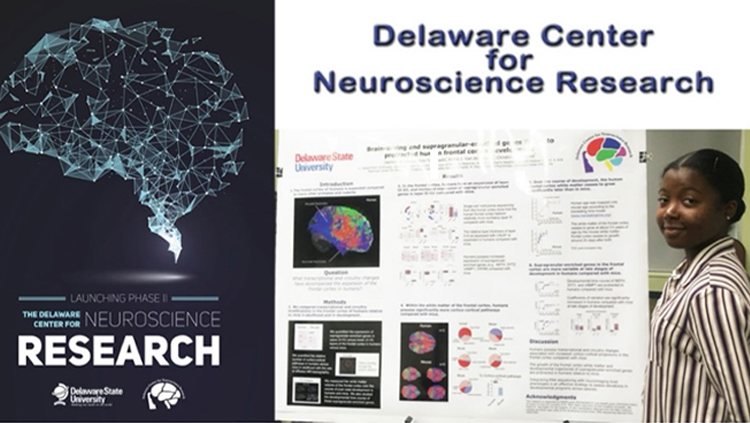 Article DiversityWhen Melissa Harrington started as an assistant professor at Delaware State University, a Historically Black institution, she had a keen appreciation of the potential for Historically Black Colleges and Universities (HBCUs) to enhance diversity in biomedical sciences. In her time at DSU, Dr. Harrington, has led the creation and growth of many programs designed to encourage underrepresented students to participate in research and support their academic success, but more can and should be done to increase opportunities for diverse students to participate in science. In this article, Drs. Melissa Harrington and Christine Charvet explain the challenges of and potential solutions for enhancing diversity in STEM fields.Feb 1, 2022
 -
Article CommunityWhen Melissa Harrington started as an assistant professor at Delaware State University, a Historically Black institution, she had a keen appreciation of the potential for Historically Black Colleges and Universities (HBCUs) to enhance diversity in biomedical sciences. In her time at DSU, Dr. Harrington, has led the creation and growth of many programs designed to encourage underrepresented students to participate in research and support their academic success, but more can and should be done to increase opportunities for diverse students to participate in science. In this article, Drs. Melissa Harrington and Christine Charvet explain the challenges of and potential solutions for enhancing diversity in STEM fields.Feb 1, 2022
-
 Journal ArticleNicotinic Modulation of Fast-spiking Neurons in Rat Somatosensory Cortex Across Development | eNeuroSignaling at nicotinic acetylcholine receptors (nAChRs) is vital for normal development of cerebral cortical circuits. These developing circuits are also shaped by fast-spiking (FS) inhibitory cortical neurons. While nicotinic dysfunction in FS neurons is implicated in a number of psychiatric and neurodevelopmental disorders, FS neurons are thought to not have nicotinic responses in adults. Here, we establish a timeline of FS neuron response to nicotine pre- and postsynaptically in primary somatosensory cortex in male and female rats. We found that nicotine increases the frequency of spontaneous synaptic inputs to FS neurons during the second postnatal week, and this effect persisted through development. In contrast, FS neurons in S1 had no postsynaptic responses to nicotine from as early as they can be reliably identified. This was not attributable to receptor desensitization, and we further revealed that FS neurons express abundant mRNA for several nAChR subunits, beginning early in development. To deter...Nov 17, 2025
 -
Journal ArticleThe triglyceride-glucose (TyG) index, a convenient marker of insulin resistance, is associated with stroke. This study determined the association between the triglyceride-glucose waist-to-hip ratio (TyG-WHR) and stroke. Data from the China Health and Retirement Longitudinal Study (CHARLS) were utilized from baseline in 2011 to the wave six follow-up in 2020. 17,606 participants were screened and the CHARLS cohort was assembled using a multistage probability sampling technique. Participants were comprehensively assessed through standardized questionnaires with face-to-face interviews. Cox proportional hazards regression models were applied to investigate the relationship between the TyG-WHR and the risk of stroke. To identify potential non-linear relationships, Cox proportional hazards regression with smooth curve fitting was used. A total of 4911 patients with 2,338 males (47.6%) and 2,573 females (52.4%) were included in this analysis. A significant association between the TyG-WHR and the risk of stroke w...Nov 17, 2025
-
Journal ArticleStructural changes in dendritic spines underlie long-term potentiation (LTP). While CaMKII has been considered as the primary driver of these changes, we show that transient, localized activation of Rac1 alone is sufficient to induce structural LTP in hippocampal slices prepared from rat pups of either sex. Using photoactivatable Rac1 (PA-Rac1), we demonstrated that Rac1 activation triggers spine enlargement and actin polymerization. This PA-Rac1-induced plasticity was blocked by Rac1 and Pak1 inhibitors but not by a CaMKII inhibitor. Our results identify Rac1 as an upstream of persistent signaling that stabilizes actin-based spine structural changes critical for synaptic memory encoding. Significance Statement The molecular mechanisms that trigger persistent structural long-term potentiation (sLTP) at synapses remain incompletely understood. This study demonstrated that localized activation of Rac1, a small GTPase regulating actin dynamics, is sufficient to induce and maintain sLTP in hippocampal neurons...Nov 17, 2025
-
Journal ArticleArfGAP, with dual PH domain-containing protein 1/Centaurin-α1 (ADAP1/CentA1), is a brain-enriched and highly conserved Arf6 GTPase-activating and Ras-anchoring protein. CentA1 is involved in dendritic outgrowth and arborization, synaptogenesis, and axonal polarization by regulating the actin cytoskeleton dynamics. CentA1 upregulation and association with amyloid plaques in the human Alzheimer’s disease (AD) brain suggest a role for this protein in AD progression. To understand the role of CentA1 in neurodegeneration, we crossbred CentA1 KO mice with the J20 mouse model of AD. We evaluated AD-associated behavioral and neuropathological hallmarks and gene expression profiles in J20 and J20 crossed with CentA1 KO (J20xKO) male mice to determine the impact of eliminating CentA1 expression on AD-related phenotypes. Spatial memory assessed by the Morris Water Maze test showed significant impairment in J20 mice, which was rescued in J20xKO mice. Moreover, neuropathological hallmarks of AD, such as amyloid plaque ...Nov 17, 2025
-
 SfN Journals: In Conversation features authors and editors discussing new research, thought-provoking opinions, and expert reviews published in JNeurosci and eNeuro.Jan 27, 2022
 -
 Article Scientific ResearchI have always been astonished by how quickly we learn things, and how long we remember them. For example, after seeing an exciting movie, in which individual scenes flash by quickly, we can go home to tell our family and friends lots of details about it. I call this problem the stability-plasticity dilemma. How do we learn things quickly but remember them for a long time? Why does a fast-learning rate not force a fast-forgetting rate? Answering this question illustrates the power of neural models.Jan 25, 2022
 -
Journal ArticleIn natural, free viewing settings, visual perception is driven by a series of saccades and fixations. Perceptual mechanisms are typically studied through averaged fixation related potentials generated from simultaneous eye-tracking and EEG recordings. Lambda responses following fixation onsets signal the arrival of new visual input to the primary visual cortex. In our study, we investigate the use and preprocessing parameter dependence of Independent Component Analysis (ICA) in separating the lambda response from other neural sources. In our experiment, ten subjects (2 males and 8 females) viewed 80 art paintings in natural, free-viewing settings, during which EEG data were recorded. Our results show that unique lambda response components can be detected reliably and individual lambda waves can be extracted in a single trial manner, without signal averaging. ICA decomposition is most sensitive to high-pass filtering producing best results with a minimum 1 Hz filtering. We also propose a method that automat...Nov 7, 2025
-
 Webinar AdvocacyWorking with animals in your research comes with additional oversight, regulation, and the inherent risk of opposition. The Society for Neuroscience has many resources available to prepare for, defend against, and recover from animal rights activist efforts. The panel features researchers who have faced personal attacks and association leaders for biomedical research who will discuss how to best combat attacksanimal re, and generate institutional support, on animal research across biomedical sciences. The goal of the panel is to engage researchers and invited experts in the field to share their personal stories about being victims of attacks from animal rights activist groups due to conducting animal research and the best ways to combat these attacks and generate institutional support in order to prevent them from happening again. It is expected that attendees will learn the impact these attacks have had on their fellow researchers and the best course of action their institutions can take to protect them from further harm. Attack on biomedical researchers by animal rights activist groups have been on the rise due to their use of animals (including non-human primates) in their research. These attacks, some of which have affected SfN members, have ranged from threatening messages to attacks at personal residences leading researchers to halt their studies. It is not only critical that these researchers under attack receive support from the scientific community and relevant organizations, but also receive support from their affiliated institutions in order to prevent these attacks from happening again. It is crucial the public understands the facts surrounding the ethical use of animals in research and the value of using animals to conduct potentially life-saving research.Dec 8, 2021




