



Filter
-
(133)
-
(733)
-
(4)
-
(1)
-
(47845)
-
(92)
-
(25)
-
(14)
-
(435)
-
(7)
-
(184)
-
(8)
-
(33)
-
(17)
-
(7)
-
(9)
-
(9)
-
(5)
-
(21)
-
(8)
-
(12)
-
(9)
-
(3)
-
(10)
-
(10)
-
(56)
-
(45)
-
(12)
-
(3)
-
(7)
-
(6)
-
(5)
-
(8)
-
(7)
-
(11)
-
(58)
-
(13)
-
(31)
-
(8)
-
(5)
-
(10)
-
(5)
-
(16)
-
(4)
5341 - 5350
of 52774 results
-
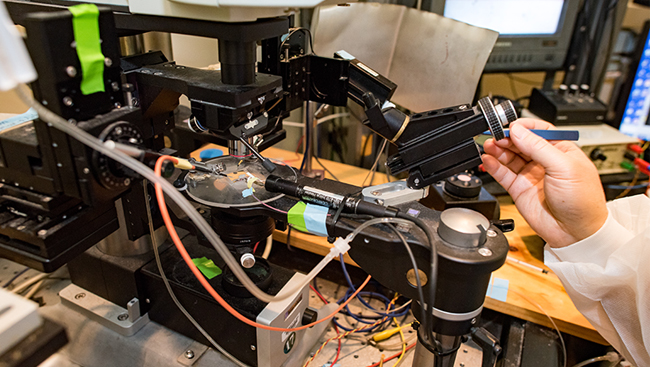 Article TrainingThe articles below were selected by Stephan Lammel, Karel Svoboda, and David Kupferschmidt, faculty from Module 8 of SfN’s Optogenetics Training Series, to supplement their presentation, Caveats for Designing and Interpreting Optogenetics Approaches. Use these resources to better understand and control for some of the major caveats related to designing, conducting, and interpreting the results from optogenetic experiments.
 -
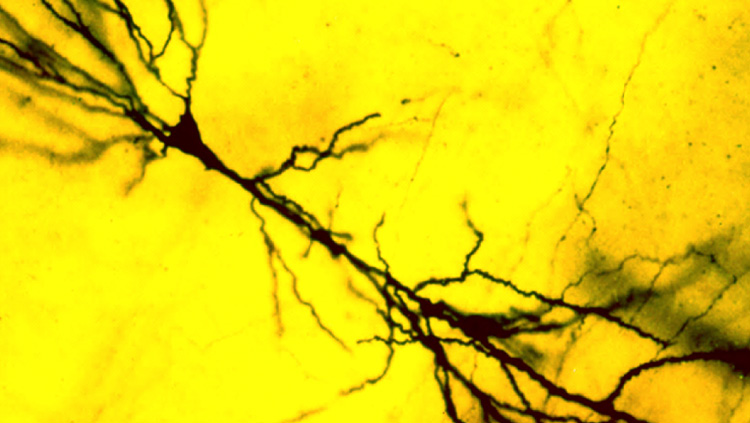 Video TrainingLearn how to simulate strokes with the simulation platform, The Virtual Brain.
 -
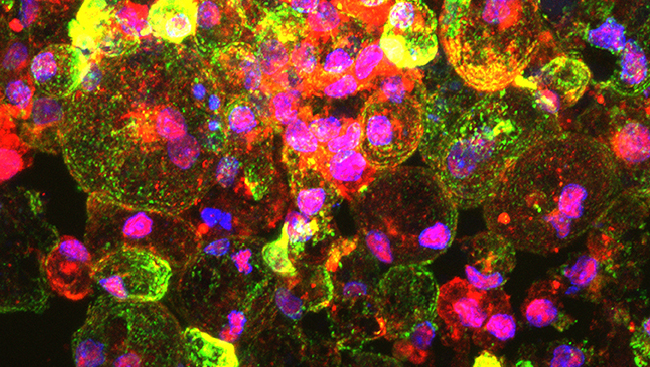 Video Scientific ResearchIn this video, Beth Cimini talks about the use of machine learning for morphological profiling, extracting many features of the cells to build up its “fingerprint.”
 -
 TrainingIn this presentation, Zhiping Pang will introduce parameters for defining human neurons derived from iPSCs. Specifically, Pang will: - Describe morphological features of human neurons (immature to mature characteristics). - Introduce morphological and biochemical techniques to characterize human neurons. - Provide information about functional characterization of human neurons, including electrophysiology (cover intrinsic neuronal membrane property; active membrane property; synapse transmission) and calcium imaging (network activity and contributions of synaptic transmission).
 -
 TrainingIn this presentation, Aparna Bhaduri and Madeline Andrews will: - Describe human cortical development and relevant cell types. - Introduce cortical organoid models. - Introduce single-cell RNA sequencing approaches. - Provide a summary of findings from organoid studies using RNA sequencing and organoid models. - Describe scRNAseq methods to better understand cell type. - Compare organoid and primary cortical cells at a single cell level.
 -
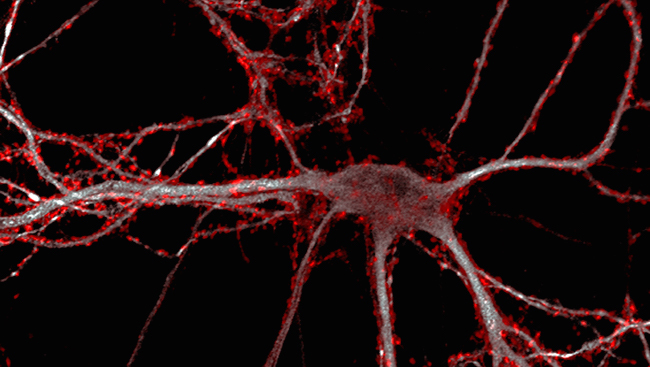 TrainingThese resources were selected by Madeline Lancaster, Aparna Bhaduri, and Madeline Andrews, faculty from Module 4: Neural Organoids. These resources supplement their presentations, “Modeling Human Brain Development in a Dish”, and “Using Organoids and Single-Cell RNA Sequencing Approaches to Study Human Cortical Development.”
 -
 Video TrainingIn this presentation, Jason Tchieu will: - Explain why human astrocytes are important. - Provide general methods to differentiate astrocytes from PSCs, including transcription factor mediated systems. - Describe how to stage and troubleshoot the differentiation(s). - Introduce functional and molecular characterization. - Introduce co-culture analysis.




