



Filter
-
(133)
-
(733)
-
(4)
-
(1)
-
(47830)
-
(91)
-
(25)
-
(14)
-
(433)
-
(7)
-
(181)
-
(8)
-
(33)
-
(17)
-
(7)
-
(9)
-
(9)
-
(5)
-
(21)
-
(8)
-
(12)
-
(9)
-
(3)
-
(10)
-
(10)
-
(56)
-
(45)
-
(12)
-
(3)
-
(7)
-
(6)
-
(5)
-
(8)
-
(7)
-
(11)
-
(58)
-
(13)
-
(30)
-
(8)
-
(5)
-
(10)
-
(5)
-
(14)
-
(4)
361 - 370
of 52751 results
-
 Carmen S. Maldonado-Vlaar, PhD, received her PhD in behavioral neuroscience from Northeastern University under the mentorship of Ann E. Kelley. She did her postdoctoral training in the department of neuropharmacology at The Scripps Research Institute with George F. Koob. For the past 27 years, Maldonado-Vlaar has been a faculty member of the Department of Biology at the University of Puerto Rico-Rio Piedras Campus (UPR-RP). Maldonado-Vlaar’s scientific research is based on an ongoing interest in discovering and characterizing potential therapeutic cellular targets that are important in cocaine addiction treatment and other mental disorders. She has successfully mentored dozens of undergraduate and graduate students from underrepresented minorities (URM) in the field of neuroscience.Aug 7, 2023
 -
 Article CommunityWhat I feared happened. The Supreme Court of the United States in an expected decision of six to three, and following a trend of its conservative majority, eliminated the affirmative action law that until today allowed significant number of universities to guarantee that a portion of their matriculants would come from underrepresented groups if they met the admission requirements.Aug 7, 2023
 -
 Journal ArticleExogenously driven neural reactivation of spatially matching visual working-memory contents | eNeuroSelective attention is often divided into voluntary (goal-directed) and involuntary (stimulus-driven) forms, a distinction extensively studied for attention to external sensory input. In contrast, internal selective attention—directed toward representations held in working memory (WM)—has been considered primarily for voluntary influences. Recent behavioral evidence suggests that task-irrelevant external stimuli can also influence internal selection of feature-matching WM representations involuntarily, yet the neural mechanisms underlying these effects remain unclear. Here, we tested whether an uninformative exogenous spatial retro-cue presented during a WM delay can act as a selective “ping” and reactivate spatially matching WM content at the level of its representational category. Male and female human participants memorized complex contents presented at distinct locations, followed by unpredictive and task-irrelevant spatial retro-cues that conveyed no category information. Using temporally resolved mul...Mar 26, 2026
 -
Journal ArticleAccurate characterization of auditory pathway responses is critical for understanding neural disorders that affect hearing, including both peripheral and central deficits, as well as broader neurodevelopmental conditions. Animal models provide a way to investigate auditory circuit activation with high spatial and temporal resolution. Here, we first assessed behavioral detection of pure tones (PT) and narrow-band noise (NBN) stimuli in male rats, revealing that NBN targets were detected at lower amplitudes than PT targets, consistent with human auditory detection patterns. We then compared these behavioral results with neural responses recorded in female rats’ medial geniculate body (MGB), a thalamic relay to auditory cortex. Using high-density multichannel recordings, we found that NBN stimuli elicited greater neural sensitivity at low amplitudes, whereas PT stimuli evoked faster responses and higher peak firing rates. MGB units achieved maximal frequency discrimination at amplitudes close to detection thr...Mar 26, 2026
-
 Article CommunityWhy do humans celebrate, and what is the science behind it? Expressions of celebratory behavior hardly seem necessary for survival, yet they are universal.Jul 31, 2023
 -
Article DiversityWhy do humans celebrate, and what is the science behind it? Expressions of celebratory behavior hardly seem necessary for survival, yet they are universal.Jul 31, 2023
-
 Soaleha Shams, PhD, is a research fellow at the Mayo Clinic in Minnesota, where she is using CRISPR-Cas9 gene-editing to study social and stress behavior in zebrafish. Shams explores expression and underlying neurobiology of zebrafish social behavior as a tool to understand typical vertebrate socialization, as well as to model atypical social behaviors that are part of human disorders such as depression, autism, and stress disorders.Jul 31, 2023
 -
Journal ArticleRas-related C3 botulinum toxin substrate 1 (Rac1) is a small GTPase that regulates actin cytoskeleton dynamics and synaptic plasticity. Rac1 has been implicated in active forgetting, but whether it also constrains the consolidation of new memories remains unclear. Here we show that systemic administration of the Rac1 inhibitor 1A-116 after training in the novel object recognition task markedly extends memory persistence in rats. A single post-training injection of 1A-116 enhanced recognition memory for at least 28 days without altering locomotor- or anxiety-related behaviors. When given after a brief, sub-threshold training session that normally supports only short-term memory, 1A-116 enabled long-term retention that required hippocampal protein synthesis. This promnesic effect was time-dependent, independent of sex, and consistent with Rac1 acting as a negative regulator of memory consolidation rather than merely promoting forgetting. These findings indicate that Rac1 activity after learning limits the co...Mar 24, 2026
-
Journal ArticleWe lack a mechanistic understanding of how cortical contributions to balance control change in aging and Parkinson’s disease (PD). Balance is governed by brainstem circuits, with higher-order centers like the cortex or basal ganglia becoming engaged as challenge increases or balance health declines. We previously showed that parallel sensorimotor feedback loops engaging brainstem and cortical circuitry contribute to muscle activity for balance control in young adults (YAs). Here, we analyze data from male and female older adults (OAs) with and without PD, decomposing perturbation-evoked tibialis anterior and medial gastrocnemius muscle activity into hierarchical components based on latencies of feedback control loops. We found that balance-correcting muscle activity followed a stereotypical waveform of long-latency responses (LLRs): LLR1 began ∼120ms and LLR2 occurred ∼210ms, respectively, consistent with subcortical and cortical feedback latencies. Both LLRs increased with balance challenge and could be e...Mar 23, 2026
-
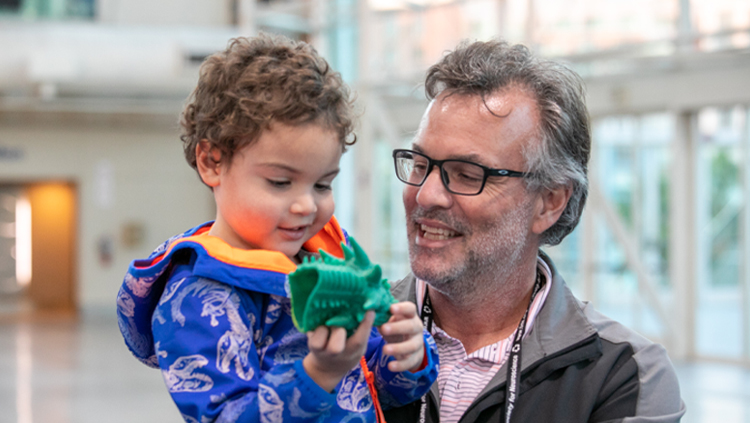 Article OutreachAs scientists who are passionate about what we research, it is our natural drive to share our enthusiasm with the world. On the other hand, lay audiences today are accessing a surfeit of information – not always well sourced in rigor or facts – and are left with incorrect information and their questions unanswered. Finding effective ways to bridge this gap and inform the interested public about neuroscience in an engaging yet scientifically accurate manner is a unique problem for our generation of scientists to solve. On top of this, we should know better than anyone the importance of communicating in multimodal and accessible ways to a wide variety of neurotypical and neuro-atypical minds. An additional layer of nuance is to be considered when teaching neuroscience to children. From personal experience, children are easily inspired or discouraged from pursuing further learning in topics based on demographics and gender, as well as how scientific topics are taught.Jul 19, 2023




