



Filter
-
(133)
-
(733)
-
(4)
-
(1)
-
(47832)
-
(91)
-
(25)
-
(14)
-
(433)
-
(7)
-
(181)
-
(8)
-
(33)
-
(17)
-
(7)
-
(9)
-
(9)
-
(5)
-
(21)
-
(8)
-
(12)
-
(9)
-
(3)
-
(10)
-
(10)
-
(56)
-
(45)
-
(12)
-
(3)
-
(7)
-
(6)
-
(5)
-
(8)
-
(7)
-
(11)
-
(58)
-
(13)
-
(30)
-
(8)
-
(5)
-
(10)
-
(5)
-
(14)
-
(4)
2001 - 2010
of 52753 results
-
 Article Professional DevelopmentIn The Hitchhiker’s Guide to a Neuroscience Career, published in Neuron in May 2015, Marian Joëls and the other authors applaud the worldwide excitement around neuroscience and the number of people entering the field. To help neuroscientists advance in the face of increased competition, the authors present the “critical success indicators for a career in academic neuroscience,” including mobility, networking, building a CV and seeking advice, and outreach. Here, Marian Joëls further explores these topics.Aug 5, 2015
 -
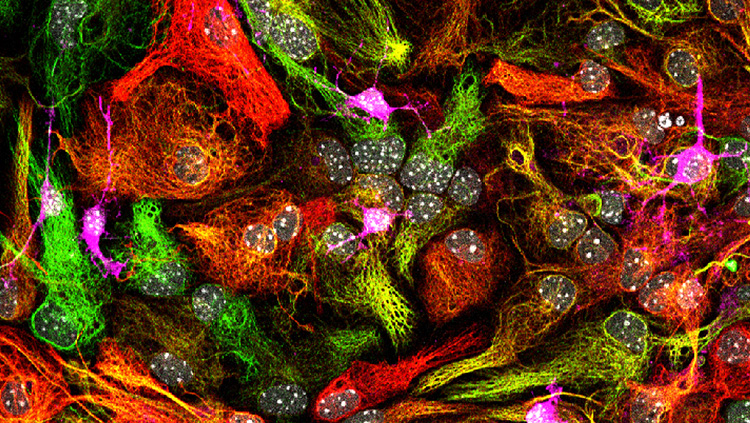 Article Professional DevelopmentThe Neuroscience Scholars Program is a two-year training program open to underrepresented graduate students and postdoctoral researchers. Building on 40 years of historic engagement, the program supports annual travel awards, mentoring, and the professional development of NSP Fellows and Associates. All materials available in this archive are provided open access to the field and are supported by the National Institute of Neurological Disorders and Stroke (NINDS). The contents of this series are solely the responsibility of the Society for Neuroscience and do not necessarily reflect the official views of NINDS. Learn more about the Neuroscience Scholars Program. Program Year 2021–2022Aug 3, 2015
 -
 Video Career PathsYour to-do list in academia is long; you have to secure funding, publish, teach, manage your time, manage others, and somehow find time for a personal life. How do you prioritize these demands? How do you determine if you’re prioritizing successfully? Listen to neuroscience leaders talk about creative and effective ways they’ve defined and attained success in academic life.Jul 23, 2015
 -
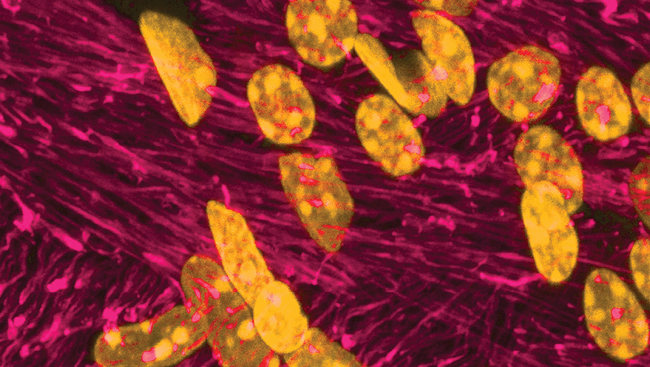 Article Scientific ResearchSharon L. Juliano, director of neuroscience and a professor at Uniformed Services University of the Health Sciences, discusses the importance of animals in research.Jul 15, 2015
 -
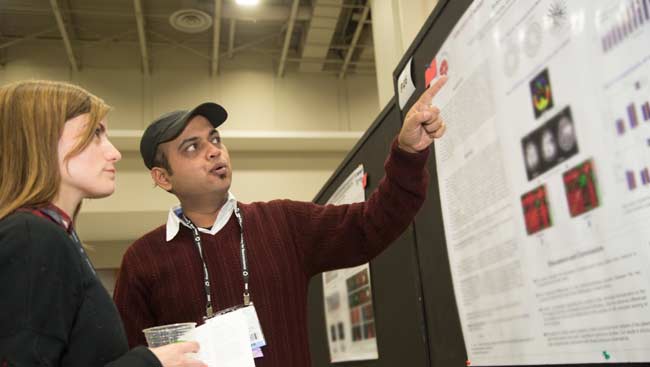 Article Professional DevelopmentCorrectly submitting your NIH grant application is just as important as writing it. Follow these practical steps to make sure your application successfully travels through the submission process.Jul 15, 2015
 -
 Journal ArticleIschemic stroke (IS) poses a serious threat to patient survival. The inhibition of ferroptosis can effectively alleviate ischemia-reperfusion (I/R) injury, suggesting potential targets in the ferroptosis pathway for the treatment of ischemic stroke. In this study, MCAO/R mice and OGD/R-induced HT22 cell were constructed. It was found that Baicalein decreased ROS, MDA, and Fe2+ levels, upregulated GSH levels, and enhanced the expression of ferroptosis-related proteins (GPX4 and SLC7A11), downregulated the expression of pro-apoptotic proteins (Bax, cytochrome c, and cleaved caspase-3), and upregulated the expression of an anti-apoptotic protein (Bcl-2), ameliorating cerebral I/R injury. In animal and cell models, SIRT6 is downregulated, and FOXA2 expression and acetylation levels are abnormally upregulated. SIRT6 inhibited FOXA2 expression and acetylation. Baicalein promoted FOXA2 deacetylation by upregulating SIRT6 expression. FOXA2 transcriptionally inhibits SLC7A11 expression. In Conclusion, Baicalein inh...Sep 19, 2024
 -
Journal ArticleDespite decades of preclinical investigation, there remains limited understanding of the etiology and biological underpinnings of anxiety disorders. Sensitivity to potential threat is characteristic of anxiety-like behavior in humans and rodents, but traditional rodent behavioral tasks aimed to assess threat responsiveness lack translational value, especially with regards to emotionally valenced stimuli. Therefore, development of novel preclinical approaches to serve as analogues to patient assessments is needed. In humans, the fearful face task is widely used to test responsiveness to socially communicated threat signals. In rats, ultrasonic vocalizations (USVs) are analogous social cues associated with positive or negative affective states that can elicit behavioral changes in the receiver. It is therefore likely that when rats hear aversive alarm call USVs (22kHz) they evoke translatable changes in brain activity comparable to the fearful face task. We used functional magnetic resonance imaging in male ...Sep 19, 2024
-
Journal ArticleHuman and mouse dorsal root ganglia (hDRG and mDRG) neurons are important tools in understanding the molecular and electrophysiological mechanisms that underlie nociception and drive pain behaviors. One of the simplest differences in firing phenotypes is that neurons are single-firing (exhibit only one action potential) or multi-firing (exhibit 2 or more action potentials). To determine if single- and multi-firing hDRG neurons exhibit differences in intrinsic properties, firing phenotypes, and AP waveform properties, and if these properties could be used to predict multi-firing, we measured 22 electrophysiological properties by whole-cell patch-clamp electrophysiology of 94 hDRG neurons from 6 male and 4 female donors. We then analyzed the data using several machine learning models to determine if these properties could be used to predict multi-firing. We used 1000 iterations of Monte Carlo Cross Validation to split the data into different train and test sets and tested the Logistic Regression, k-Nearest N...Sep 19, 2024
-
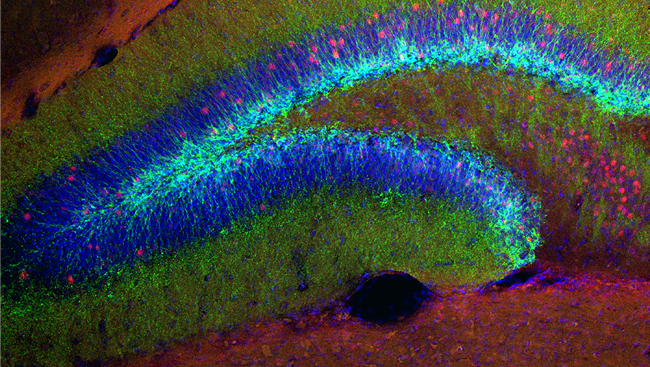 Article AdvocacyAt the 21st Annual Coalition for National Science Funding (CNSF) Exhibition and Reception on Capitol Hill, SfN set up a booth where neuroscientists discussed their research with U.S. policymakers and staffers. Clara Scholl is one of the scientists who participated. Here, she shares her observations and takeaways about what advocacy is all about.Jul 8, 2015
 -
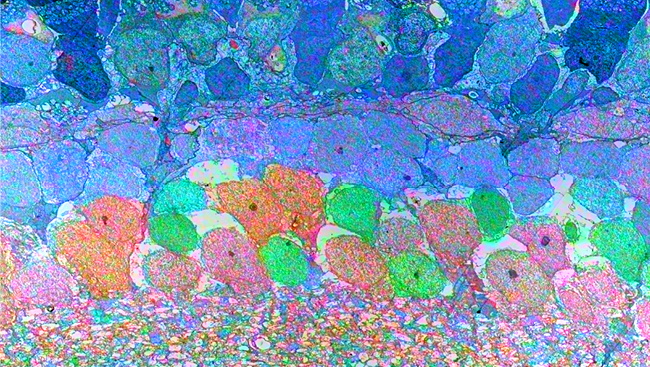 Article Scientific ResearchMapping activity in the brain requires both a wide lens — to see connections extending across brain regions — and a fine focus — to see the cells forming those connections. Two-photon microscopy coupled with calcium imaging meets the criteria for a fine focus; it can detect activity within individual neurons or within a local population of neurons.Jul 8, 2015




