



Filter
-
(133)
-
(733)
-
(4)
-
(1)
-
(47832)
-
(91)
-
(25)
-
(14)
-
(433)
-
(7)
-
(181)
-
(8)
-
(33)
-
(17)
-
(7)
-
(9)
-
(9)
-
(5)
-
(21)
-
(8)
-
(12)
-
(9)
-
(3)
-
(10)
-
(10)
-
(56)
-
(45)
-
(12)
-
(3)
-
(7)
-
(6)
-
(5)
-
(8)
-
(7)
-
(11)
-
(58)
-
(13)
-
(30)
-
(8)
-
(5)
-
(10)
-
(5)
-
(14)
-
(4)
1951 - 1960
of 52753 results
-
 Journal ArticleDespite decades of preclinical investigation, there remains limited understanding of the etiology and biological underpinnings of anxiety disorders. Sensitivity to potential threat is characteristic of anxiety-like behavior in humans and rodents, but traditional rodent behavioral tasks aimed to assess threat responsiveness lack translational value, especially with regard to emotionally valenced stimuli. Therefore, development of novel preclinical approaches to serve as analogues to patient assessments is needed. In humans, the fearful face task is widely used to test responsiveness to socially communicated threat signals. In rats, ultrasonic vocalizations (USVs) are analogous social cues associated with positive or negative affective states that can elicit behavioral changes in the receiver. It is therefore likely that when rats hear aversive alarm call USVs (22 kHz), they evoke translatable changes in brain activity comparable with the fearful face task. We used functional magnetic resonance imaging in ma...Oct 1, 2024
 -
 Journal ArticleThis article allows readers to assess their ability to detect errors in thinking in seven case histories of psychologists’ thoughts about cognitive science. It explains the nature of the errors and shows that some of them reflect faulty reasoning. It presents a “model method” to improve reasoning. It is based on the theory of mental models, which gives a general account of how individuals think, both deductively and indicatively, and which postulates that individuals construct mental models of possibilities in the world. The model method enhances both the accuracy and speed of reasoning. The article concludes with some general reflections on the role of knowledge of meanings, the world, and context in thinking.Oct 1, 2024
 -
Journal ArticleThis study aims to explore the correlation of serum thyroid hormone levels to cognitive impairments in Parkinson's disease (PD) patients. In this retrospective study, 106 Chinese patients without cognitive impairments and 94 patients with cognitive impairments, including 55 with mild cognitive impairment (PD-MCI) and 39 with PD dementia (PDD), were analyzed. Clinical data regarding the PD assessments, including disease duration, Unified Parkinson's Disease Rating Scale (UPDRS) Part 3 scores, and Hoehn and Yahr (H–Y) staging, were analyzed. Cognitive functions were evaluated using the Montreal Cognitive Assessment score. Serum levels of thyroid-stimulating hormone (TSH), free thyroxine (FT4), and free triiodothyronine (FT3), were measured using ELISA. Significantly altered H–Y staging, disease duration, and UPDRS Part 3 scores were observed in PD patients with cognitive impairment compared with those without. Serum levels of FT3 were significantly decreased, while FT4 and TSH levels were significantly eleva...Oct 1, 2024
-
 Journal ArticleIt is a common belief that memories, over time, become progressively independent of the hippocampus and are gradually stored in cortical areas. This view is mainly based on evidence showing that prefrontal cortex (PFC) manipulations impair the retrieval of remote memories, while hippocampal inhibition does not. More controversial is whether activity in the medial PFC is required immediately after learning to initiate consolidation. Another question concerns functional differences among PFC subregions in forming and storing remote memories. To address these issues, we directly contrasted the effects of loss-of-function manipulations of the anterior cingulate cortex (aCC) and the ventromedial PFC, which includes the infralimbic (IL) and prelimbic (PL) cortices, before testing and immediately after training on the ability of CD1 mice to recall the hidden platform location in the Morris water maze. We injected an AAV carrying the hM4Di receptor into the PL–IL or aCC. Interestingly, pretest administrations of c...Oct 1, 2024
 -
 Journal ArticleAnimals have evolved innate responses to cues including social, food, and predator odors. In the natural environment, animals are faced with choices that involve balancing risk and reward where innate significance may be at odds with internal need. The ability to update the value of a cue through learning is essential for navigating changing and uncertain environments. However, the mechanisms involved in this modulation are not well defined in mammals. We have established a new olfactory assay that challenges a thirsty mouse to choose an aversive odor over an attractive odor in foraging for water, thus overriding their innate behavioral response to odor. Innately, mice prefer the attractive odor port over the aversive odor port. However, decreasing the probability of water at the attractive port leads mice to prefer the aversive port, reflecting a learned override of the innate response to the odors. The orbitofrontal cortex (OFC) is a fourth-order olfactory brain area, involved in flexible value associati...Oct 1, 2024
 -
 Journal ArticleEstrogens act through nuclear and membrane-initiated signaling. Estrogen receptor alpha (ERα) is critical for reproduction, but the relative contribution of its nuclear and membrane signaling to the central regulation of reproduction is unclear. To address this question, two complementary approaches were used: estetrol (E4) a natural estrogen acting as an agonist of nuclear ERs, but as an antagonist of their membrane fraction, and the C451A-ERα mouse lacking mERα. E4 dose- dependently blocks ovulation in female rats, but the central mechanism underlying this effect is unknown. To determine whether E4 acts centrally to control ovulation, its effect was tested on the positive feedback of estradiol (E2) on neural circuits underlying luteinizing hormone (LH) secretion. In ovariectomized females chronically exposed to a low dose of E2, estradiol benzoate (EB) alone or combined with progesterone (P) induced an increase in the number of kisspeptin (Kp) and gonadotropin-releasing hormone (GnRH) neurons coexpressin...Oct 1, 2024
 -
 Journal ArticleTemporal lobe epilepsy (TLE) is the most common focal epilepsy in adults, and people with TLE exhibit higher rates of reproductive endocrine dysfunction. Hypothalamic gonadotropin-releasing hormone (GnRH) neurons regulate reproductive function in mammals by regulating gonadotropin secretion from the anterior pituitary. Previous research demonstrated GnRH neuron hyperexcitability in both sexes in the intrahippocampal kainic acid (IHKA) mouse model of TLE. Fast-inactivating A-type ( I A) and delayed rectifier K-type ( I K) K+ currents play critical roles in modulating neuronal excitability, including in GnRH neurons. Here, we tested the hypothesis that GnRH neuron hyperexcitability is associated with reduced I A and I K conductances. At 2 months after IHKA or control saline injection, when IHKA mice exhibit chronic epilepsy, we recorded GnRH neuron excitability, I A, and I K using whole-cell patch-clamp electrophysiology. GnRH neurons from both IHKA male and diestrus female GnRH-GFP mice exhibited hyperexcit...Oct 1, 2024
 -
Journal ArticleIt remains unknown whether the Chinese tree shrew, regarded as the closest sister of primate, has evolved a dorsolateral prefrontal cortex (dlPFC) comparable with primates that is characterized by a fourth layer (L4) enriched with granular cells and reciprocal connections with the mediodorsal nucleus (MD). Here, we reported that following AAV-hSyn-EGFP expression in the MD neurons, the fluorescence micro-optical sectioning tomography revealed their projection trajectories and targeted brain areas, such as the hippocampus, the corpus striatum, and the dlPFC. Cre-dependent transsynaptic viral tracing identified the MD projection terminals that targeted the L4 of the dlPFC, in which the presence of granular cells was confirmed via cytoarchitectural studies by using the Nissl, Golgi, and vGlut2 stainings. Additionally, the L5/6 of the dlPFC projected back to the MD. These results suggest that the tree shrew has evolved a primate-like dlPFC which can serve as an alternative for studying cognition-related functi...Oct 1, 2024
-
 Journal ArticleIn the presence of temporally organized stimuli, there is a tendency to entrain to the beat, even at the neurological level. Previous research has shown that when adults listen to rhythmic stimuli and are asked to imagine the beat, their neural responses are the same as when the beat is physically accented. The current study explores the neural processing of simple beat structures where the beat is physically accented or inferred from a previously presented physically accented beat structure in a passive listening context. We further explore the associations of these neural correlates with behavioral and self-reported measures of musicality. Fifty-seven participants completed a passive listening EEG paradigm, a behavioral rhythm discrimination task, and a self-reported musicality questionnaire. Our findings suggest that when the beat is physically accented, individuals demonstrate distinct neural responses to the beat in the beta (13–23 Hz) and gamma (24–50 Hz) frequency bands. We further find that the neu...Oct 1, 2024
 -
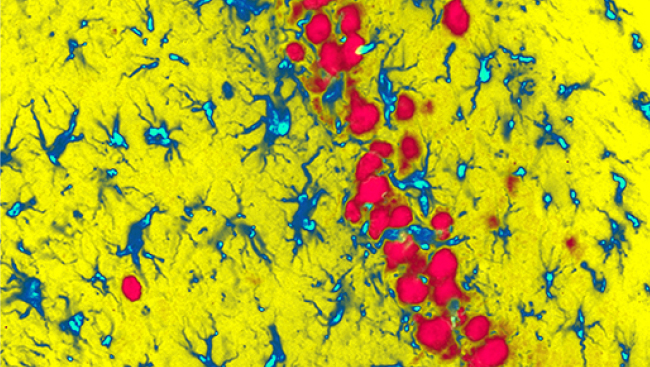 Annual Meeting Podcast Scientific ResearchIt never gets old to watch single channel currents, in real time, in a stochastic dance across the screen. The more you look the more you see — an unquestionable truism in science and an especially apt description of Diane Lipscombe’s current research on cell-specific control of calcium ion channel splicing. Calcium ion channel genes have the capacity to generate numerous isoforms but does each have unique function? Lipscombe reviews experimental approaches, including exon-specific targeting, to ask if individual sites of alternative splicing impact behavior and if isoforms have therapeutic value.Oct 1, 2015




