



Filter
-
(133)
-
(733)
-
(4)
-
(1)
-
(47832)
-
(91)
-
(25)
-
(14)
-
(433)
-
(7)
-
(181)
-
(8)
-
(33)
-
(17)
-
(7)
-
(9)
-
(9)
-
(5)
-
(21)
-
(8)
-
(12)
-
(9)
-
(3)
-
(10)
-
(10)
-
(56)
-
(45)
-
(12)
-
(3)
-
(7)
-
(6)
-
(5)
-
(8)
-
(7)
-
(11)
-
(58)
-
(13)
-
(30)
-
(8)
-
(5)
-
(10)
-
(5)
-
(14)
-
(4)
1881 - 1890
of 52753 results
-
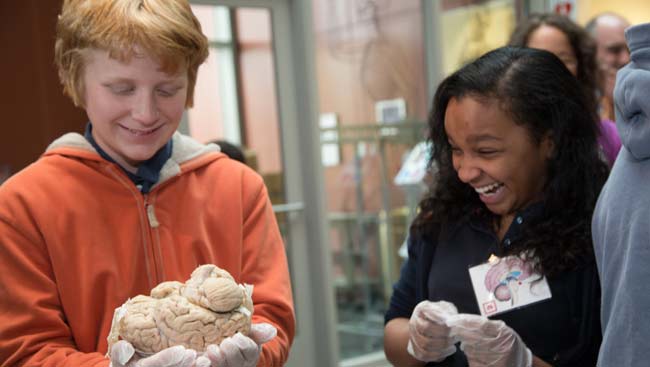 Article OutreachWendy Suzuki began her neuroscience career studying the hippocampus, but 20 years into her career switched her research focus to examine how exercise affects brain function. She now regularly talks about neuroscience in the public sphere as the host of Transistor, “a transformative STEM podcast;” in her new book, Healthy Brain Happy Life; and delivering TEDx talks. Read here about Suzuki’s insights into the best ways to communicate science and why she does it.Jan 21, 2016
 -
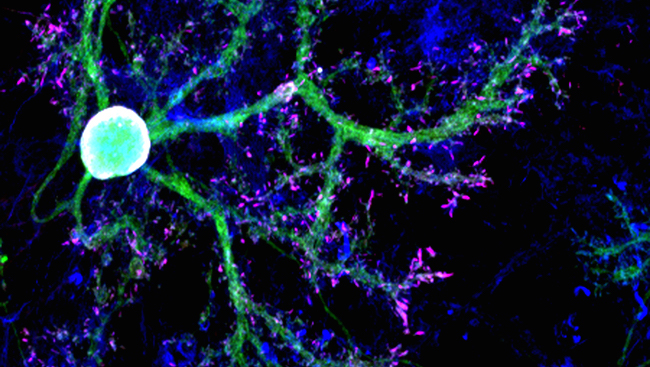 Article Scientific ResearchA common question about normal behavior is, “Why do animals sleep?” The actual answer is complex, consisting of explanations related to ecology and evolution, the physiology of homeostasis, and the molecular biology of cells.Jan 21, 2016
 -
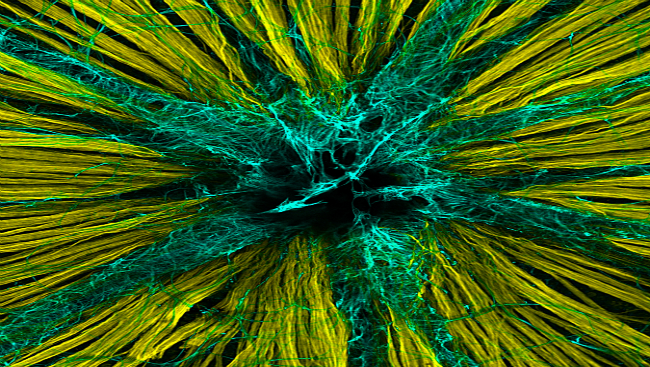 Article Scientific ResearchAnimal rights extremists are becoming more sophisticated by focusing on heavily limiting research through crippling legal ploys. Here are many of their targets and tactics.Jan 19, 2016
 -
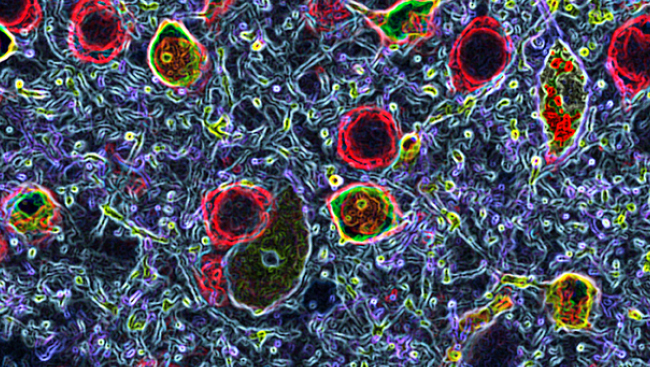 Annual Meeting Video Scientific ResearchEd Catmull, president of Pixar and Walt Disney Animation Studios, spoke about creativity at Neuroscience 2013. Catmull has been at the center of fostering collaborations across artistic and technological disciplines, and has overseen innovative endeavors for more than three decades. Catmull discussed issues central to uncovering genius, including removing hidden barriers to creativity and candor.Jan 14, 2016
 -
 Article Annual Meeting Scientific ResearchTo learn more about the human brain, researchers often turn to looking at the brains of other primates, like the Rhesus macaque. Similar to the human brain in both organization and function, non-human primate brains can also be evaluated during tasks requiring complex thought, perception, and decision making.Jan 12, 2016
 -
 Journal ArticleTetrahydroxy stilbene glucoside (TSG) from polygonum multiflorum exerts neuroprotective effects after ischemic stroke. We explored whether TSG improved ischemic stroke injury via PINK1/Parkin-mediated mitophagy. Oxygen glucose deprivation/reoxygenation (OGD/R) in vitro model and middle cerebral artery occlusion (MCAO) rat model were established. Cerebral injury was assessed by neurological score, hematoxylin and eosin staining, TTC staining and brain water content. Apoptosis, cell viability and mitochondrial membrane potential were assessed by flow cytometry, CCK-8 and JC-1 staining, respectively. Co-localization of LC3-labeled autophagosomes with LAMP2-labeled lysosomes or Tomm20-labeled mitochondria was observed with fluorescence microscopy. Ubiquitination level was determined using ubiquitination assay. The interaction between molecules was validated by co-immunoprecipitation and GST pull-down. We found that TSG promoted mitophagy and improved cerebral I/R damage in MCAO rats. In OGD/R-subjected neurons...Oct 15, 2024
 -
Journal ArticleSelective modifications in the expression or function of dendritic ion channels regulate the propagation of synaptic inputs and determine the intrinsic excitability of a neuron. Hyperpolarization-activated cyclic nucleotide-gated (HCN) channels open upon membrane hyperpolarization and conduct a depolarizing inward current (Ih). HCN channels are enriched in the dendrites of hippocampal pyramidal neurons where they regulate the integration of synaptic inputs. Synaptic plasticity can bidirectionally modify dendritic HCN channels in excitatory neurons depending on the strength of synaptic potentiation. In inhibitory neurons, however, the dendritic expression and modulation of HCN channels is largely unknown. In this study, we systematically compared the modulation of Ih by synaptic potentiation in hippocampal CA1 pyramidal neurons and stratum Radiatum (sRad) interneurons in mouse organotypic cultures. Ih properties were similar in inhibitory and excitatory neurons and contributed to resting membrane potential ...Oct 15, 2024
-
Journal ArticleAnimals have evolved innate responses to cues including social, food and predator odors. In the natural environment, animals are faced with choices that involve balancing risk and reward where innate significance may be at odds with internal need. The ability to update the value of a cue through learning is essential for navigating changing and uncertain environments. However, the mechanisms involved in this modulation are not well defined in mammals. We have established a new olfactory assay that challenges a thirsty mouse to choose an aversive odor over an attractive odor in foraging for water, thus, overriding their innate behavioral response to odor. Innately, mice prefer the attractive odor port over the aversive odor port. However, decreasing the probability of water at the attractive port leads mice to prefer the aversive port, reflecting a learned override of the innate response to the odors. The orbitofrontal cortex (OFC) is a fourth order olfactory brain area, involved in flexible value associati...Oct 15, 2024
-
Journal ArticleDeficits in social behavior are found in neurodevelopmental disorders, including autism spectrum disorders (ASDs). Since abnormalities in cerebellar morphology and function are observed in ASD patients, the cerebellum is thought to play a role in social behavior. However, it remains unknown whether the cerebellum is involved in social behavior in other animals and how cerebellar circuits control social behavior. To address this issue, we employed zebrafish stereotyped orienting behavior as a model of social behaviors, in which a pair of adult zebrafish in two separate tanks approach each other, with one swimming at synchronized angles (orienting angles) with the other. We harnessed transgenic zebrafish that express botulinum toxin, which inhibits the release of neurotransmitters, in either granule cells or Purkinje cells, and zebrafish mutants of reelin , which is involved in the positioning of cerebellar neurons, including Purkinje cells. These zebrafish, deficient in the function or formation of cerebell...Oct 15, 2024
-
Journal ArticleAge-related brain changes affect sleep and are reflected in properties of sleep slow-waves, however the precise mechanisms behind these changes are still not completely understood. Here, we adapt a previously established whole-brain model relating structural connectivity changes to resting state dynamics, and extend it to a slow-wave sleep brain state. In particular, starting from a representative connectome at the beginning of the aging trajectory, we have gradually reduced the inter-hemispheric connections, and simulated sleep-like slow-wave activity. We show that the main empirically observed trends, namely a decrease in duration and increase in variability of the slow waves are captured by the model. Furthermore, comparing the simulated EEG activity to the source signals, we suggest that the empirically observed decrease in amplitude of the slow waves is caused by the decrease in synchrony between brain regions. Significance Statement Aging is characterized by changes in slow wave (SW) sleep features,...Oct 15, 2024




