



Filter
-
(133)
-
(733)
-
(4)
-
(1)
-
(47832)
-
(91)
-
(25)
-
(14)
-
(433)
-
(7)
-
(181)
-
(8)
-
(33)
-
(17)
-
(7)
-
(9)
-
(9)
-
(5)
-
(21)
-
(8)
-
(12)
-
(9)
-
(3)
-
(10)
-
(10)
-
(56)
-
(45)
-
(12)
-
(3)
-
(7)
-
(6)
-
(5)
-
(8)
-
(7)
-
(11)
-
(58)
-
(13)
-
(30)
-
(8)
-
(5)
-
(10)
-
(5)
-
(14)
-
(4)
1861 - 1870
of 52753 results
-
 Article OutreachHow can neuroscientists explain their science concisely and interestingly without omitting nuance? What are some effective engagement strategies? Suzanne Ffolkes, Scott Thompson, and Leslie Tolbert give advice.Feb 25, 2016
 -
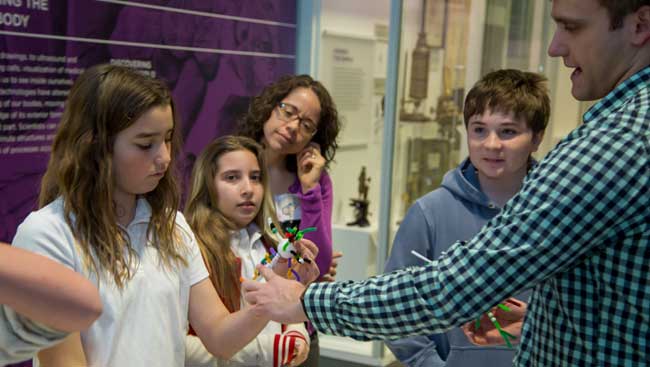 Article TrainingEducational Resources in Neuroscience (ERIN), developed by the Society for Neuroscience (SfN) with funding from the National Science Foundation (NSF), is a tool to help undergraduate, graduate, and clinical education professors find teaching resources. The database has materials reviewed by experts in the field. Resources include videos, interactive quizzes, and simulators, which you can search by topic, type of resource, and educational level.Feb 22, 2016
 -
 Article Professional DevelopmentThe mentor’s responsibilities extend well beyond helping students learn what the research and writing components of graduate school entail. First and foremost, mentors introduce students to the culture of the discipline, clarifying and reinforcing — principally by example — what’s expected of a professional scholar.Feb 22, 2016
 -
 Journal ArticleEach olfactory cortical hemisphere receives ipsilateral odor information directly from the olfactory bulb and contralateral information indirectly from the other cortical hemisphere. Since neural projections to the olfactory cortex are disordered and non-topographic, spatial information cannot be used to align projections from the two sides like in the visual cortex. Therefore, how bilateral information is integrated in individual cortical neurons is unknown. We have found, in mice, that the odor responses of individual neurons to selective stimulation of each of the two nostrils are significantly correlated, such that odor identity decoding optimized with information arriving from one nostril transfers very well to the other side. Nevertheless, these aligned responses are asymmetric enough to allow decoding of stimulus laterality. Computational analysis shows that such matched odor tuning is incompatible with purely random connections but is explained readily by Hebbian plasticity structuring bilateral co...Oct 21, 2024
 -
 Video Career PathsWorking as a dean can allow you to interact and aid a wider array of people than in a typical professor role. Joanne Berger-Sweeney shares her experiences as Dean of Tufts University School of Arts and Sciences where she deals with a variety of administration issues every day while still maintaining a research laboratory.Feb 18, 2016
 -
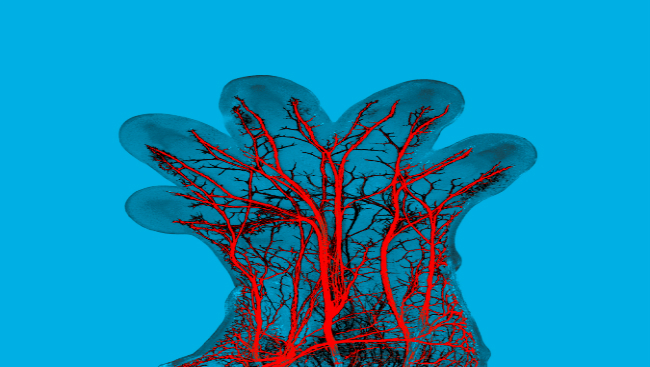 Article Scientific ResearchPerceiving the sizes of visual objects appears to be a simple perceptual experience in which no big scientific conundrum exists.Feb 18, 2016
 -
 Podcast Scientific ResearchWendy Suzuki introduces us to Marian Diamond, whose lively classes ushered Suzuki into a career in neuroscience. Suzuki shares how she came to study how exercise profoundly affects the brain, not just the body.Feb 16, 2016
 -
 Article OutreachScience requires significant public investment, and engaging the broader community is key to communicating discoveries and building support for education and research.Feb 16, 2016
 -
 Article DiversityThe following Q&A is adapted from the webinar, In First Person: Tips to Survive and Excel as a Woman in Neuroscience, hosted by SfN’s Professional Development Committee's Women in Neuroscience Subcommittee (WINS).Feb 16, 2016
 -
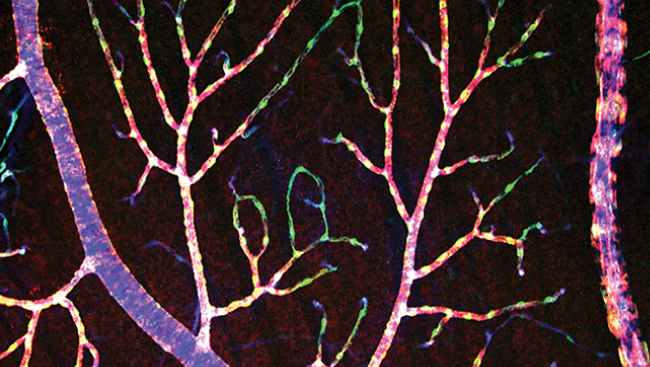 Article Scientific ResearchOur brain is a hungry organ. Although it accounts for only 2 percent of our body weight, the brain consumes 20 percent of the oxygen and 25 percent of the total nutrients that our body utilizes. The brain has an extensive blood supply to feed itself. Interruption of this supply, even for just a few minutes, can damage the brain permanently.Feb 11, 2016




