



Filter
-
(133)
-
(733)
-
(4)
-
(1)
-
(47832)
-
(91)
-
(25)
-
(14)
-
(433)
-
(7)
-
(181)
-
(8)
-
(33)
-
(17)
-
(7)
-
(9)
-
(9)
-
(5)
-
(21)
-
(8)
-
(12)
-
(9)
-
(3)
-
(10)
-
(10)
-
(56)
-
(45)
-
(12)
-
(3)
-
(7)
-
(6)
-
(5)
-
(8)
-
(7)
-
(11)
-
(58)
-
(13)
-
(30)
-
(8)
-
(5)
-
(10)
-
(5)
-
(14)
-
(4)
1791 - 1800
of 52753 results
-
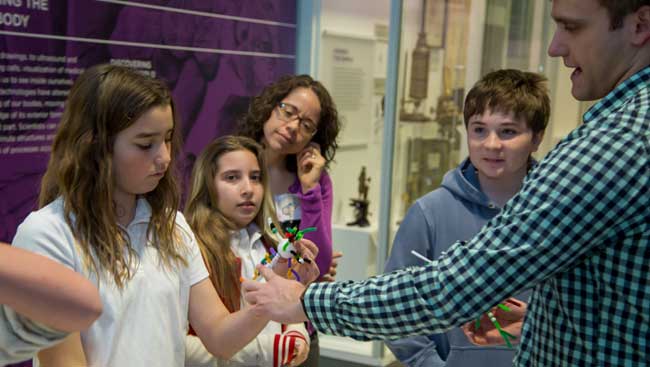 Article TrainingIt is often said that academic fields are becoming increasingly segregated as specializations develop more jargon and become more detailed with each new peer-reviewed paper. However, the classes co-taught by Professors Otis and Sathian are unique interdisciplinary spaces where students across traditional disciplinary divides are able to wrestle with topics shared by the humanities and sciences: perception, imagination, and art.May 26, 2016
 -
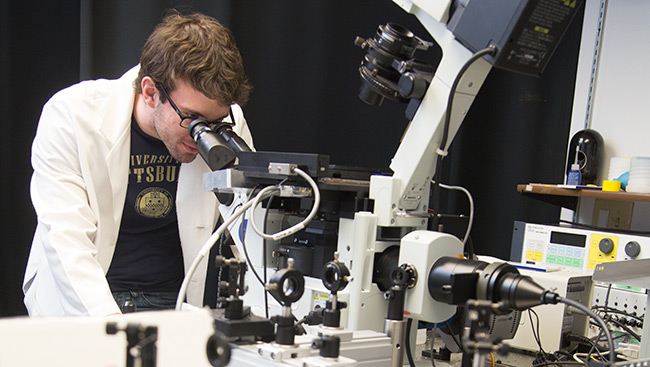 Article AdvocacyLearn from the strategies and actions we’ve taken at the University of Louisville to make lab tours a standout part of the advocacy portfolio.May 24, 2016
 -
 Journal ArticleRelationships among membrane currents allow central pattern generator (CPG) neurons to reliably drive motor programs. We hypothesize that continually active CPG neurons utilize activity-dependent feedback to correlate expression of ion channel genes to balance essential membrane currents. However, episodically activated neurons experience absences of activity-dependent feedback, and thus, presumably employ other strategies to coregulate the balance of ionic currents necessary to generate appropriate output after periods of quiescence. To investigate this, we compared continually active pyloric dilator (PD) neurons with episodically active lateral gastric (LG) CPG neurons of the stomatogastric ganglion (STG) in male Cancer borealis crabs. After experimentally activating LG for 8 hours, we measured 3 potassium currents and abundances of their corresponding mRNAs. We found that ionic current relationships were correlated in LG’s silent state, but ion channel mRNA relationships were correlated in the active st...Nov 4, 2024
 -
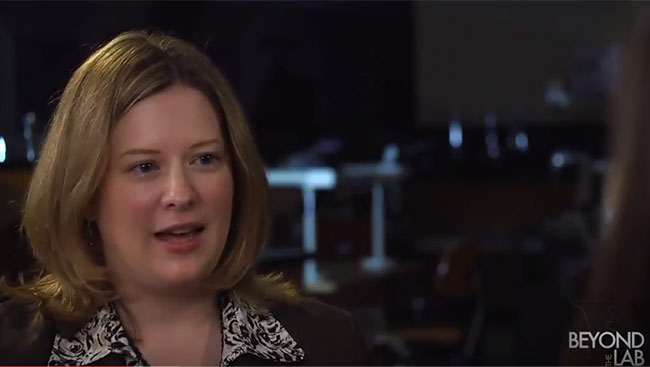 Video Career PathsErin Flynt is a senior medical writer at Envision Communications. Flynt talks about how the skills she developed during her PhD program are integrated in her current role as a medical writer.May 19, 2016
 -
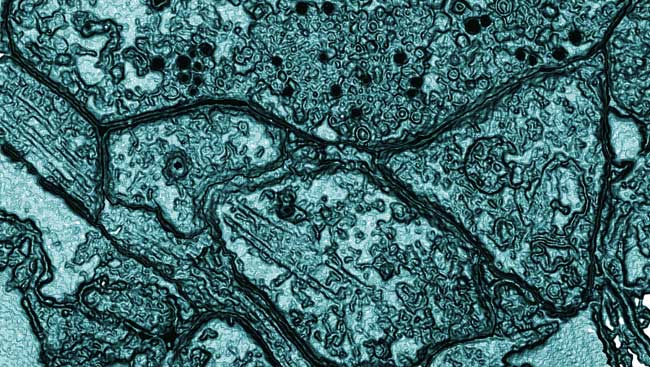 Article Scientific ResearchThe Tale of Two Roses: The Shaping of Sensory Coding Neuronal Ensembles by Reward and NorepinephrineMaterial below summarizes the article, Arc-Expressing Neuronal Ensembles Supporting Pattern Separation Require Adrenergic Activity in Anterior Piriform Cortex: An Exploration of Neural Constraints on Learning, on October 14, 2015 in The Journal of Neuroscience and authored by Amin MD. Shakhawat, Ali Gheidi, Iain T. MacIntyre, Melissa L. Walsh, Carolyn W. Harley, and Qi Yuan.May 19, 2016
 -
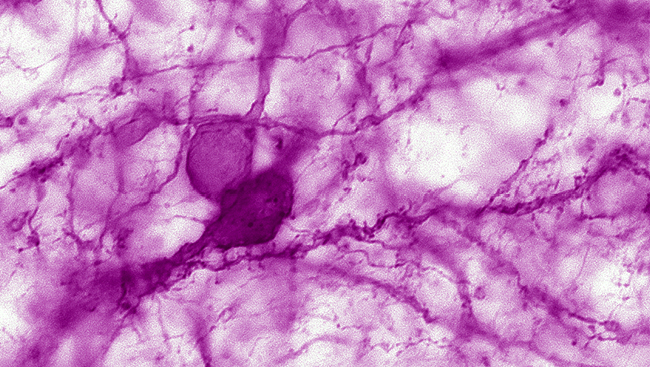 Article TrainingWhen syllabi are already packed with traditional scientific training topics, how can you encourage your department’s faculty to prepare students for a variety of work environments?May 17, 2016
 -
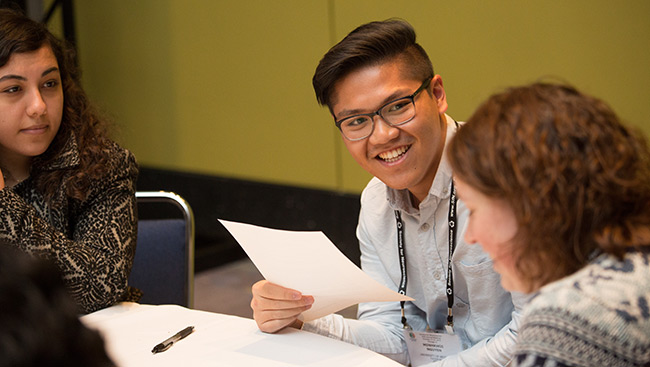 Article Professional DevelopmentUse this reference sheet as you update or create your first CV.May 17, 2016
 -
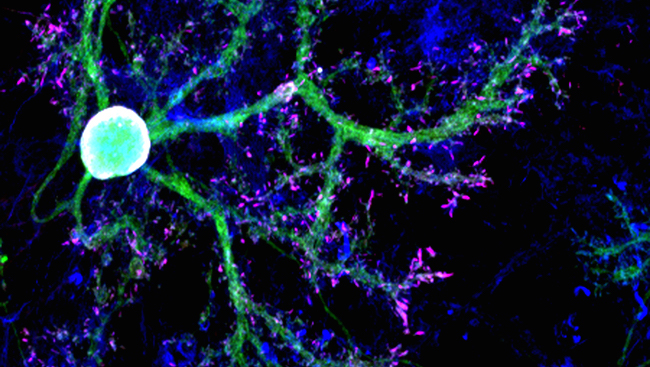 Video Career PathsJerome Jourquin, a scientific grants manager at the Susan G. Komen Breast Cancer Foundation, talks about the crucial skills he developed in his PhD program, and how he applies this skills to his current position.May 12, 2016
 -
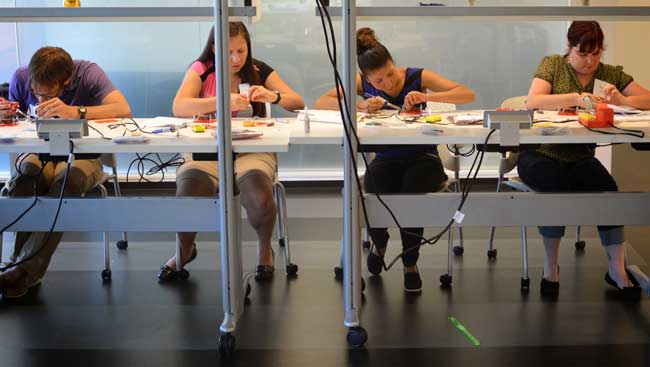 Article OutreachExperimentation is a great way to engage students and teach skills that are useful beyond the classroom or bench. At the Neuroscience Community Outreach Group at the University of Washington in Seattle, we developed neural engineering workshops to get high school students and teachers interested in neuroscience.May 12, 2016
 -
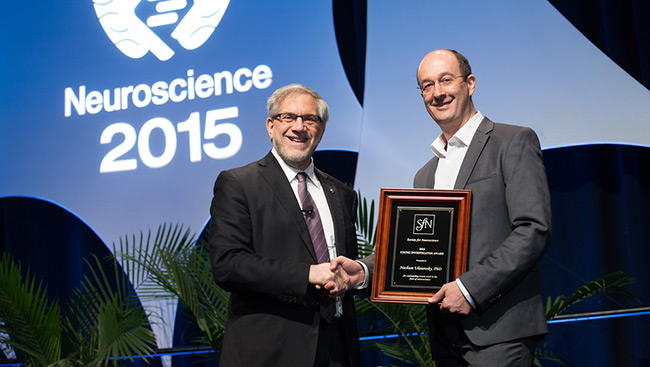 Article Professional DevelopmentNachum Ulanovsky was the first to record neural activity in a freely moving bat. By doing so, he was able to investigate how cells in the hippocampus encode a spatial representation of the three-dimensional environment. For these accomplishments, Ulanovsky received the Young Investigator Award in 2015. Here, he discusses his research.May 10, 2016




