



Filter
-
(133)
-
(733)
-
(4)
-
(1)
-
(47832)
-
(91)
-
(25)
-
(14)
-
(433)
-
(7)
-
(181)
-
(8)
-
(33)
-
(17)
-
(7)
-
(9)
-
(9)
-
(5)
-
(21)
-
(8)
-
(12)
-
(9)
-
(3)
-
(10)
-
(10)
-
(56)
-
(45)
-
(12)
-
(3)
-
(7)
-
(6)
-
(5)
-
(8)
-
(7)
-
(11)
-
(58)
-
(13)
-
(30)
-
(8)
-
(5)
-
(10)
-
(5)
-
(14)
-
(4)
1781 - 1790
of 52753 results
-
 Journal ArticleThe pretectum of vertebrates contains neurons responsive to global visual motion. These signals are sent to the cerebellum, forming a subcortical pathway for processing optic flow. Global motion neurons exhibit selectivity for both direction and speed, but this is usually assessed by first determining direction preference at intermediate velocity (16-32 deg/sec), and then assessing speed tuning at the preferred direction. A consequence of this approach is that it is unknown if and how direction preference changes with speed. We measured directional selectivity in 114 pretectal neurons from 44 zebra finches ( Taeniopygia guttata ) across spatial and temporal frequencies, corresponding to a speed range of 0.062 to 1024°/s. Pretectal neurons were most responsive at 32-64°/s with lower activity as speed increased or decreased. At each speed, we determined if cells were directionally-selective, bidirectionally-selective, omnidirectionally responsive, or unmodulated. Notably, at 32°/s, 60% of the cells were dire...Nov 7, 2024
 -
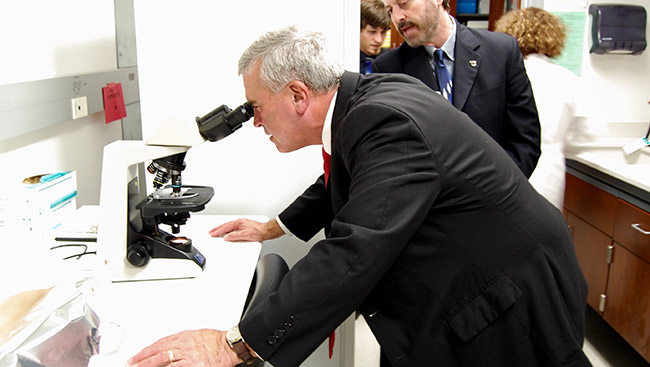 Article AdvocacyAs neuroscientists, it is critical for the future of our field that we help lawmakers understand the importance of scientific research to human health and economic development.Jun 9, 2016
 -
 Article Career PathsHow Clinical Training Impacted This Physician’s Choice to Research Pediatric Developmental DisordersJoseph Gleeson explains why he dedicated his career to studying and pursuing treatments for developmental brain disorders.Jun 7, 2016
 -
 Article Scientific ResearchAdolescence can be a rough and turbulent ride — not only for teenagers, but for everyone else around them. And the explanation for erratic behavior — anger, impulsivity, unnecessary risks, and inappropriate and suboptimal choices — has likely troubled parents for generations. Neuroscience first answered this mystery decades ago. Our brains, it turned out, are not fully developed at birth and undergo considerable neuronal maturation processes during adolescence until early adulthood.Jun 2, 2016
 -
 Article Career PathsI work on malformations of cerebral cortical development. These are congenital abnormalities of brain development that are highly associated with epilepsy, intellectual disabilities, and autism.Jun 2, 2016
 -
Journal ArticleNeurodevelopmental abnormalities are considered to be one of the important causes of schizophrenia. The offspring of methylazoxymethanol acetate (MAM)-exposed mice are recognized for the dysregulation of neurodevelopment and well-characterized with schizophrenia-like phenotypes. However, the inhibition-related properties of the medial prefrontal cortex (mPFC) and hippocampus throughout adolescence and adulthood have not been systematically elucidated. In this study, both 10 mg/kg and 15 mg/kg MAM-exposed mice exhibited schizophrenia-related phenotypes in both adolescence and adulthood, including spontaneous locomotion hyperactivity and deficits in prepulse inhibition (PPI). We observed that there was an obvious parvalbumin (PV) loss in mPFC and hippocampus of MAM-exposed mice, extending from adolescence to adulthood. Moreover, the frequency of sIPSCs in pyramidal neurons at mPFC and hippocampus was significantly dampened in the 10 mg/kg and 15 mg/kg MAM-exposed mice. Furthermore, the firing rate of putativ...Nov 5, 2024
-
Journal ArticleVisual working memory (VWM) requires precise feature binding. Previous studies have revealed a close relationship between the posterior parietal cortex (PPC) and feature binding during VWM, this study further examined their causal relationship through three transcranial direct current stimulation (tDCS) experiments. In Experiment 1 ( N = 57), participants underwent three sessions of tDCS separately, including PPC stimulation, occipital cortex stimulation, and sham stimulation, and completed delayed estimation tasks for orientations before and after stimulation. Results showed that tDCS over PPC selectively prolonged recall response time (RT) and increased the probability of non-target responses (a.k.a. failure of feature binding, p NT). In Experiment 2 ( N = 29), combining metacognition estimation, we further investigated whether the effects of PPC stimulation were attributed to mis-binding (i.e., participants self-reported "remembered" in non-target responses) or informed guessing trials (participants sel...Nov 5, 2024
-
Journal ArticleSocial status and dominance are critical factors influencing well-being and survival across multiple species. However, dominance behaviors vary widely across species, from elaborate feather displays in birds to aggression in chimps. To effectively study dominance, it is essential to clearly define and reliably measure dominance behaviors. In laboratory settings, C57BL/6 mice are commonly used to study dominance due to their stable and linear social hierarchies. However, other mouse strains are also used for laboratory research. Despite substantial evidence for strain effects on behavioral repertoires, the impact of strain on dominance in mice remains largely unstudied. To address this gap, we compared dominance behaviors between CD1 and C57BL/6 male mice across four assays: observation of agonistic behaviors, urine marking, tube test, and a reward competition. We found that CD1 mice demonstrate increased fighting, increased territorial marking through urination, and increased pushing and resisting in the t...Nov 5, 2024
-
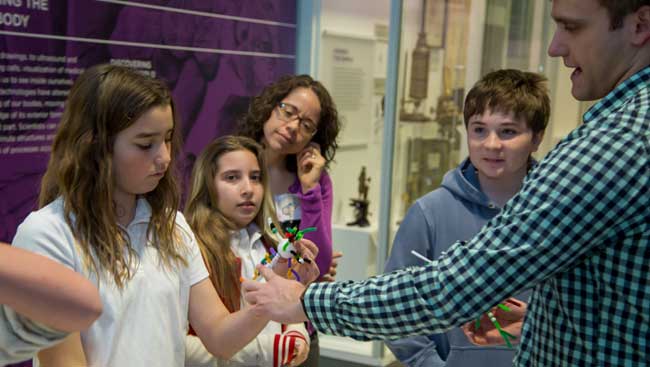 Article TrainingIt is often said that academic fields are becoming increasingly segregated as specializations develop more jargon and become more detailed with each new peer-reviewed paper. However, the classes co-taught by Professors Otis and Sathian are unique interdisciplinary spaces where students across traditional disciplinary divides are able to wrestle with topics shared by the humanities and sciences: perception, imagination, and art.May 26, 2016
 -
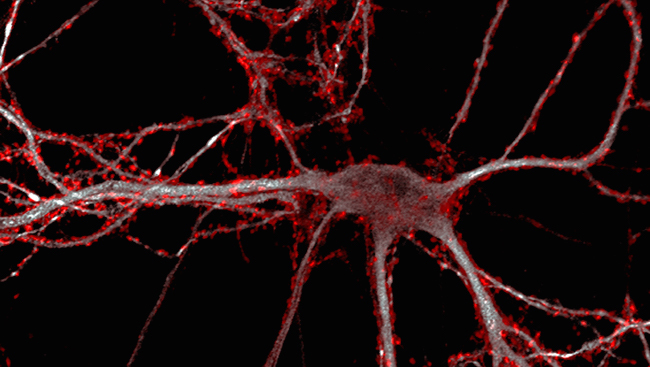 Video Career PathsAmy Moore, the director of research programs at Georgia Research Alliance, talks about how her PhD program developed skills she is still using in her current role.May 26, 2016




