



Filter
-
(133)
-
(733)
-
(4)
-
(1)
-
(47832)
-
(91)
-
(25)
-
(14)
-
(433)
-
(7)
-
(181)
-
(8)
-
(33)
-
(17)
-
(7)
-
(9)
-
(9)
-
(5)
-
(21)
-
(8)
-
(12)
-
(9)
-
(3)
-
(10)
-
(10)
-
(56)
-
(45)
-
(12)
-
(3)
-
(7)
-
(6)
-
(5)
-
(8)
-
(7)
-
(11)
-
(58)
-
(13)
-
(30)
-
(8)
-
(5)
-
(10)
-
(5)
-
(14)
-
(4)
1751 - 1760
of 52753 results
-
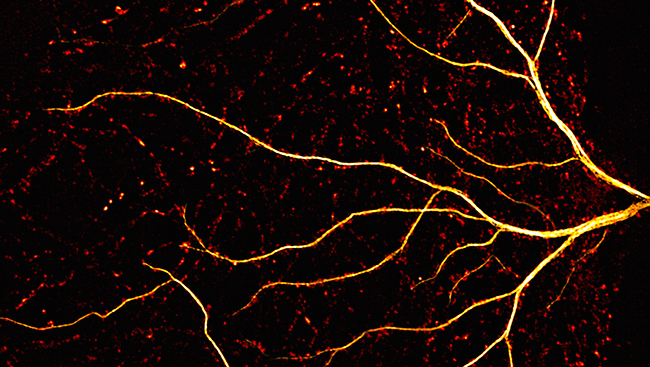 Professional DevelopmentWhat is the Neuronline community and why has SfN launched the Neuronline Community Leaders program? Neuronline is SfN’s members-only online community for learning and discussion, where SfN members at all stages can network, seek career advice, and discuss the latest science research and current events in the field. Neuronline Community Leaders will be key players in sparking and guiding different conversations in the community by sharing their knowledge, expertise, and insights with others in the field of neuroscience.Aug 4, 2016
 -
 Article OutreachWhen talking to nonscientists, do you ever wonder if you’re overwhelming them with too much information, or just not quite answering their question?Aug 2, 2016
 -
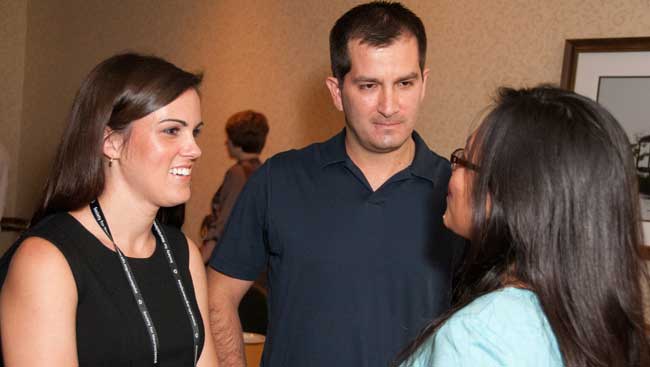 Article Professional DevelopmentMany factors can contribute to your success as a postdoc. These three neuroscientists highlight what most positively impacted their postdoc experiences and long-term success.Aug 2, 2016
 -
 Journal ArticleTranscranial magnetic stimulation (TMS) is a non-invasive brain stimulation method that modulates brain activity by inducing electric fields in the brain. Real-time, state-dependent stimulation with TMS has shown that neural oscillation phase modulates corticospinal excitability. However, such motor-evoked potentials (MEPs) only indirectly reflect motor cortex activation and are unavailable at other brain regions of interest. The direct and secondary cortical effects of phase-dependent brain stimulation remain an open question. In this study, we recorded the cortical responses during single-pulse TMS using electroencephalography (EEG) concurrently with the MEP measurements in 20 healthy human volunteers (11 female). TMS was delivered at peak, rising, trough, and falling phases of mu (8-13 Hz) and beta (14-30 Hz) oscillations in the motor cortex. The cortical responses were quantified through TMS-evoked potential components N15, P50, and N100 as peak-to-peak amplitudes (P50-N15 and P50-N100). We further ana...Nov 14, 2024
 -
Journal ArticleNormal pressure hydrocephalus (NPH) is marked by enlarged cerebral ventricles with normal intracranial pressure, plus three stereotypical symptoms: gait impairment, cognitive dysfunction, and urinary frequency with urge-incontinence. The neural circuit dysfunction responsible for each of these symptoms remains unknown, and an adult mouse model would expand opportunities to explore these mechanisms in preclinical experiments. Here, we describe the first mouse model of chronic, communicating hydrocephalus with normal intracranial pressure. Hydrocephalic male and female mice had unsteady gait and reduced maximum velocity. Despite performing well on a variety of behavioral tests, they exhibited subtle learning impairments. Hydrocephalic mice also developed urinary frequency, and many became incontinent. This mouse model, with symptoms resembling human NPH, can be combined with molecular-genetic tools in any mouse strain to explore the neural circuit mechanisms of these symptoms. Preclinical work using this hyd...Nov 14, 2024
-
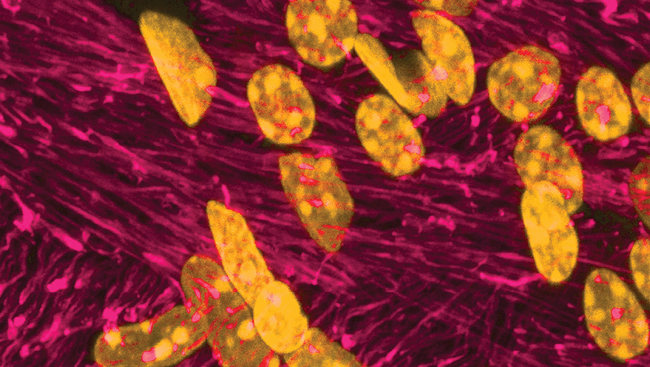 Article Scientific ResearchSense of balance is an essential element in our relationship to the external world.Jul 28, 2016
 -
 Article TrainingA key goal of any training program is to prepare people for their future careers.Jul 25, 2016
 -
 Article Professional DevelopmentWhether you are considering career paths for your first job or a different path for your third role, it is important to figure out your needs and have a strategy for accomplishing your goals.Jul 22, 2016
 -
 Video Annual Meeting TrainingPreparing trainees for a variety of career trajectories can help faculty, program directors, and chairs support them through evolving challenges and needs.Jul 21, 2016
 -
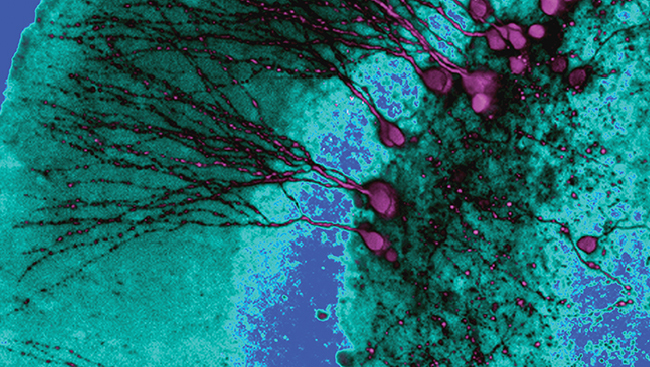 Article Scientific ResearchThe amygdala, a group of nuclei in the medial temporal lobe, is a key brain structure for fear and anxiety.Jul 21, 2016




