



Filter
-
(133)
-
(733)
-
(4)
-
(1)
-
(47832)
-
(91)
-
(25)
-
(14)
-
(433)
-
(7)
-
(181)
-
(8)
-
(33)
-
(17)
-
(7)
-
(9)
-
(9)
-
(5)
-
(21)
-
(8)
-
(12)
-
(9)
-
(3)
-
(10)
-
(10)
-
(56)
-
(45)
-
(12)
-
(3)
-
(7)
-
(6)
-
(5)
-
(8)
-
(7)
-
(11)
-
(58)
-
(13)
-
(30)
-
(8)
-
(5)
-
(10)
-
(5)
-
(14)
-
(4)
1731 - 1740
of 52753 results
-
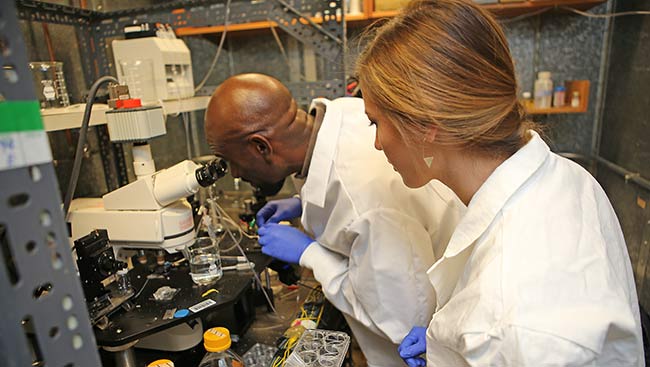 Article Scientific ResearchScience is about discovery. We do it because we love to learn.Sep 6, 2016
 -
 Article TrainingThe following Q&A is adapted from the webinar "What’s in a Master’s? Different Programs for Different Needs." J. Patrick Card shares his advice for students deciding which Master's program is the best fit for them.Sep 1, 2016
 -
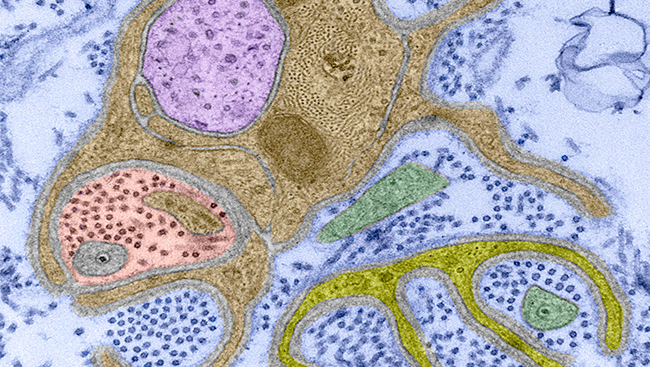 Article Scientific ResearchMaterial below summarizes the article, Embedding a Panoramic Representation of Infrared Light in the Adult Rat Somatosensory Cortex through a Sensory Neuroprosthesis, published on February 24, 2016, in The Journal of Neuroscience and authored by Konstantin Hartmann, Eric E. Thomson, Ivan Zea, Richy Yun, Peter Mullen, Jay Canarick, Albert Huh, and Miguel A. L. Nicolelis. Sensory prosthetic systems, such as cochlear implants, have helped thousands of people with deficits in hearing. Visual prosthetic devices, such as retinal chips, hold great promise for the restoration of vision to those with retinal injury or disease. One key goal for the future is to bypass the peripheral nervous system altogether and build high-capacity prosthetic devices that directly connect to the cerebral cortex.Sep 1, 2016
 -
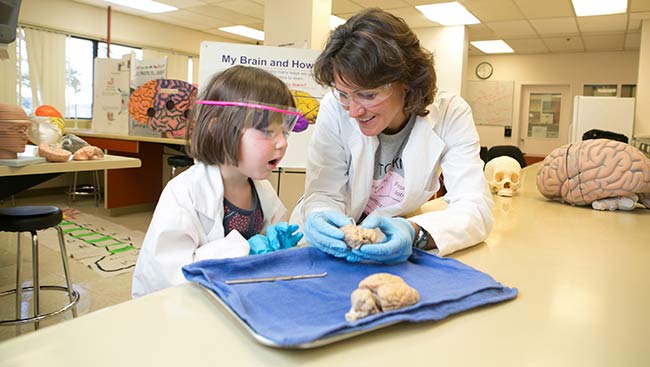 Article OutreachIn response to the need for community members to have access to free health education, I developed a program called "Get to Know Your Brain!"Aug 30, 2016
 -
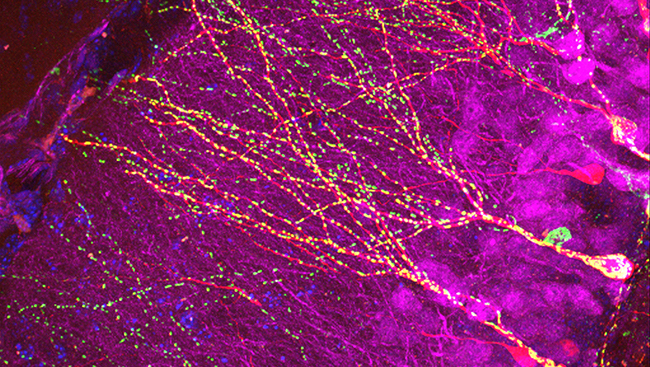 Article Scientific ResearchThe adult nervous system is composed of billions of neurons that extend axons over substantial distances to reach an appropriate target and build complex networks during development.Aug 25, 2016
 -
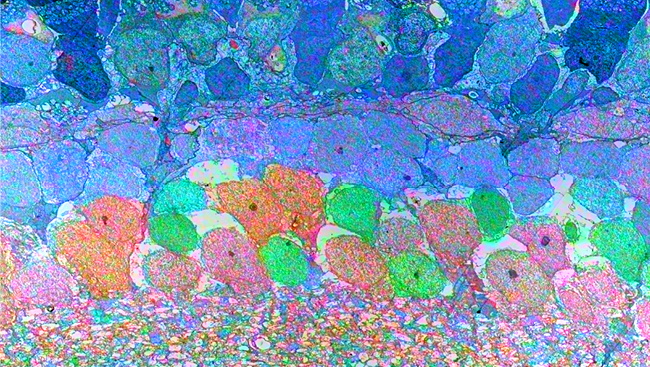 Annual Meeting Video Scientific ResearchScientists can help gain public support for animal research by communicating openly and proactively about adherence to strict rules and regulations, and how it has advanced our understanding of complex diseases.Aug 24, 2016
 -
 Journal ArticleGoal-directed actions require transforming sensory information into motor plans defined across multiple parameters and reference frames. Substantial evidence supports the encoding of target direction in gaze- and body-centered coordinates within parietal and premotor regions. However, how the brain encodes the equally critical parameter of target distance remains less understood. Here, using Bayesian pattern component modeling of fMRI data during a delayed reach-to-target task, we dissociated the neural encoding of both target direction and the relative distances between target, gaze, and hand at early and late stages of motor planning. This approach revealed independent representations of direction and distance along the human dorsomedial reach pathway. During early planning, most premotor and superior parietal areas encoded a target’s distance in single or multiple reference frames and encoded its direction. In contrast, distance encoding was magnified in gaze- and body-centric reference frames during la...Nov 18, 2024
 -
Journal ArticleOverexpression of the eukaryotic initiation factor 4E (eIF4E) gene has been associated with excessive stereotypic behaviors and reduced sociability, which manifest as autism-like social cognitive deficits. However, the precise mechanisms by which eIF4E overexpression induces insufficiently these autism-like behaviors and the specific brain regions implicated remain insufficiently understood . Oxytocin, a neurotransmitter known for its role in social behavior, has been proposed to modulate certain autism-related symptoms by influencing microglial function and attenuating neuroinflammation. Nonetheless , the contributions of the hippocampus and oxytocin in the content of eIF4E overexpression-induced autistic behaviors remain elucidated . To investigate this issue,esearchers utilized the three-chamber social interaction test, the open field test, and the Morris water maze to evaluate the social cognitive behaviors of the two groups of mice. Additionally, enzyme-linked immunosorbent assay (ELISA), immunofluore...Nov 18, 2024
-
Journal ArticleMaintaining concentration on demanding cognitive tasks, such as vigilance (VG) and working memory (WM) tasks, is crucial for successful task completion. Previous research suggests that internal concentration maintenance fluctuates, potentially declining to sub-optimal states, which can influence trial-by-trial performance in these tasks. However, the timescale of such alertness maintenance, as indicated by slow changes in pupil diameter, has not been thoroughly investigated. This study explored whether "pupil trends"—which selectively signal sub-optimal tonic alertness maintenance at various timescales—negatively correlate with trial-by-trial performance in VG and WM tasks. Using the Psychomotor Vigilance Task (VG) and the Visual-Spatial 2-back Task (WM), we found that human pupil trends lasting over 10 seconds were significantly higher in trials with longer reaction times, indicating poorer performance, compared to shorter reaction time trials, which indicated better performance. The Attention Network Tes...Nov 18, 2024
-
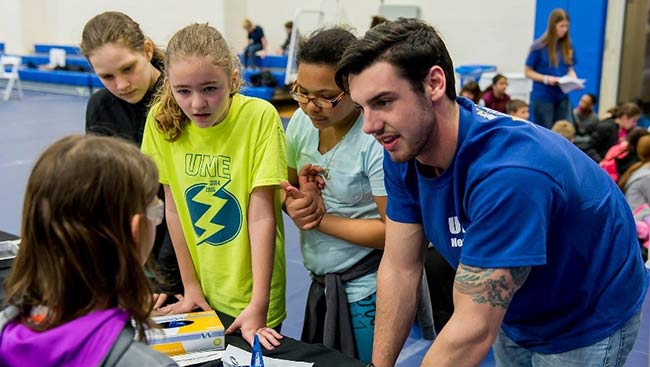 Article OutreachThe University of New England (UNE), one of the founding institutions of the Maine Chapter of SfN, has grown its outreach program over the years, now engaging more than 4,000 students annually. Outreach activities even span internationally through UNE’s campus in Tangier, Morocco. Here is a behind the scenes look at how we began small and achieved growth.Aug 23, 2016




